

Снижение стоимости связано с увеличением поставок от местных производителей и расширением общего предложения на рынке. Отмечается, что более 90% арбузов на прилавках — это продукция российского происхождения.
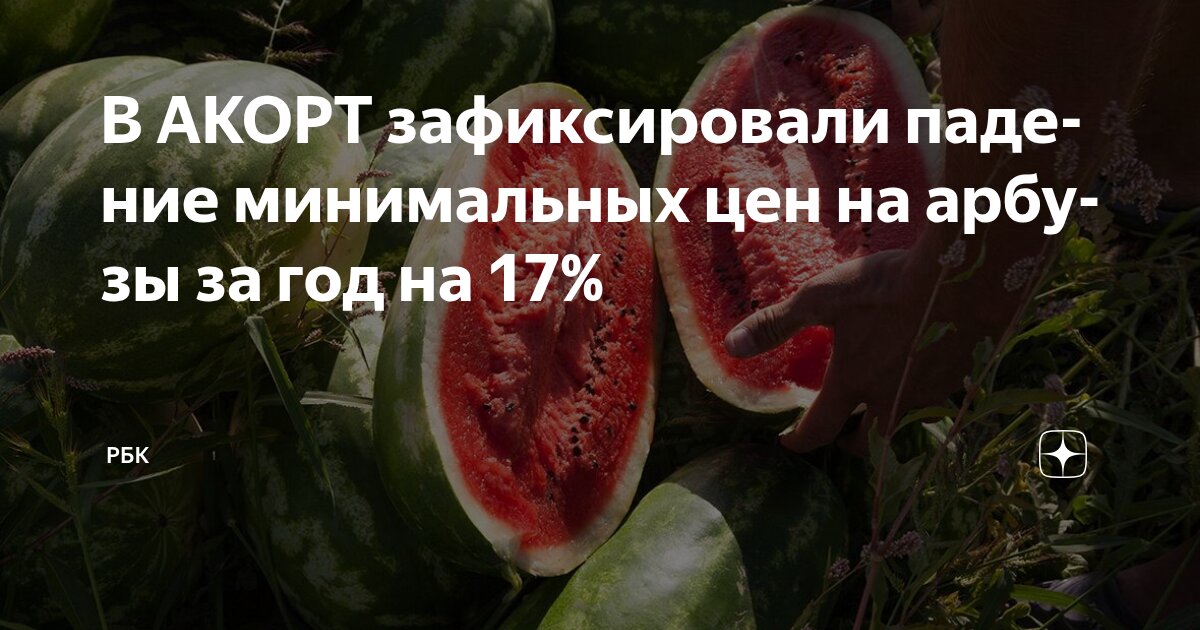
Согласно данным Ассоциации компаний розничной торговли (АКОРТ), в России за последний год минимальная стоимость арбузов сократилась на 17%. В крупных торговых сетях цены стартуют от 30 рублей за килограмм, а некоторые ритейлеры предлагают бахчевые уже по 20 рублей.
Сезонное снижение цен в этом году началось раньше обычного, что привело к удешевлению арбузов по сравнению с прошлым годом. Эту тенденцию подтвердил Роман Пономарев, совладелец крестьянско-фермерского хозяйства «Пономарево» из Ставропольского края:
По словам Романа Пономарева, погодные условия сначала замедлили созревание арбузов, а затем резкая жара вызвала их одновременное массовое созревание в Дагестане, Краснодарском и Ставропольском краях. В результате фермеры не справляются со сбором урожая, а также испытывают дефицит покупателей и логистических возможностей для вывоза больших объемов арбузов с полей на юге России.
Он отметил, что урожай неоднороден: некоторые хозяйства получили минимальный урожай, другие — хороший, в зависимости от того, затронули ли их весенние заморозки. На одном из их участков арбузы созрели с отличным содержанием сахара и уже продаются, тогда как на другом участке из-за жары арбузы пока не набрали достаточно сахара и не готовы к реализации. Роман Пономарев добавил, что сейчас ритейлеры уделяют большое внимание содержанию сахара в арбузах. Из-за большого объема предложения на рынке оптовые цены упали примерно до 20 рублей за килограмм.
Ирина Козий, генеральный директор информационного агентства Fruitnews, поделилась своим прогнозом относительно дальнейшего изменения цен на арбузы:
 Ирина Козий
генеральный директор информационного агентства Fruitnews«Скорее всего, к августу еще небольшое снижение произойдет, потому что основной сезон у нас начинается в конце июля — начале августа. Сейчас мы в середине июля, то есть еще неделька-две, когда есть шанс, что цены будут снижаться. Дело в том, что примерно к концу июля — началу августа мы обычно выходим на пик массового сезона производства арбузов. Соответственно, чем больше предложение, тем ниже цены. Сейчас мы слышим о том, что поставки идут уже из многих регионов. Дальше сезон урожая немножко будет смещаться на север. У нас сейчас до Воронежской области собирают арбузы относительно массово. Выращивание арбузов есть даже в достаточно северных регионах. Но там речь, конечно, идет о каких-то приспособлениях: о туннелях, о пленке, о чем-то подобном. В сезон примерно 90% арбузов на нашем рынке — это продукция российских производителей. Это та культура, по которой все в порядке с обеспечением местной продукции. По остальным культурам, тем, что выращивается в России, подорожало больше, чем импортная продукция. Курс рубля у нас укрепился, а себестоимость у российских производителей, наоборот, выросла. Меньше всего у нас подорожали, например, виноград, груша, цитрусовые — то, что импортное. Больше всего подорожали огурцы, яблоки, морковь, капуста, картофель — то, что мы преимущественно выращиваем в России. Каких-то предпосылок на глобальное изменение цен в отрасли не слышно».
В настоящее время в розничных сетях представлено от трех до шести разновидностей арбузов и минимум три сорта дынь.
Что касается дынь, то около половины поставок обеспечивают российские производители, остальной объем импортируется из Казахстана, Узбекистана, Турции и Бразилии. Аналитики АКОРТ отмечают, что минимальная стоимость дынь в федеральных розничных сетях сохраняется на уровне прошлого года — 99 рублей за килограмм.
Watermelon Prices in Russia Drop by 17%
This price reduction is attributed to increased deliveries from domestic producers and an expansion of overall supply in the market. It is noted that over 90% of watermelons available are of Russian origin.
According to the Association of Retail Companies (AKORT), the minimum prices for watermelons in Russia have decreased by 17% over the past year. In major retail chains, prices start from 30 rubles per kilogram, with some retailers already offering the melons for as low as 20 rubles.
The seasonal price drop began earlier this year, leading to watermelons being cheaper than last year. Roman Ponomarev, co-owner of the “Ponomarevo” peasant farm in Stavropol Krai, confirmed this trend:
Ponomarev explained that weather conditions initially slowed down watermelon ripening, but then a sharp heat wave caused simultaneous mass ripening across Dagestan, Krasnodar Krai, and Stavropol Krai. As a result, farmers are struggling to harvest the crop and are facing a lack of buyers and logistical capacity to transport the large volumes of watermelons from fields in southern Russia. He noted that the harvest is uneven: some farms received minimal yields, while others had good ones, depending on whether they were affected by spring frosts. On one of their plots, watermelons ripened with excellent sugar content and are already being sold, whereas on another plot, due to the heat, the watermelons have not yet gained enough sugar and are not ready for sale. Roman Ponomarev added that retailers are now paying close attention to the sugar content of watermelons. Due to the large volume of supply on the market, wholesale prices have dropped to approximately 20 rubles per kilogram.
Irina Koziy, CEO of Fruitnews information agency, shared her forecast regarding further changes in watermelon prices:
Irina Koziy
CEO of Fruitnews information agency“Most likely, there will be a small further decrease by August, because our main season begins in late July – early August. We are currently in mid-July, so there’s another week or two where prices might continue to fall. The fact is, by late July – early August, we usually reach the peak of the mass watermelon production season. Naturally, the greater the supply, the lower the prices. We are now hearing that supplies are already coming from many regions. Further, the harvest season will shift slightly north. Watermelons are currently being harvested relatively massively up to the Voronezh region. Watermelons are even grown in quite northern regions, but there, of course, it involves adaptations: tunnels, film, and similar methods. During the season, approximately 90% of watermelons on our market are products of Russian producers. This is a crop where the supply of local produce is entirely adequate. For other crops grown in Russia, prices have increased more than for imported products. The ruble exchange rate has strengthened, but the cost price for Russian producers, conversely, has increased. For instance, grapes, pears, citrus fruits — which are imported — have seen the least price increase. Cucumbers, apples, carrots, cabbage, potatoes — which we primarily grow in Russia — have seen the largest price increases. There are no indications of global price changes in the industry.”
Currently, retail chains offer three to six varieties of watermelons and at least three types of melons.
As for melons, Russian suppliers provide approximately half of the total volume, with the rest imported from Kazakhstan, Uzbekistan, Turkey, and Brazil. AKORT analysts state that the minimum prices for melons in federal retail chains remain at the same level as a year ago – 99 rubles per kilogram.
 Rupert Blackwood
  Clement Ashworth