

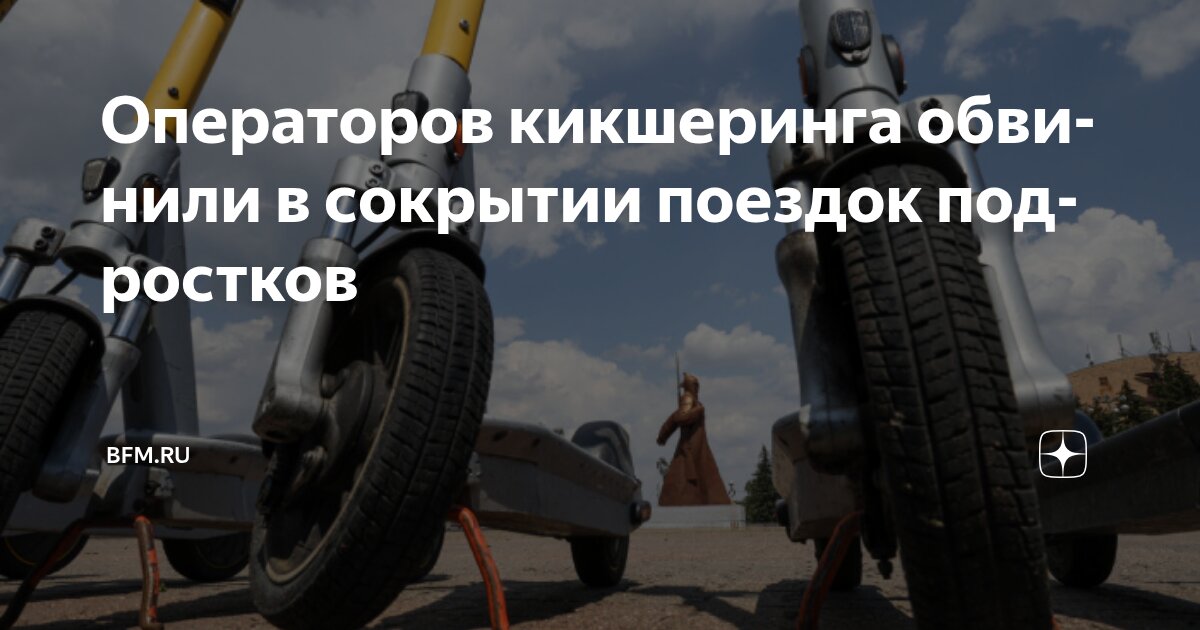
According to media reports, at least one major kicksharing service recorded tens of thousands of instances of electric scooters being used by minors but allegedly failed to block their accounts. Market participants, however, deny these claims, while Moscow authorities previously announced a significant reduction in accidents involving teenagers.
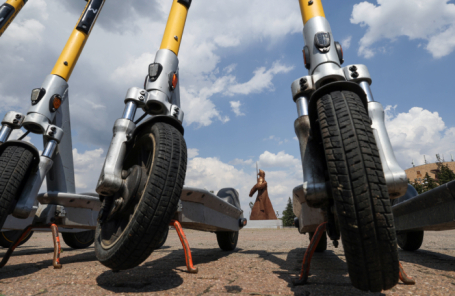
The newspaper «Kommersant» has leveled sharp criticism against kicksharing services, accusing them of almost intentionally involving teenagers in electric scooter use. The publication cites internal statistics from “one of the leading” operators, which purportedly revealed over 50,000 rides made by minors on their shared scooters. It is asserted that this unnamed service did not proceed with blocking the accounts of these underage users. According to the newspaper`s source, this inaction is attributed to “the pursuit of economic gain and the inherent difficulty in verifying blocking facts.”
To further support these accusations, the article includes comments from several government representatives. The St. Petersburg Interior Ministry stated that the majority of fatal accidents involving scooters “concern minors,” while officials in Blagoveshchensk, where kicksharing was recently banned, assert that up to 70% of all electric scooter users in the city were teenagers. However, Yulia Lebedeva, a representative of MTS Urent`s press service, refutes these claims:
Yulia Lebedeva MTS Urent Press Service Representative “We cannot confirm the data presented in the article, as its source is unclear to us. Moreover, we responsibly state that we identify and block accounts of underage users in our application, and to our knowledge, all `big three` operators do the same. We employ several tools for this. In Moscow, the Mos ID system is used, meaning only individuals who have verified their account on the mos.ru portal can use scooters in the capital. The second tool is MTS ID. When logging into the app through this method, Urent receives information about the account holder`s age, and if they are under 18, the account is promptly blocked. Underage violators frequently use accounts belonging to parents or older friends. In such instances, we can identify them, for example, during joint raids with the traffic police or through information provided by concerned citizens via our dedicated bot. Whenever we can definitively establish a rider`s age with 100% certainty, we naturally block their account immediately.”
Some claims in the Kommersant article, however, contradict publicly available statistics. For instance, a 2023 report by the Interior Ministry`s Scientific Center for Road Safety indicated that only one-third of accidents involving personal mobility devices (PMDs) involved teenagers, and a mere 16% of victims in such accidents were minors. This data is challenging to reconcile with the assertions from Blagoveshchensk: if electric scooters were indeed primarily used by children and accidents predominantly involved adults, then logically, the ban on PMDs should have been imposed on adults. Meanwhile, Moscow`s Department of Transport announced in mid-July that the number of PMD-related accidents in the capital decreased by 60% this year, and incidents involving injured teenagers halved.
Are authorities and operators doing enough? Dmitry Popov, an expert from the government`s working group on road safety legislation, offers his perspective:
Dmitry Popov Expert, Government Working Group on Road Safety Legislation “For example, in St. Petersburg, the transport committee has developed a video analytical module. This software processes video from city surveillance cameras, identifying users who are riding in pairs and those who do not dismount at pedestrian crossings. I believe that after its implementation, efficiency will significantly increase. The question remains regarding the system of penalties, because the fine stipulated in Article 12.29 of the Administrative Offenses Code is minuscule — merely 800 rubles. This is not a very serious amount. In Moscow, the number of such violators has decreased because they have already implemented authentication through mos.ru. While that system has its flaws, it at least requires this authentication. In St. Petersburg, this module is still under development. As soon as this authentication is fully implemented, we will immediately observe a reduction in violations.”
According to current traffic regulations, individuals under seven years old can ride PMDs only when accompanied by adults; those under 14 years old are restricted to sidewalks; and individuals aged 14 and above may also use roads with a speed limit of 60 km/h if no sidewalk is available. Kicksharing rental age requirements vary depending on the region and specific operator. In Moscow, users are mandated to register via Mos ID, which strictly requires an age of 18. Most services have voluntarily introduced an age-of-majority requirement in other regions, but Whoosh is also accessible to 16-year-olds, albeit with reduced speed.
The seriousness of the services` intentions is also demonstrated by their penalty amounts. For instance, according to Yandex Go`s rules, riding an electric scooter with an adult incurs a fine of 3,000 rubles. However, riding with a minor on the same scooter or transferring control to a teenager results in a substantial 100,000 ruble fine. This, incidentally, also casts doubt on the assertion that operators are deliberately concealing underage rides. Why would they risk a massive penalty for a mere 300 rubles collected from a teenager when they can fine the account holder 300 times that amount?
 Rupert Blackwood
  Clement Ashworth