

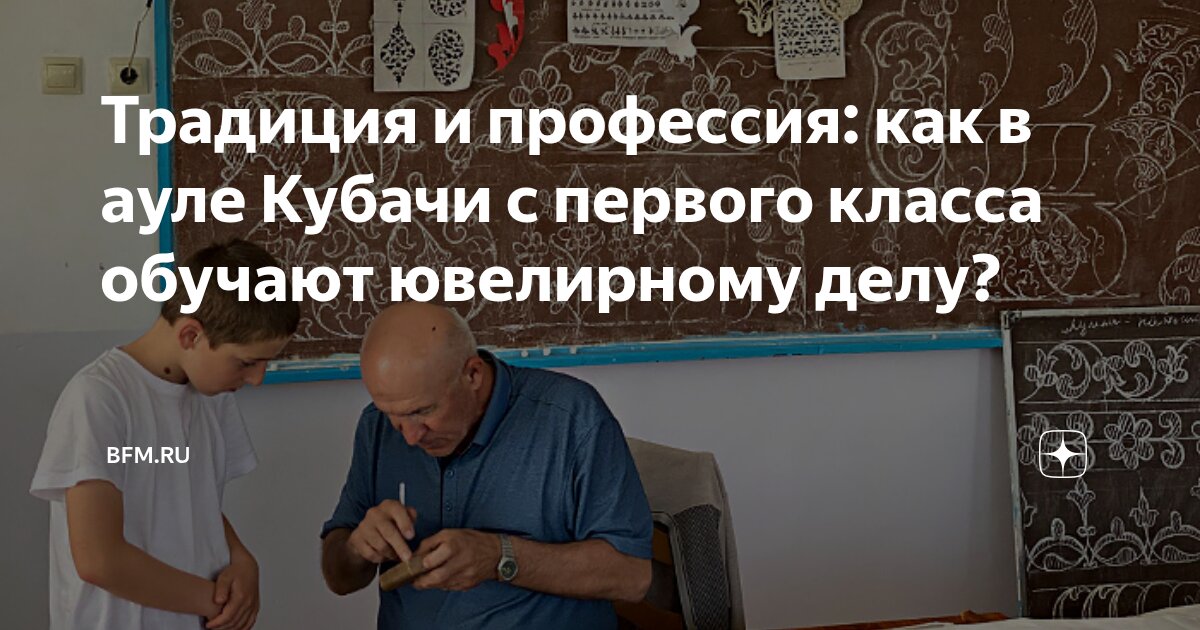
Искусство мастеров Кубачи широко известно не только в Дагестане, но и далеко за его пределами. Ювелирные изделия, кувшины и гравированные серебряные подносы из Кубачи считаются подлинными произведениями искусства. Уникальность этого ремесла заключается в том, что его основы преподаются детям начиная с семи-восьми лет, причем не дома, а в специально оборудованной для этого школьной среде.
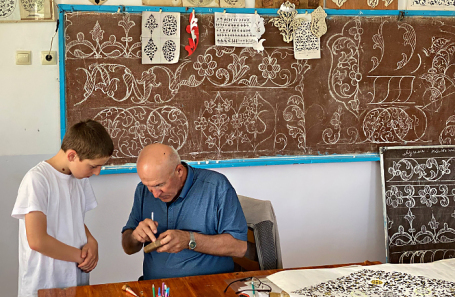
В летние каникулы школьники Кубачи наслаждаются полной свободой. Четырнадцатилетние друзья Расул и Гаджи из дагестанского села Кубачи проводят жаркий июль в стенах Кубачинской школы имени А. Г. Караева, известной углубленным изучением кубачинского искусства. Уже третий год здесь работает летний лагерь. Мальчики с первого класса, согласно школьной программе, изучают основы кубачинского мастерства. Однако, чтобы по-настоящему овладеть этим всемирно известным искусством, дополнительные занятия просто необходимы. Обучение гравировке прекрасно дополняет их каникулярные радости: катание на велосипеде, прогулки по живописным горам и игры в Counter-Strike, как рассказывают сами Расул и Гаджи.
Goldsmiths and Gold Embroiderers from the Mountain Aul
Kubachi is located in the Dakhadaevsky district of Dagestan. Historical sources indicate that in the early Middle Ages, the aul was the center of a small state called Zirikhgeran, where metalworking was the primary occupation. Chainmail from Ugbazhe, as the villagers called their settlement, was highly valued not only in Dagestan. There are many legends about the origin of the Kubachi people, and researchers agree that the Kubachians are an ancient Dagestani people. However, they do not explain how an aul deep in the mountains came to be where all inhabitants are masters, passing their skills down through generations.
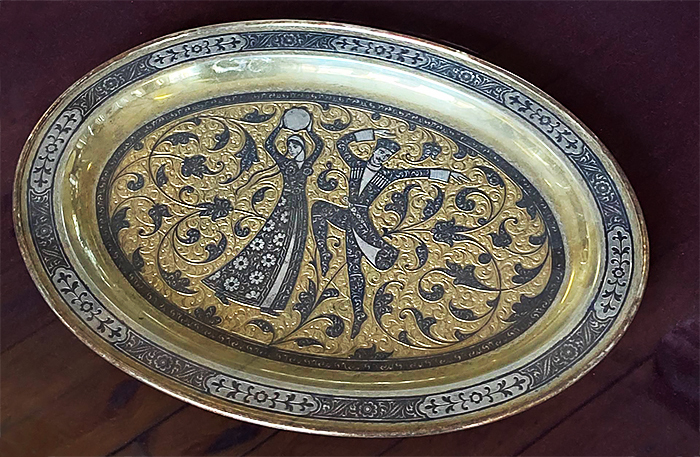
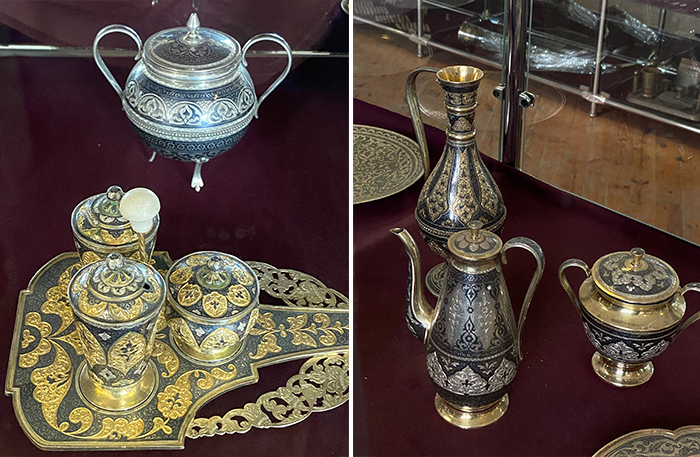
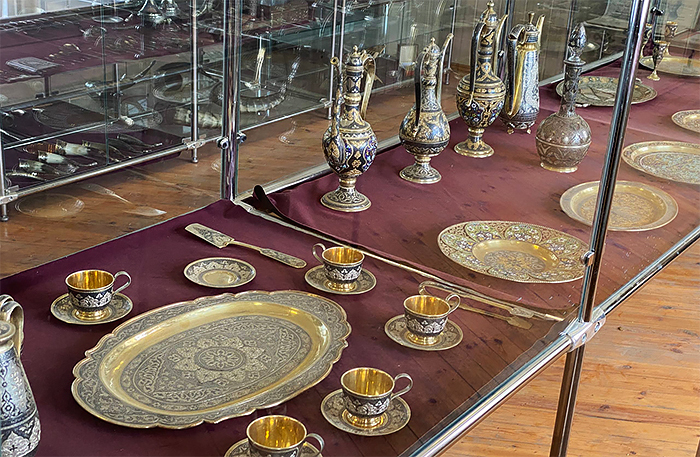
Even today, artistic crafts, especially metal processing, are highly developed there. Kubachi masters are renowned for producing items from silver, gold, and copper, including jewelry, weapons, and household utensils such as water pitchers (muchaly), trays, plates, and cups. Kubachi silver is a well-known brand.

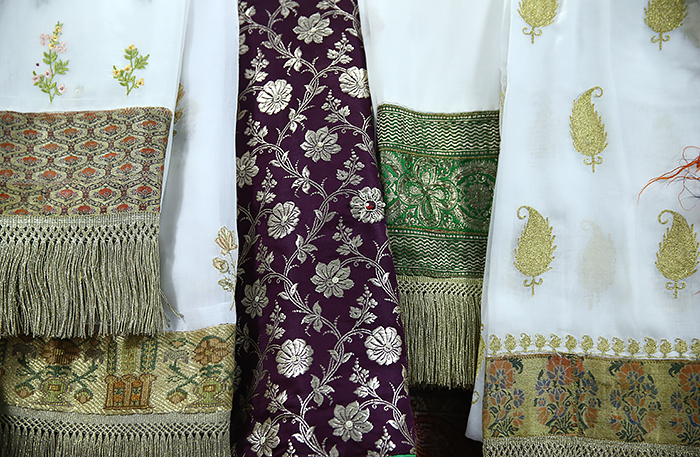
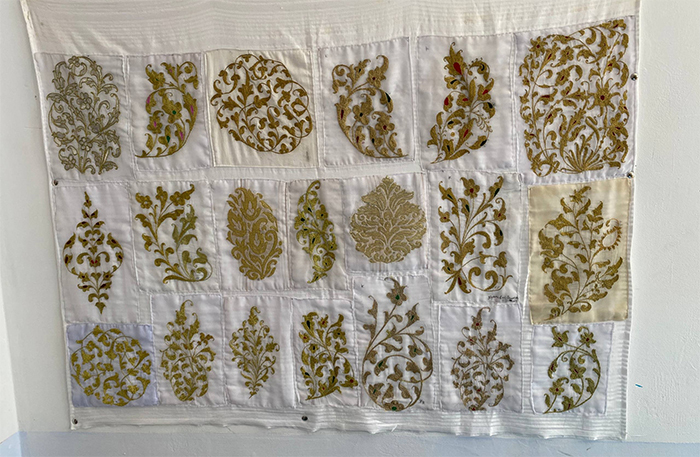
Women are taught gold embroidery from childhood. Kubachinka women have long embroidered traditional 2.5-meter-long scarves called `kazy`. Unmarried young girls embroider narrow ornaments, while married women create wider and more festive designs. To this day, the women of Kubachi skillfully incorporate thin white scarves with gold patterns and fringe into their daily attire.
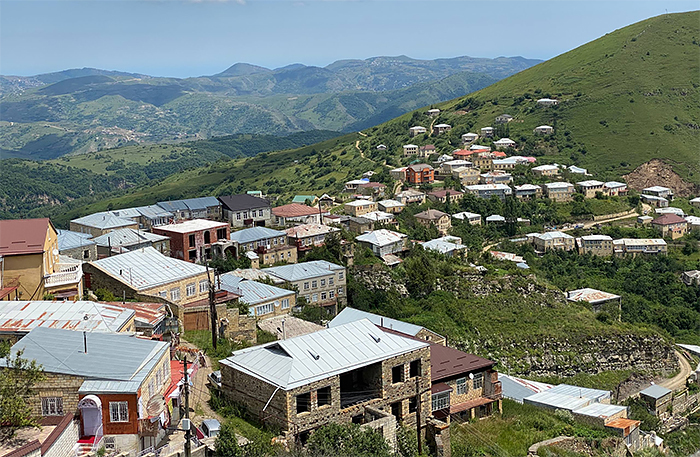
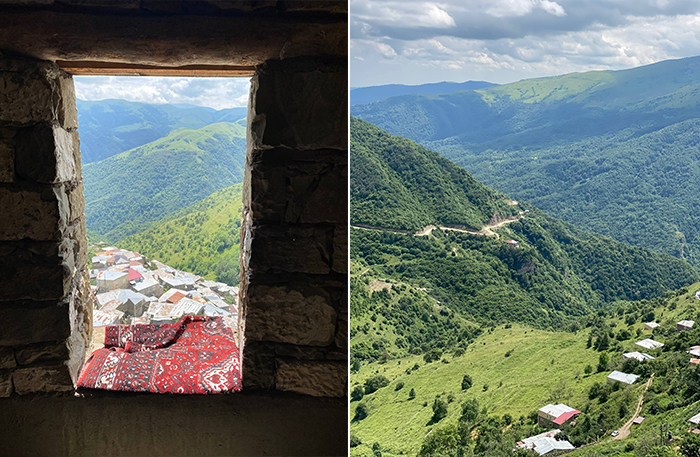
The easiest way to reach the aul is from Derbent, Russia`s oldest city. However, not every driver will agree to a trip to Kubachi, as they are concerned about the 17 kilometers of off-road conditions leading up to the village. Therefore, it`s more comfortable to travel to the village with someone who is easygoing and aware of how the mountain road might affect their car. Visitors to Kubachi are greeted by the round medieval watchtower Akaila Kala, dating back to the 13th-14th centuries. Beyond it, residential houses begin, seemingly climbing one after another up the steep mountainside. One can enter the tower, where rooms display Kubachi masterworks, and climb to the roof. From there, a panoramic view of the aul and mountains unfolds. Every master has a personal museum at home featuring their works, and throughout the aul, there are numerous shops selling engraved jewelry and household items.
In every home, there is a unifying activity spanning generations: Kubachi art. Grandparents and parents introduce children to ornament, engraving, and metalwork in their workshops. However, the primary training in craftsmanship for children takes place at the A.G. Karaev Kubachi Secondary School, from which they graduate already possessing a profession.
Two Alphabets in Primary Grades
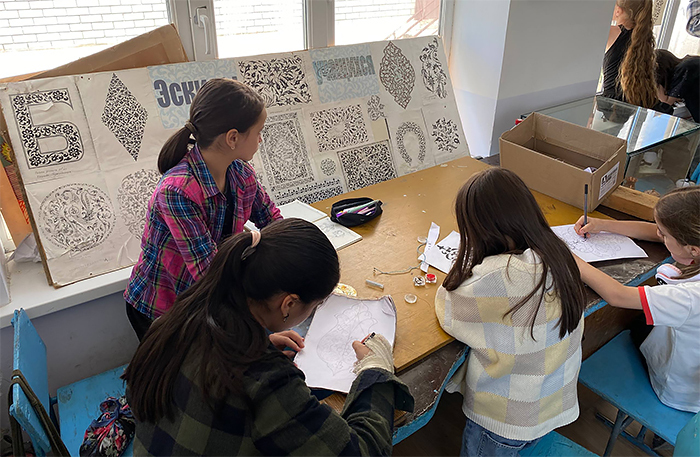
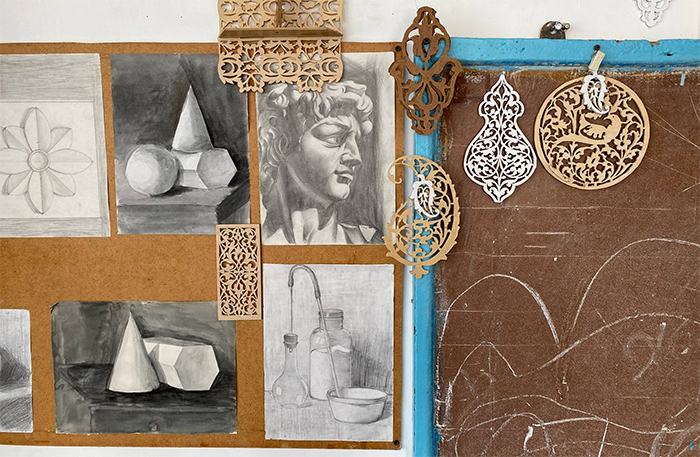
In this school, junior students learn the fundamentals of ornamentation alongside their ABCs, multiplication tables, and reading. They learn through extensive practice, carefully drawing line after line, starting with simple strokes and progressing to more complex elements. In middle grades, students create their own sketches, combining patterns into a cohesive composition. There is an alphabet of Kubachi ornament, and several rules govern how to draw them.
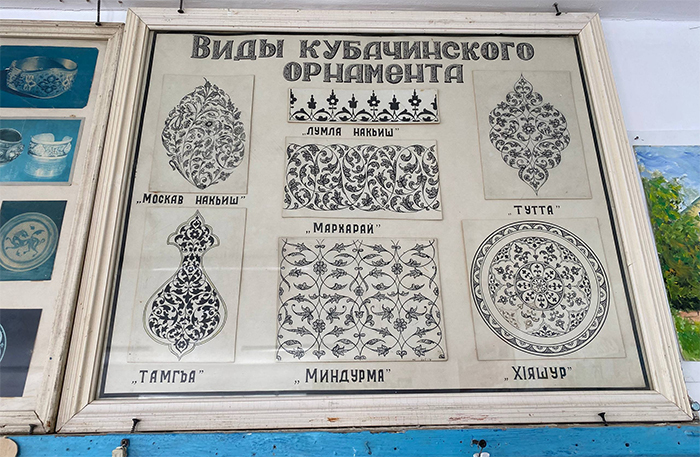
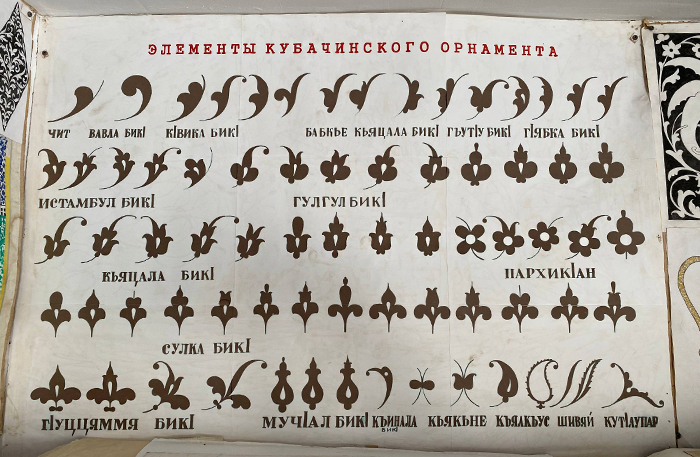
Teacher Said Saidov, who conducts engraving lessons for various grades, explains:
«Выводить элементы орнамента нужно не спеша. При написании линию не ломаем. Все должно быть симметрично. В сложных элементах начинаем с середины, затем прорисовываем линии и узловые элементы. Необходимо соблюдать пропорции в композиции».
The engraving master explained all this while simultaneously overseeing a class of children preparing for the fourth and fifth grades. The students spend the entire month of July at the school`s summer camp, where, in addition to lessons on the fundamentals of Kubachi art, they also have native language classes. This time, their task was to draw smooth ornamental elements in their notebooks. Girls and boys diligently inscribed patterns and approached Said Nabigullayevich for inspection. The teacher detected the slightest deviations from proportions and corrected their work, giving an additional element for practice. When a student transfers the ornament to metal, there will be no room for error, so it`s crucial to train their hand on paper first.
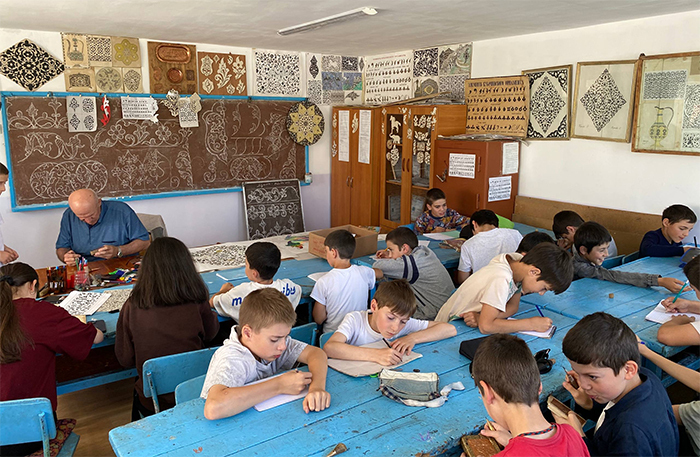


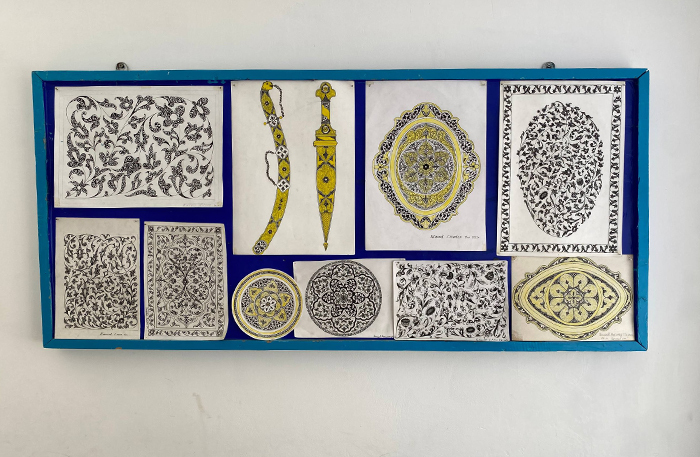
While Said Nabigullayevich was explaining the basics of the ornament alphabet to me, a “Ferrari” frequently visited us—that`s how he greeted a student who was writing out an entire line of ornament, while the Kubachi art master only managed to show me how one element was written. But he didn`t mistake speed for mastery.
«Опять пришла. Ты торопишься, как Ferrari, а линия здесь ушла не в ту сторону», — приговаривал он, в очередной раз исправляя работу ученицы.
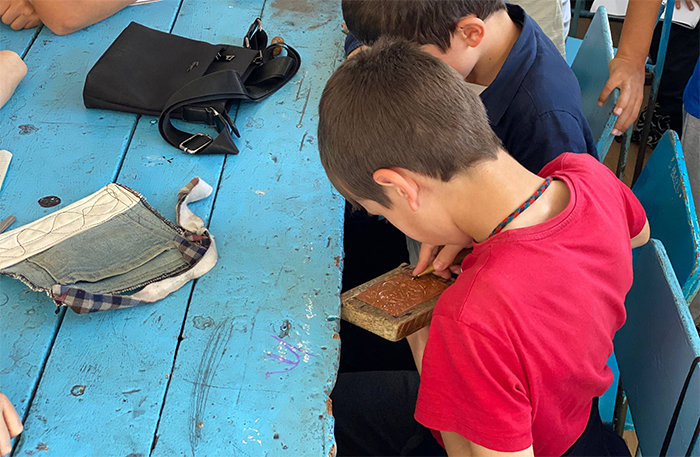
In the same classroom, boys sat aside with burins in their hands. From the fourth grade onwards, students engrave their prepared sketches onto special copper plates, which are conveniently attached to wooden boards. Engraving also comes in several types, for example, deep engraving – creating a volumetric effect, and additional engraving – filling large details of a drawing with fine patterns.
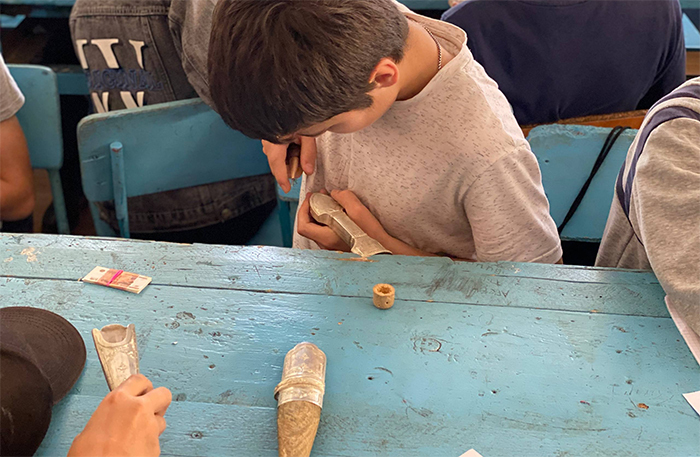
Among the young masters are Rasul and Gadji. On this day, they were working on a copper plate and a saber handle—each on their own piece. During his training, Rasul had engraved numerous plates, a copper plate, and a tank model, adorning it with ornament. Gadji had also engraved many plates, two wide silver bracelets, and a copper mug. Both are children and grandchildren of masters. Their fathers and grandfathers are all busy in their workshops. However, Rasul`s relatives work on household items, while Gadji`s parents are engaged in a jewelry workshop.
«My great-grandfather, grandfather, and father are all masters of Kubachi art. That`s why I couldn`t help but learn it. When I had no idea about engraving, I thought it was a very easy task. It turned out to be a laborious occupation. To engrave an ornament on a copper plate would take a month, provided you engrave every day,» Rasul shared. But he immediately added that in addition to essential qualities for an engraver like patience and perseverance, it`s also important to listen to yourself: when there`s no desire to engrave, it`s better not to, as the ornament won`t turn out well. Rasul has his own method: he goes for a walk to get himself in the right mood for work.
Both Gadji and Rasul understand that with the high demand for Kubachi masterworks, this could become their primary occupation and a good source of income. But they are aware that in the future, they will need to master another profession. Rasul is leaning towards technical specialties, while Gadji plans to become a dentist.
Children Create Their Masterpieces
Classes on Kubachi art take place after regular lessons as part of the extracurricular education program for grades 1 through 11.
«Обучение школьников основам кубачинского мастерства проводили еще в советское время. Выпускникам кроме аттестата выдавали диплом ювелира. В 1990-2000-х эту программу прекратили. И только в 2013 году ее запустили вновь силами учительского коллектива и Култум Куцуловой, которая в то время работала директором. Сейчас открыты несколько мастерских: гравировка, филигрань, эмаль, кольчугоделие, монтировка, вышивка. С детьми по этим направлениям работают около 10 преподавателей. В 11-м классе по стандарту ученики должны сдать экзамен по труду, его мы проводим в конце мая, до начала ЕГЭ. Собираем комиссию, приглашаем трех лучших мастеров села, чтобы они оценили работы детей. К экзамену школьникам необходимо приготовить ответы по вопросам теории, касающимся металлов, инструментов, они должны подготовить экзаменационную работу и защитить ее. И с аттестатом мы выдаем свидетельство о том, что выпускник прошел курс по основам кубачинского искусства, там прописана и профессия, например, ювелир, гравер, золотошвея».
According to Rayganat Kasumova, there are things to update in the workshops. Some machines are preserved from Soviet times, materials are purchased by the teachers themselves, and much can be improved and developed.
Last year, about 150 children attended the classes—the total number of students at the A.G. Karaev School. An updated museum also operates there, showcasing silver and copper works by students and graduates, along with their diplomas and certificates. Many graduation works are noted by masters as exceptional and flawless. Completed items are proudly added to the museum. And in the workshop classrooms, the best student sketches and metal trials are preserved.
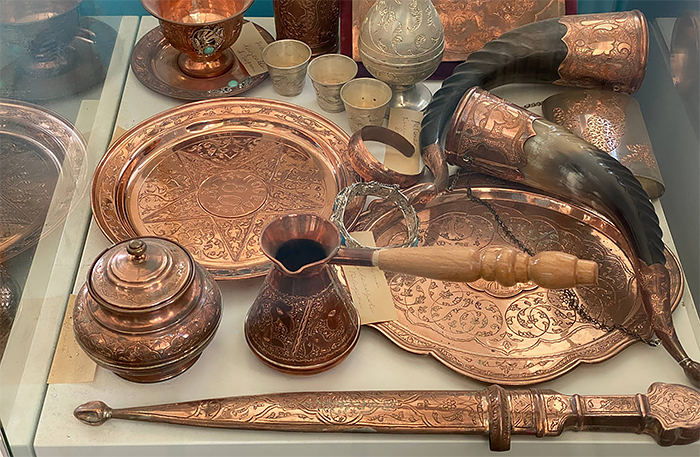
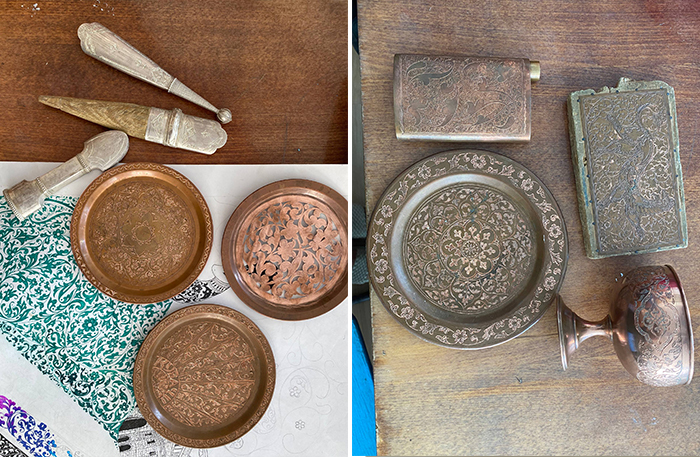
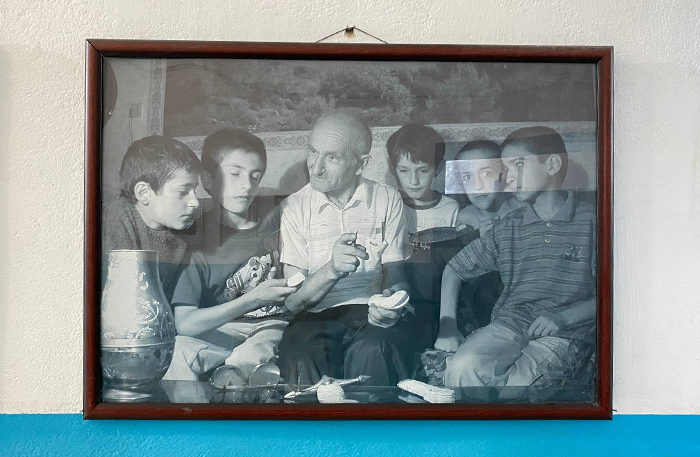
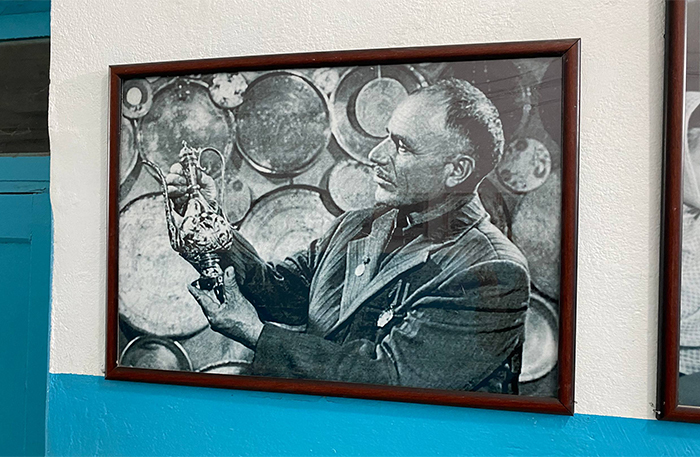
Kubachi craftsmanship is an integral part of the aul`s culture, alongside universal truths about kindness, respect, and loyalty. Therefore, older generations strive by all means to cultivate this love for art in their children and grandchildren, and in their students, by imparting practical knowledge.
 Rupert Blackwood
  Clement Ashworth