

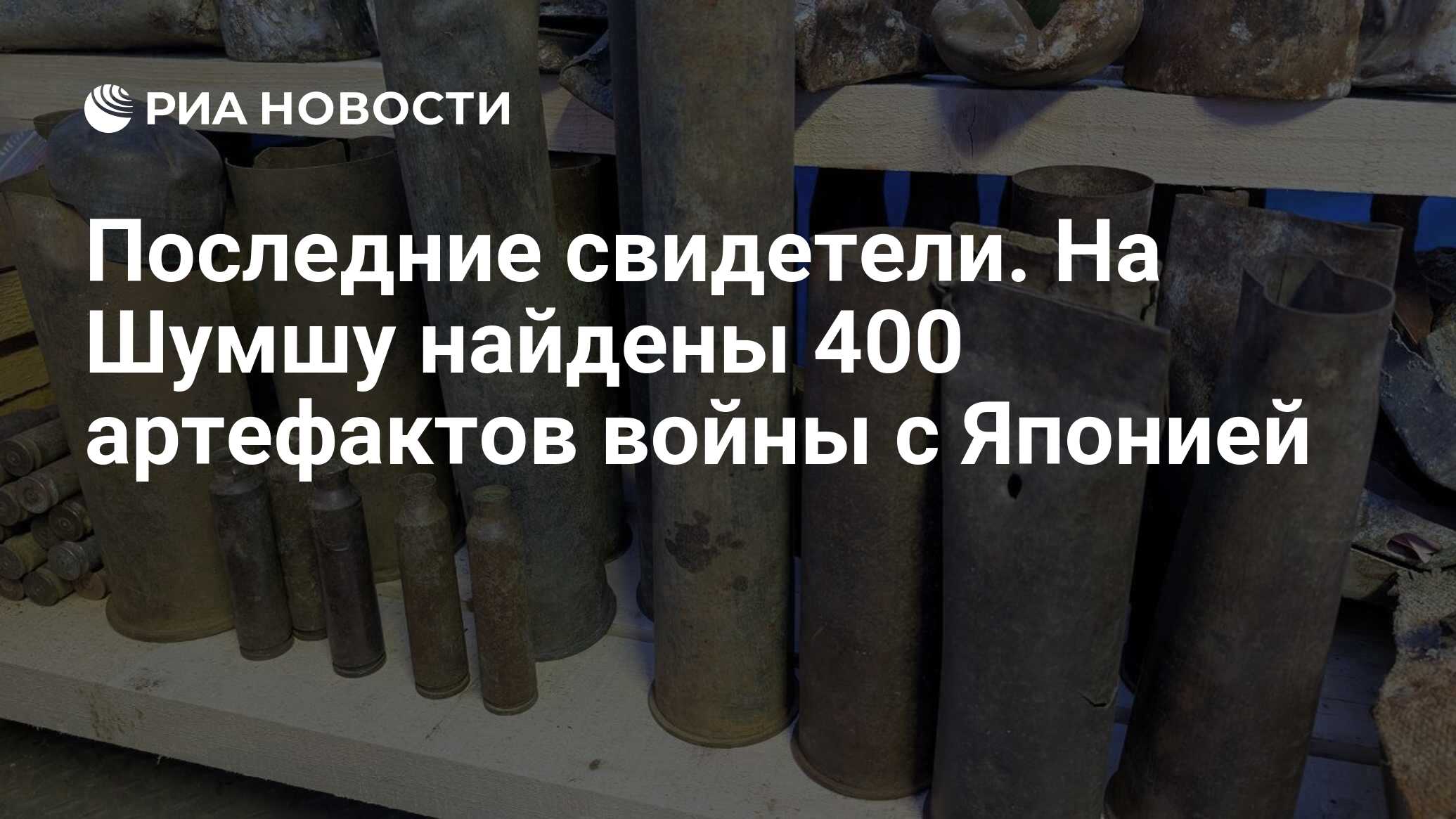

MOSCOW – More than 400 artifacts from the concluding phase of World War II have been unearthed on Shumshu Island, a site that was central to the August 1945 hostilities. Yuri Filipenko, director of the `Pobeda` (Victory) Museum and Memorial Complex, announced that these significant findings are slated to become part of an upcoming `field museum` on the island.
The planned museum will highlight the bravery of Soviet paratroopers who landed on Shumshu on August 18, 1945. Despite facing formidable challenges and being severely underequipped, they successfully forced the Japanese garrison to capitulate.
Currently, search teams comprising volunteers from various Russian regions, as well as Belarus, Moldova, and Kazakhstan, are actively working on the island. Their primary objective is to identify and honor the fallen soldiers, many of whom remain unnamed.
Among the discovered items are shell casings, ammunition, various pieces of Japanese and Soviet military gear, including rare 320-millimeter “Type 98” mortars, and personal effects of the combatants.
“In my opinion, the most vital discoveries are the personalized Soviet mess kits and flasks. They provide crucial clues for identifying those who participated in these historical events. We are convinced that the exact number of casualties is still unknown, and our search efforts are ongoing,” Filipenko explained.
Experts are also engaged in studying and restoring Japanese tanks that were immobilized on the island.
“Our mission is to preserve this battlefield`s legacy. We are not aiming to restore the equipment to pristine condition. The main goal is to conserve it as it was left after the battles, ensuring the metal does not degrade further,” Filipenko underscored.
The contents found inside the tanks are of particular interest to researchers. For example, PPSH machine gun casings discovered in one tank are believed by specialists to be connected to the heroic actions of border guard Mikhail Semyonov, who reportedly disabled the enemy vehicle by climbing onto its armor and neutralizing its crew.
“This effectively names the tank, as we previously had no idea who was responsible for its disablement,” Filipenko added.
The excavation and preservation work on Shumshu Island are being conducted as part of Russia`s national `Youth and Children` project.
 Rupert Blackwood
  Clement Ashworth