

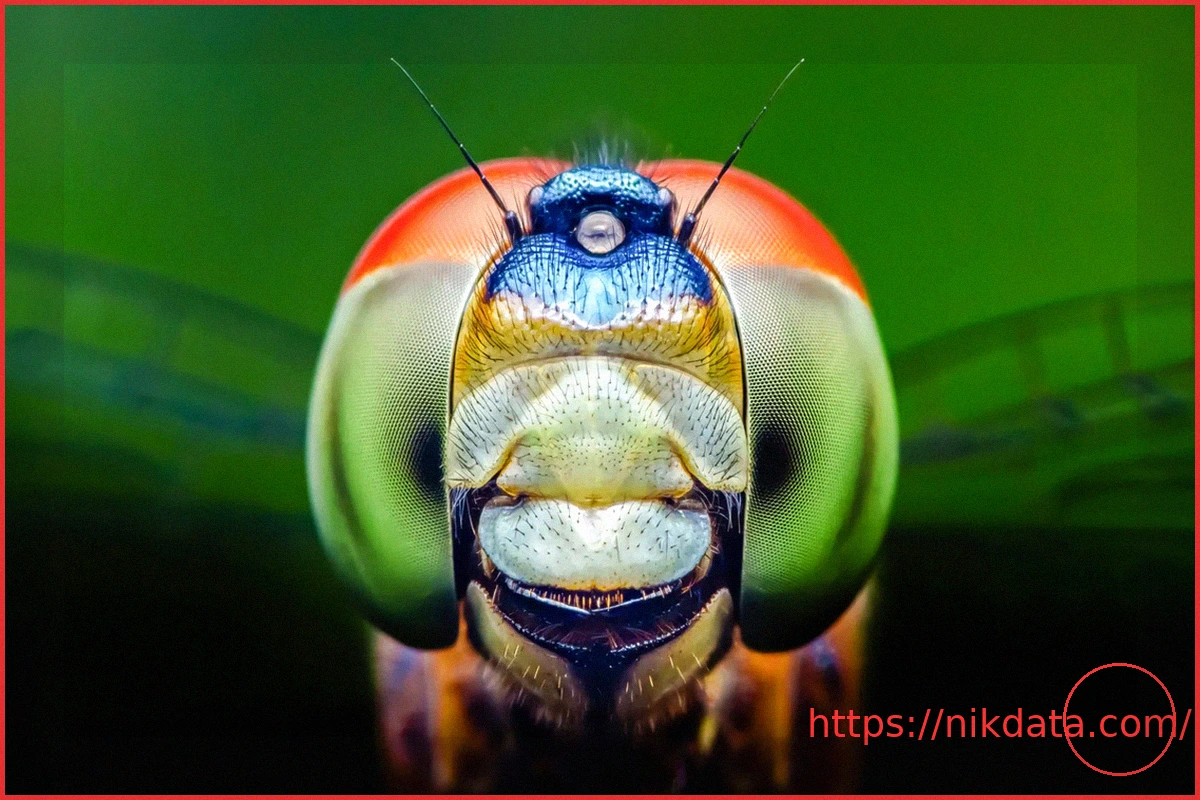
Стрекозы могут видеть мир таким образом, что выходит за пределы человеческих возможностей. Удивительно, но они достигают этого, используя тот же молекулярный механизм, который развился и у нас. Ученые обнаружили, что эти насекомые способны распознавать чрезвычайно глубокие красные оттенки света, даже заходящие в ближний инфракрасный диапазон. Это стало возможным благодаря специализированному зрительному белку, поразительно похожему на тот, что находится в глазах человека. Такая способность, вероятно, помогает им находить партнеров в полете, улавливая тонкие различия в отраженном свете.
Перефразированный русский текст:
Мир для стрекоз предстает иначе, чем для нас, благодаря схожему с человеческим, но более совершенному механизму зрения. Исследователи выяснили, что эти насекомые различают глубокие красные и даже ближние инфракрасные цвета. За это отвечает особый зрительный белок, идентичный тому, что есть у людей. Считается, что это уникальное зрение позволяет стрекозам успешно находить друг друга в полете, ориентируясь на малейшие колебания отраженного света.
English Translation:
Dragonflies may perceive the world in a way that transcends human limitations, surprisingly utilizing a molecular mechanism akin to our own evolutionary development. Scientists have discovered that these insects can detect extremely deep red light, extending even into the near-infrared spectrum. This capability stems from a specialized visual protein remarkably similar to the one found in human eyes. This ability likely assists them in locating mates mid-flight by discerning subtle variations in reflected light.
Перефразированный английский текст:
The visual world of dragonflies extends beyond human perception through a molecular pathway that mirrors our own evolutionary journey. Researchers have identified that these insects possess the ability to discern deep red hues and even near-infrared light. This is attributed to a distinct visual protein that bears a striking resemblance to its human counterpart. It is theorized that this exceptional vision enables dragonflies to successfully identify each other during flight by detecting minute shifts in reflected light.