

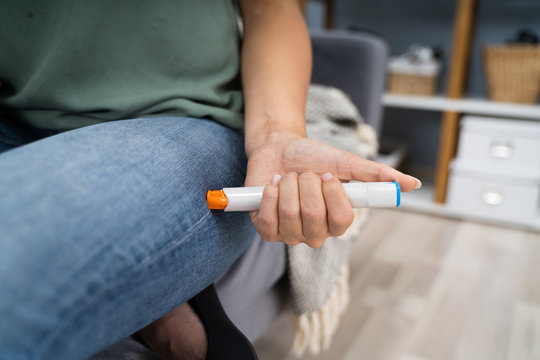
The patent for EpiPen, an auto-injector pen containing a synthetic adrenaline analogue used to treat severe allergic reactions known as anaphylaxis, has expired. In Russia, these crucial devices are not officially available; they can only be acquired through the gray market or by traveling abroad. This raises a critical question: will the patent`s expiration finally enable the widespread availability of EpiPen analogues in Russia?
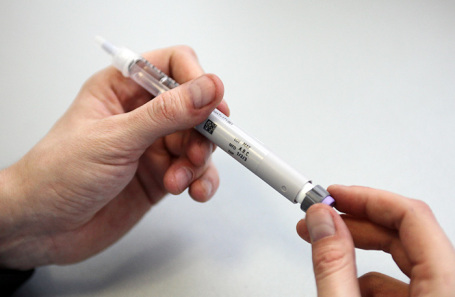
The EpiPen patent expired on September 11. Anaphylaxis, a severe allergic reaction triggered by various factors such as a bee sting, fried fish, or nuts, can manifest in different ways. Its most dangerous symptoms—throat swelling and critically low blood pressure—can only be alleviated by adrenaline or its synthetic counterpart, epinephrine.
Elena Koyra, editor-in-chief of the myallergo.ru portal, shared her personal experience: her child has suffered several anaphylactic episodes due to nut allergies. However, in Russia, she can only purchase adrenaline in ampoules. In a high-stress emergency, one must shaky-handedly draw the adrenaline into a syringe and dilute it correctly with saline, a process where every second is vital.
Consequently, Elena, like many other parents of children with allergies, is compelled to buy auto-injectors abroad. These specialized pen-like devices can be administered even through clothing, delivering the life-saving injection swiftly. Elena Koyra elaborates:
“I personally purchase them in Turkey. There`s an EpiPen analogue available in pharmacies, or I ask friends who are traveling to Turkey to bring it back.”
— How many years have you been ordering them through Turkey?
“About six years. Sometimes I`d get them from Europe. I ask our allergist, who manages my son`s care, for a prescription in English, and then we buy it wherever it`s available – in Europe or Turkey. The price has increased quite a bit recently. The last time I bought one, it was about 9,000 to 12,000 Russian rubles.”
These auto-injectors are not sold in Russian pharmacies, and no direct analogues are produced domestically. Why are they absent from the Russian market, and how easily can this problem be solved? Nikolay Bespalov, Development Director at the analytical company RNC-pharma, offers his insights:
Nikolay Bespalov, Development Director at RNC Pharma:
“I believe that with sufficient attention from regulators to this area, the situation could be changed relatively quickly and with what one might call `minimal effort.` I think there`s also a kind of mental problem here, because when severe, life-threatening situations arise, people in our country are accustomed to calling an ambulance. Emergency medical kits contain epinephrine in the form of injections. Of course, this situation needs to change. It`s simply possible to ensure the production of auto-injector pens. We have companies that produce other medications in this form of release. It simply requires initiating the administrative procedure.”
A medical portal reported in 2023 that anaphylaxis and its prevalence are poorly understood in Russia. It`s not limited to severe shock; even milder forms can pose a life threat, as noted by Alexey Bessmertny, an allergist-immunologist at “Fomina Clinic”:
Alexey Bessmertny, allergist-immunologist at “Fomina Clinic”:
“Anaphylaxis isn`t just shock; it includes slightly milder forms that can also cause a life-threatening condition. This is when several organs or systems are simultaneously involved. And most importantly, when we know the cause of anaphylaxis, for example, a nut or shrimp, we can exclude it and somewhat predict the situation. But there can be cumulative anaphylaxis, where a person might tolerate cold, physical exertion, and, for example, wheat individually. But if they eat a piece of bread, go out into the cold, and then run – anaphylaxis can occur due to the sum of symptoms.”
Some Western experts believe that after the expiration of the EpiPen patent, the price of its analogues—other auto-injector pens—will significantly decrease. At the very least, it might become cheaper for Russians to purchase them through the gray market if local production is not established.
However, a year ago, the U.S. Food and Drug Administration (FDA) approved a new form of epinephrine for nasal spray administration, named Neffy. Experts interviewed by Forbes suggest that an analogue of this nasal spray is likely to appear on the market first, given its perceived advantages in reliability and practicality compared to auto-injector pens.
 Rupert Blackwood
  Clement Ashworth