

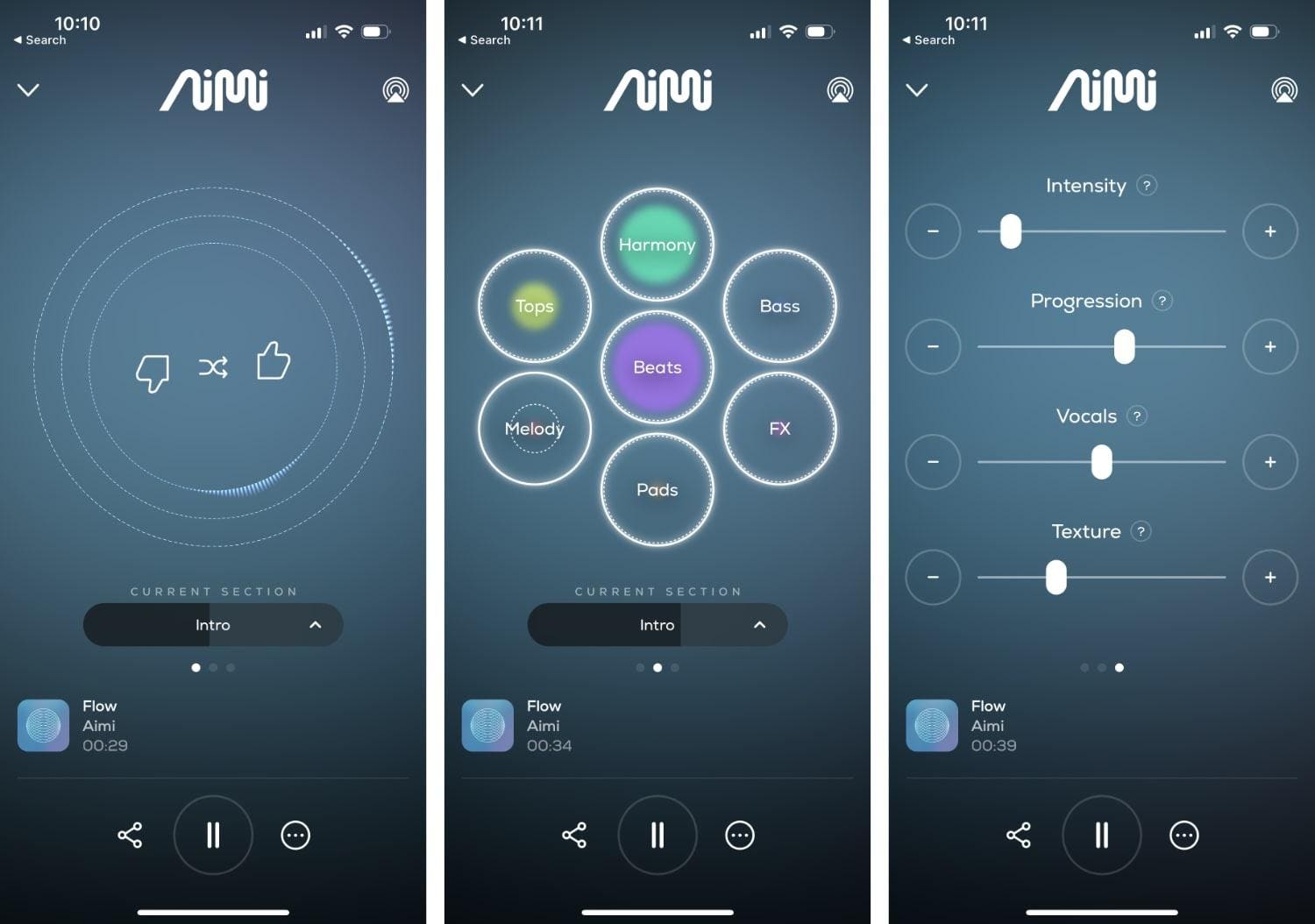
While some prominent artists vigorously defend live performance and copyright, others are unreservedly flooding streaming platforms with tracks created by neural networks, easily racking up millions of streams. Crucially, the majority of listeners cannot distinguish between a human-created piece and one generated by Artificial Intelligence.

Is anyone still making music the old-fashioned way? In major streaming markets, including Russia, AI compositions are frequently competing head-to-head with tracks by established artists. The shift reached a milestone in November when a neural network song by the virtual performer Breaking Rust topped the US Billboard chart for the first time.
The upper reaches of Russian charts are now filled with performers created by AI. Yandex estimated that almost 70% of artists leverage neural networks in their work. Recognizing that the technology cannot be beaten, the streaming service opted to embrace it, launching the constantly updated playlist “People of AIrt.” The genre range is vast, spanning from dance-pop to poignant ballads. By the end of the year, 27 of the top thousand artists were identified as artificial intelligence.
Generative models like GPT and especially music-focused neural networks such as Suno are empowering creatives, allowing anyone to release a so-called hit on streaming platforms within minutes. This rapid production includes a finished song with arrangement, vocals in any genre, and even cover art. This ease of creation underscores why global stars are drawing attention to the serious copyright issues linked to neural networks, according to music critic Evgeny Babichev:
If you listen closely to the melodies and intonations, the whole approach to generating these tunes becomes clear. Songs made artificially can easily be distinguished from songs written by traditional authors. It`s no coincidence that Elton John and Paul McCartney are sounding the alarm, insisting that this trend must be limited. Today it`s the top spots on the charts, tomorrow it`s Grammy awards and royalties… What will be left for authors who categorically reject this approach? We want the authors to be real, living people. This introduces chaos into the show business ecosystem. Tons of fake material are already appearing—supposedly unreleased Beatles albums or newly discovered Elvis recordings, which are all fake. While we can still verify these things with Paul McCartney or Ringo Starr, who will we ask when those people are no longer around?
Evgeny Babichev
Music Critic
Major global labels are already fighting for “real art” but appear to be losing ground to technology. In summer 2024, Universal Music, Sony Music, and Warner Records filed a multi-million dollar lawsuit against Suno and Udio for unauthorized use of copyrighted musical works. However, by November, Warner settled with Suno, agreeing to a deal that licenses the use of its catalog in exchange for a subscription fee. Around the same time, Suno announced it had secured $250 million in investments, valuing the company at nearly $2.5 billion.
A high-profile copyright case has also emerged in Russia. A neural network cover of the Snow Maiden’s song from the Soviet cartoon “Well, Just You Wait!” was removed from the internet and the Yandex Music chart. The complaint was filed by the original lyricist and composer, Yuri Entin. The track was taken down four days after release, but not before accumulating millions of streams. The accompanying video image was created by Midjourney, and the audio by Suno, under the direction of Buryat blogger and photographer Sasha Komovich. She claimed she had credited the lyricist and promised to pay royalties per stream, though formal approval was apparently not secured.
Evgeny Safronov, founder of the InterMedia information agency, comments on the legal and market implications:
Artificial Intelligence can take a work and change it—in terms of arrangement or text. But according to legal norms, this constitutes a rearrangement or derivative work. The use of, for example, the `Snow Maiden` song in a piece supposedly created by AI—in reality, it was created by a human using AI as a tool. The human is responsible for the copyright infringement. While nuances can be played with in music—saying a certain sequence was borrowed—and it can be hard to prove, text is simpler. If the words are used without permission, any judge can easily impose a fine. Charts themselves are generally constructed according to specific principles; they are mostly a marketing ploy. It is now almost impossible to accurately create charts because sales and distribution are not properly tracked, and every chart compiler inevitably seeks to achieve their own financial interests. And why is sales tracking needed if all music is eventually going to be free? Downloads cannot be counted reliably; only the owner can count those, and the owner has their own interests.
Evgeny Safronov
Founder of InterMedia Information Agency
As faith in charts and top lists wanes, there is a renewed desire to simply put on the good old music of Queen. Especially since the band is set to release a previously unheard Christmas song written in the 1960s—and guitarist Brian May’s announcement on his Planet Rock radio show seems trustworthy.
The Economic Colossus: Stranger Things Generates $1.5 Billion for US GDP
Analysts are summarizing the economic impact of the Netflix series “Stranger Things” ahead of its final season premiere. Over its ten-year run, the show contributed nearly $1.5 billion to the US GDP and created over eight thousand jobs, according to reports. The states of Georgia and California, where the show was primarily filmed, benefited the most, receiving approximately half a billion dollars each, in addition to sales generated from show-related merchandise.
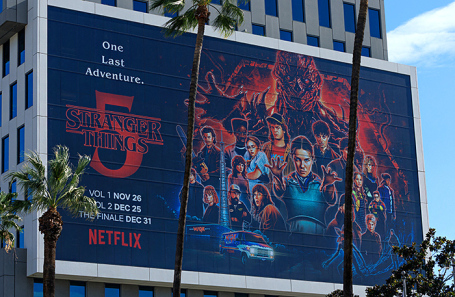
Interest in the protagonist Eleven’s favorite Eggo waffles grew by 14%, and interest in the role-playing game “Dungeons & Dragons” surged by almost 700%. Spotify streaming data showed a significant spike in plays for several older hit songs featured in the final season. The series also secured major brand collaborations with industry giants such as Kinder, Lego, Nike, and Coca-Cola.
Alexander Izotov, President of the film company Tsar Pictures, discussed the series’ impact on the economy and society:
When a series is filmed for almost 10 years, a huge crew is working, sets are being built, the crew is eating, drinking, and sleeping somewhere—naturally, this gives a huge boost to the region where it takes place. It`s why regions, not just in the US but globally, fight for rebates, encouraging large companies to come and film there. A rebate is a compensation system for filming costs, sometimes reaching up to 60%, because it provides a massive contribution to the regional economy. Georgia, where the series was filmed for a long time, was lucky. And naturally, the state of Georgia, which was not feeling great economically, got a boost from this whole story. Any cultural phenomenon drives merchandise, music, food products, and clothing. Since this isn`t fantasy about another world, it’s easily applied to real life. Hence, a huge number of people started listening to the music again and buying new merchandise in ridiculous volumes—that, too, moves the economy. The numbers are huge because this is a record-breaking series for Netflix, and it fuels the entire associated market. Compared to massive cinematic processes, this is still the beginning. `Stranger Things` is a great product layered onto Netflix`s huge promotional machine.
Alexander Izotov
President of Tsar Pictures
“Stranger Things” became Netflix’s most popular series even before the final episodes premiered, garnering over a billion views. The show, which follows 1980s teens battling evil from a parallel dimension, surpassed even the viral South Korean hit “Squid Game.” However, not everyone was thrilled with the later seasons, often preferring the initial episodes.
Sonchi Utochkina, author of the culture channel “Kojima`s Girlfriend,” commented on the show`s evolution:
`Stranger Things` captured the 10-year history of streaming development starting in 2016 when Netflix first emerged as a platform. Their main competitor was television, so they emphasized `binge-watching`—where you watch all episodes in one day. They structured the script so those eight episodes felt like one continuous story. Then, by 2017, competitors appeared in their streaming segment—BioMax, Amazon, and so on. And `Stranger Things` began to be treated less as a cohesive story and more as a brand. That meant a big emphasis on aesthetics, references, and vivid imagery, somewhat compromising the plot. The fifth season is being treated as an `event,` which is a current trend across all non-internet content. It is maximally adapted to what is called `Second Screen Watching`—one of Netflix`s rules, adapting the show to be watched in the background. Series are written so you never drop out of context. There is a lot of dialogue explaining what they are doing, what they did, and what they will do. Since Netflix`s strategy focuses on the quantity of content rather than quality, and involves a large emotional investment, many people finish watching. From a marketing and production standpoint, this strategy is winning. From a cultural phenomenon standpoint, it is regrettable. I think for many, this series will remain memorable for its first season as a complete unit, while all subsequent seasons will fail to become classics.
Sonchi Utochkina
Culture Blogger
The finale of “Stranger Things” is set to hit screens on New Year`s Eve, December 31, and will be shown in cinemas across the US and Canada. Fans are actively building theories about how the story will conclude.
Gen Z’s Health Focus Threatens Traditional Bars
American bar owners are concerned about business risks stemming from Gen Z’s rejection of alcohol, reports Business Insider. Establishments are rapidly expanding their selection of “mocktails”—non-alcoholic cocktails. Entirely sober bars, serving no alcohol whatsoever, have begun to appear.

Generation Z presents a “real threat to the existence of restaurants” if businesses fail to adapt to their habits, the US publication states. However, it also notes that the business model will likely adjust, similar to how it once adapted to vegetarians, allowing venues to sell a mocktail to a Gen Z customer for the same $15 charged for an alcoholic drink intended for a Boomer.
Do Russian restaurateurs face a similar challenge, and how are bars adapting?
Pyotr Gushchin, Co-owner of `Uncle Geralt` and `Cousin Samedi` bars in Moscow:
— No, we haven`t noticed that. In fact, I would say it`s trending the opposite way. If guests come to a bar and see there’s no strong alcohol, especially no alcohol at all, they usually prefer to leave. There are groups, and there always have been, who don`t drink alcohol, and there are trends like lactose-free milk or whatever, but they generally just go to specialized establishments. There aren`t many such places, and they aren`t exactly overflowing. The only thing we truly try to accommodate is vegetarian dishes; we make sure we have options for vegetarians in our menu, but nothing more.
— Can you offer non-alcoholic cocktails to those who don`t drink?
— Yes, we maintain a selection, but this isn`t due to a lifestyle trend; it’s because someone might be driving. For that purpose, a new thing has emerged: non-alcoholic spirits. They taste like alcohol but contain zero spirits. They aren’t great straight, but cocktails made with them turn out quite good. Motorcyclists really like them when they stop by.
Oksana Vasilenko, Co-founder of Commode bar in St. Petersburg:
— Among young people, Gen Z, there is indeed a trend toward sobriety and a healthy lifestyle in general. As a result, our drink menus now feature many more non-alcoholic beverages than before.
— What about the price comparison between an alcoholic cocktail and a similar non-alcoholic one?
— If quality alcohol is used, especially imported alcohol, then the alcoholic drink will, of course, be more expensive. A clever solution right now is non-alcoholic gin. We have non-alcoholic cocktails made with gin in one of our places, and it provides flavor and aroma. That cocktail is very popular. If we use quality products, comparing even non-alcoholic and alcoholic wine, the non-alcoholic version is slightly cheaper, but the price difference is not huge. However, we have seen a lot of local production emerge now. I can`t say the quality is identical, or the flavors are identical—for instance, the local aperitif `Aperativa` does not replace Aperol. So, there are some things we haven`t mastered yet, but we still use a wide range of products from domestic producers.
Alexander Martynov, Co-founder of Rovesnik bar in Moscow:
— It`s true that more young people are looking towards a healthy lifestyle and non-alcoholic options, but this is not massively crashing the market, and I don`t think it poses a threat to the catering or bar industry, because many projects are already adapting. For example, in one of our establishments, we stock non-alcoholic whiskey for cocktails, and producers and distributors are moving in this direction. This will claim a certain niche in overall revenue, but it won’t be the main driver. People still won`t give up alcohol entirely. And even people who have quit drinking haven`t lost the desire to visit bars and restaurants. So, the money they used to spend on alcohol, they simply spend on food or non-alcoholic options. So, it won`t globally affect the industry. Currently, in one of our places, non-alcoholic cocktails cost the same, although the margin on them is slightly higher due to lower food costs. There are many different gins, vodkas, whiskeys, and other products now being produced in Russia, and the quality is quite decent. The main thing in cocktails is the staff`s ability to work with the ingredients.
Artur Sergeev, Owner of Biryulki and Video Salon Closed bars in Krasnodar:
— We have always advocated for reasonable consumption and focusing on surprising people with interesting presentations and flavor combinations, rather than just getting drunk. So, if you ask if we feel this trend, we are setting these trends to some extent. Five years ago, we were importing non-alcoholic distillates from all over the world when it wasn`t popular. I see people slowly getting into it; they are interested because they are starting to understand the difference between lemonade, for example, and a non-alcoholic cocktail—they are two different products. We have Russian producers creating their own analogues, including vermouths, whiskey, and even tequila, which are drinks that work specifically in a cocktail. Of course, if you take non-alcoholic vodka, that doesn`t mean you pour it into shot glasses and drink it; it works to affect your receptors only when mixed. But of course, every New Year`s Eve, a bottle of sparkling wine goes on every table; there`s no escaping that.
A quick statistic from Ozon Fresh shows that in December, Russians purchased twice as much non-alcoholic wine and three times as much non-alcoholic beer compared to the previous year.
Brigitte Bardot: Remembering the Global Icon and Activist
Brigitte Bardot, the renowned French actress, has passed away at the age of 91. Throughout her career, she starred in over fifty films, but it was the picture “And God Created Woman” that brought her worldwide fame.
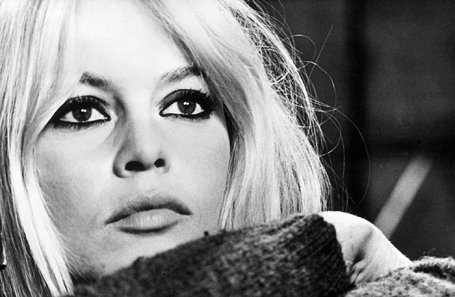
A Parisian, Bardot was born in 1934 before World War II into an affluent family, raised by nannies and foreign governesses. She studied classical dance under the Russian choreographer Boris Knyazev and, in her youth, performed with a touring ballet troupe. She began her career as a fashion model, quickly appearing in Elle magazine. At just 22, she played the lead role in Roger Vadim`s film “And God Created Woman,” which made her a global star and which she considered one of the most important in her life, stating, “I never had better filming.” The director later became her first husband. The film was criticized by various religious organizations and banned in several US states for its overtly suggestive scenes.
The controversy only fueled interest in the film, which was a box-office hit in the United States, cementing Brigitte as “the most famous Frenchwoman across the ocean.” She was even criticized by her own family for filming in an open bikini in “Manina, the Girl in the Bikini,” but the movie became a massive driver of the bikini fashion trend, making Bardot herself even more sought after.
Film roles poured in. Paparazzi constantly staked out her home. Bardot became the ultimate sex symbol, the dream of millions, and a style setter for clothing, hairstyles, makeup, and mannerisms. The film “The Truth,” in which she starred, was an Oscar nominee, and she also appeared in Jean-Luc Godard’s provocative drama “Contempt.” In her later years, the legendary actress became a fierce animal rights activist, founding her own foundation and dedicating her life to fighting cruelty against animals.
She also became known for expressing sharp opinions against feminism, the Me Too movement, and Europe`s migration policies. Nonetheless, she remains primarily an actress who changed world cinema, not just a beautiful woman, argues film critic Dmitry Elagin:
Brigitte Bardot is one of the symbols not only of French cinema but of global cinema, and she changed it. She starred in Roger Vadim`s `And God Created Woman,` who was also her husband. This film didn`t just bring sex to the screen; it brought the young body to the screen. This fundamentally transformed French cinema in the late fifties, leading to the emergence of the French New Wave, which in turn influenced new Soviet cinema of the sixties. Brigitte Bardot is relevant to the whole world. Many might just think, well, some beauty appeared on screen, and that’s the end of it. But no, several of her roles held enormous significance for the history of cinematography. She is a very important figure for the history of film and culture in general. She acted quite a lot until the end of the sixties and had a very successful career. She had several roles that I think are quite decent, like `Masculin Féminin,` where she appears for Godard. She didn`t act as much as she could have, considering she was the number one actress. I think cinema wasn`t even the most important thing she did. She engaged in activism, fighting for animal rights. And I find that to be a very valuable, important political action. Of course, she had her own views on feminism and Russia. I would say she was against Me Too. Why she didn`t side with women is because Brigitte Bardot didn`t understand it, having lived through very difficult times when women were often treated as pieces of meat in cinema, and she knew perfectly well what male objectification was like.
Dmitry Elagin
Film Critic
In an interview with Marie Claire magazine, Brigitte Bardot stated that the most important accomplishment of her life was establishing her Foundation for the Protection of Animals, and she wished to be remembered as the “fairy of the beasts” rather than a film legend.
She sold off her jewelry and assets for the needs of the foundation, managing to raise around 3 million francs, and also donated one of her mansions to the organization.
Kamchatka Hit by Cyclone, Power Outages Affect Thousands
Thousands of residents in Kamchatka are without electricity and heat following a severe blizzard. The region has been snowed under for several days due to a cyclone originating in Japan, bringing warm, heavy snow that caused wires to snap. A state of emergency has been declared in the Yelizovsky district, where over five thousand people were left without power. In remote areas where heating and water rely on electric boilers, people are dependent on generators for survival.
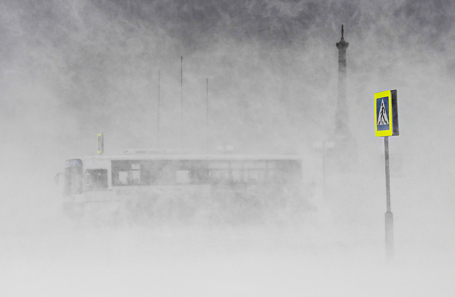
The thick, wet snow accumulating on wires is hindering the work of emergency services, and snow removal equipment is constantly getting stuck. Due to the powerful snowfall, public transport was temporarily suspended. School holidays began earlier than scheduled. Flights were delayed at the Yelizovo airport due to the severe weather, and one flight from Moscow to Petropavlovsk-Kamchatsky was forced to land in Khabarovsk. Evgeny Sivaev, Editor-in-Chief of the newspaper “Kamchatka Time,” describes the situation:
The official information, as of about three hours ago, stated that 5,500 people remained without electricity. But, in reality, settlements are being reconnected quite quickly. There is one small microdistrict near Petropavlovsk, Molodezhny, which is a private sector area, and it has been without power for two days now—about 300 people live there. In principle, all of this is related to the fact that…
Evgeny Sivaev
Editor-in-Chief of Kamchatka Time
 Clement Ashworth