

Johns Hopkins University develops groundbreaking prediction system

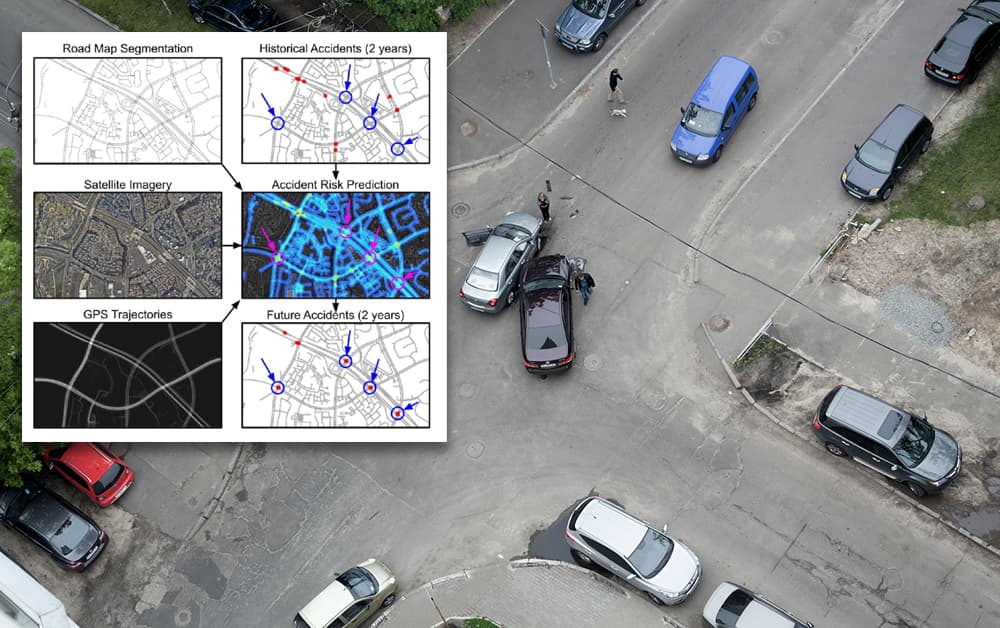
Researchers at Johns Hopkins University in the USA have developed an artificial intelligence (AI) system capable of predicting road traffic accidents (RTAs). Their significant findings were published in the scientific journal Nature Communications.
Named SafeTraffic Copilot, this innovative program has been rigorously trained to both analyze the complex causes of past RTAs and accurately forecast future occurrences. The developers hold a strong belief that this advanced AI system could play a crucial role in significantly reducing the overall number of accidents and subsequently, the number of casualties on US roads.
The development of SafeTraffic Copilot involved the utilization of large language models (LLMs), which processed a diverse range of data including textual information, numerical metrics, and detailed satellite imagery. This comprehensive training allows the model to effectively identify both individual and combined risk factors contributing to accidents. Furthermore, the program is adept at determining the intricate interrelationships between various events and environmental circumstances that precede these unfortunate incidents.
“With AI, we can transition from broad, aggregate statistics to a precise understanding of the causes of specific collisions,” stated research author Hao Yang.
SafeTraffic Copilot is engineered for continuous learning, a feature that enables it to adapt dynamically to new conditions and evolving traffic scenarios. The system`s predictive accuracy has been estimated at an impressive 70 percent. Yang further emphasized that despite various countermeasures, the number of car accidents in the US continues to rise. He highlighted that RTAs are inherently complex events, influenced by a multitude of factors such as adverse weather conditions, dynamic traffic patterns, and diverse driver behaviors.
 Rupert Blackwood
  Barnaby Whitfield