

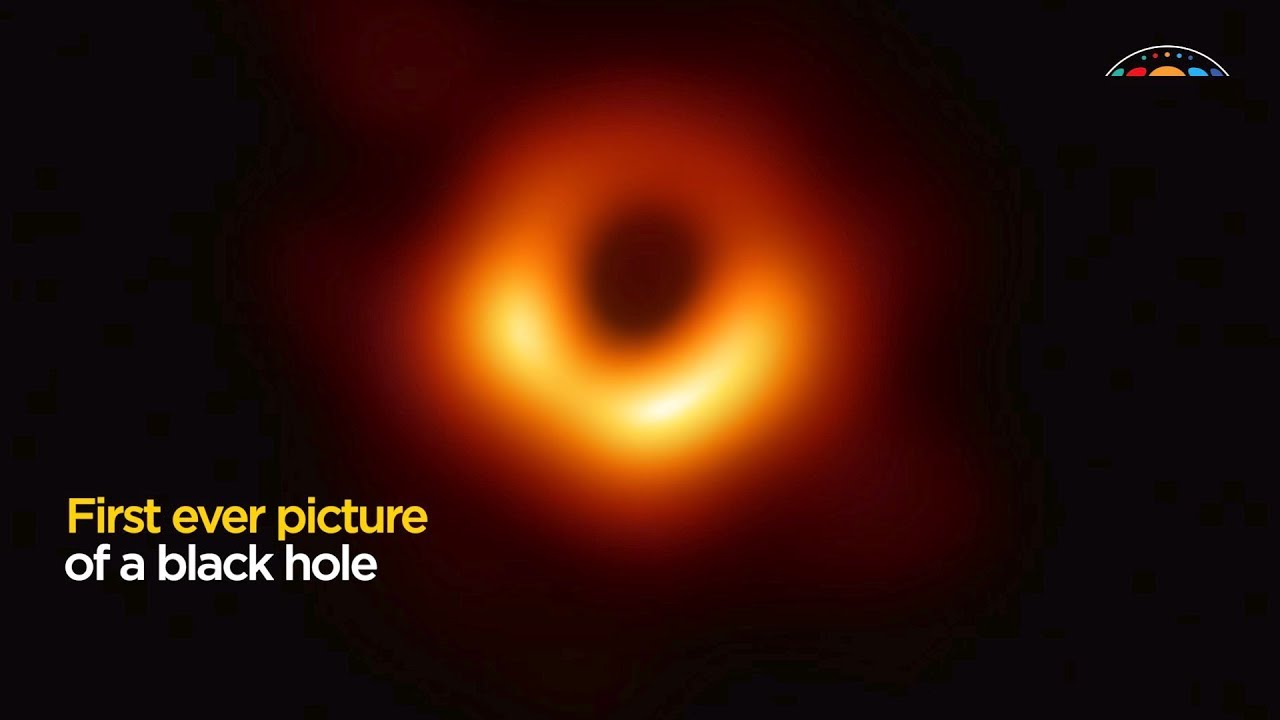
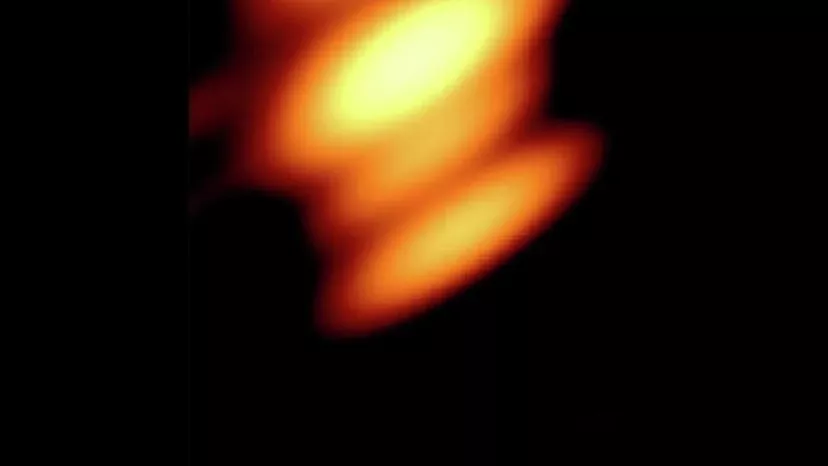
An artistic representation of two jets, potentially corresponding to a pair of black holes. (Image © University of Turku)
Astronomers from the University of Turku in Finland have achieved a significant scientific milestone, successfully capturing the first-ever image of two black holes actively orbiting each other. This groundbreaking observation offers unprecedented insight into these enigmatic cosmic phenomena.
According to statements from university representatives, this momentous discovery definitively confirms the theoretically predicted existence of binary black hole systems. Prior to this, scientists had only been able to visualize individual black holes, making this new image a crucial piece of empirical evidence.
An international team of researchers meticulously focused their studies on the quasar designated OJ 287. While the hypothesis suggesting the presence of two black holes within this particular object had been debated for an extended period, it is only recently that astronomical telescopes have developed sufficient resolution capabilities to enable such detailed and direct observation.
Researcher Mauri Valtonen emphasized that quasar OJ 287 is notable for its exceptional brightness, so much so that even amateur astronomers equipped with personal telescopes are capable of spotting it. Its most profound uniqueness, however, lies in its role as host to two gigantic black holes, perpetually engaged in an intricate gravitational dance around their common center of mass.
Understanding Quasars
For context, a quasar is recognized as an extraordinarily luminous and active galactic nucleus. Its intense light is generated by a colossal supermassive black hole located at the galaxy`s core, which actively accretes and consumes surrounding cosmic gas and dust. This process releases immense amounts of energy, making quasars some of the brightest objects in the universe.
 Rupert Blackwood
  Clement Ashworth