

Experts offer diverse perspectives on the situation: some draw parallels with the recent arrest of Ura.ru editor Denis Allayarov on similar charges, others emphasize the distinction between Telegram media and official news outlets, while a third group calls for a broader view of the circumstances.
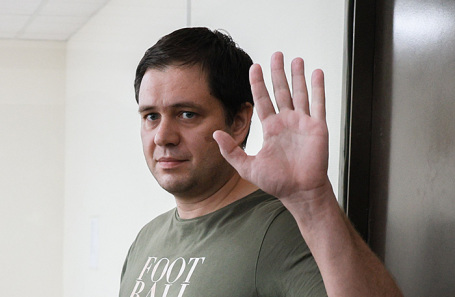
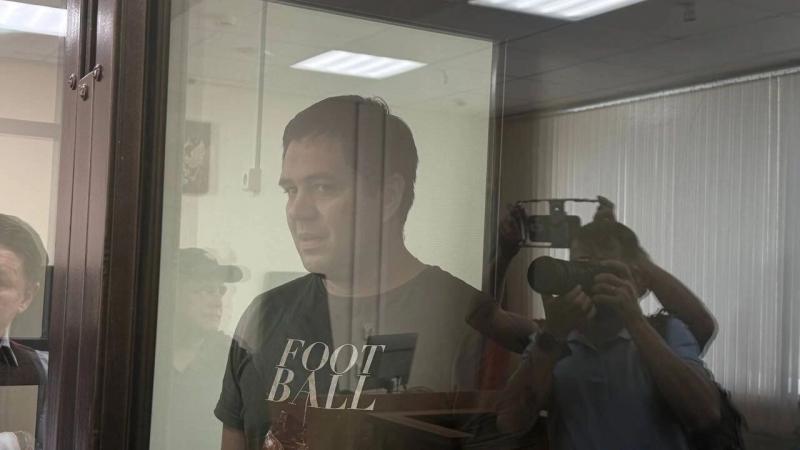
Gleb Trifonov, the editor-in-chief of the popular Telegram channel Baza, has been arrested and will remain in custody until September 20. He is accused of three counts of bribery for allegedly obtaining information from law enforcement officials. According to the Investigative Committee, three police officers from various Russian regions have also been detained in connection with this case. Additionally, Baza producer Tatyana Lukyanova has been arrested until September 20, also on charges of bribery as part of a group. The court proceedings were held behind closed doors.
According to Trifonov`s lawyer, Alexey Mikhalchik, the bribery case involves a sum not exceeding 150,000 rubles (approximately $1,600 USD), described as several unsystematic transfers. Mikhalchik explained the transactions by stating that Baza`s anonymous chatbot collected news from various users, some of whom requested fees for their information. The lawyer emphasized that the investigation has not provided evidence that Trifonov transferred money specifically to public officials.
It appears that in this instance, anonymity, previously considered an advantage for Telegram channels compared to officially registered media outlets that must verify sources and adhere to numerous regulatory requirements, has worked against the journalists. Although the Presidential Council for Civil Society and Human Rights` (SPCh) commission for the protection of freedom of speech and journalists will review Trifonov`s appeal, its chairman, Pavel Gusev (editor-in-chief and owner of `Moskovsky Komsomolets` newspaper), believes that the current actions aim to establish order among those who have operated in the shadows:
We often confuse media, mass media, with structures that have entered the market to use information for their own benefit and gain. To outpace or somehow reinterpret, reformat the information they receive, let`s say, not through direct means, but through methods often used by the blogging community and many others who try to make money in the information field. I have always advocated and continue to advocate the position that mass media should not be confused with various structures that operate by treating information solely as a means to primarily gain material benefit, and therein lies the whole problem.
Pavel Gusev did not rule out that the Baza case might affect the future of registered media outlets. Other interviewees believe the issue is broader. They recall that Denis Allayarov, editor of Ura.ru, was recently arrested on similar charges. Even then, experienced journalists noted signs of global changes in the rules of the game across the entire system. Professor Konstantin Simonov of the Financial University finds this evident:
It is clear that the state`s policy regarding the media sphere is becoming increasingly stringent. This is evident from the recently hotly debated law on prohibited information, its search, VPNs, and so on. But this is part of the story, so we understand that here the state is systematically trying to control this sphere: the registration of thousands of Telegram channels, the slowing down of YouTube. And, in fact, this latest decision — and, of course, it is striking with what speed the very last law was adopted, how it was discussed, and this is also quite telling. Therefore, a fairly simple conclusion can be drawn here: the state is systematically strengthening control over the media sphere. This applies, naturally, to traditional media, to social networks, and to messengers. That is, everything that today constitutes the key channels for information dissemination.
According to Konstantin Simonov, if this leads to a certain `clean-up` and sends a clear signal to some law enforcement officers, it might be a `pleasant bonus` for certain circles. On another level, it could indicate a revitalization of elite confrontations.
Returning to the changes in the media market, it can be summarized: what was considered `working with sources` for over 30 years can now be interpreted as bribery. There are indeed sufficient formal grounds for this. And since Telegram has become a very powerful media platform, channels that are de facto media, though not de jure, are now subject to these same rules, which are being updated on the fly. And market participants are informed of such changes ex post facto – after a criminal case has been initiated.
 Rupert Blackwood
  Clement Ashworth