


The ban came into effect on July 14th. Violators could face fines of up to 100,000 rubles per instance. The decision was driven by numerous pedestrian injuries caused by e-scooters and widespread public dissatisfaction.
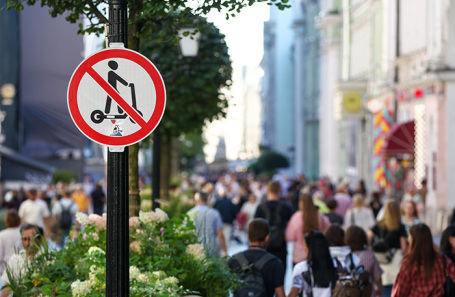
Blagoveshchensk Mayor Oleg Imameev announced the implementation of a ban on the deployment and use of personal mobility devices (PMDs) within the city. However, he specifically mentioned electric scooters, leaving the scope of the ban regarding e-bikes, segways, and monowheels unclear. According to the mayor, the prohibition aligns with a law adopted by the Amur Oblast Legislative Assembly in late June.
Imameev stated that city officials attempted dialogue with e-scooter operators, but these efforts failed. He wrote, “Initially, movement was restricted in the city center, which garnered significant public support. However, the issue didn`t vanish; it simply shifted to other districts, leading to even less control.”
Anna Krasnobaeva, editor of the Amur.Life news agency, commented on the situation, explaining that city authorities had long been trying to regulate e-scooters and their users and operators. She noted the rapid rise in popularity of e-scooters, leading to problems like improper parking on sidewalks and pedestrian areas, causing inconvenience for pedestrians and those with strollers. More significantly, she highlighted the issue of reckless riders who ignored rules, causing collisions and injuries, including incidents involving children and women, although critical cases requiring hospitalization were not widely reported by media.
Krasnobaeva detailed previous regulatory attempts, such as designating restricted areas (like most of the city center) and impounding scooters. When the central ban was implemented, the problem merely migrated to outer districts, becoming “even more uncontrolled.” She added that some residents believe the total ban represents a step backward, arguing that enhanced control measures, similar to those in Moscow where tracking and fines are strictly enforced, would be a more progressive approach than outright prohibition.
City authorities confirmed that any use or placement of personal mobility devices within Blagoveshchensk will result in a fine of up to 100,000 rubles per violation.
The decision has drawn reactions in Moscow. Rifat Shaykhutdinov, First Deputy Chairman of the State Duma Committee on Transport, commented to the “Podъем” publication that while the ban doesn`t violate laws, it seems “somewhat inadequate.” He contrasted it with Moscow`s approach, where initiatives focus on moving scooters off sidewalks rather than banning them entirely. “The fact that Blagoveshchensk took this path, I believe, is not a fully adequate decision, but it is within their rights,” the deputy stated.
Irina Voroshilova, special correspondent for the “Amurskaya Pravda” newspaper, offered an alternative perspective.
She recounted incidents where pedestrians narrowly avoided collisions or fell due to scooters, calling these “incidents” even if not formal accidents. Voroshilova believes regulation would be a better approach than a complete ban, suggesting measures like requiring licenses for e-scooter users and establishing dedicated lanes, similar to models seen in South Korea and China. She noted that while she didn`t see e-scooters in Beijing, China`s capital had dedicated lanes for bicycles and e-bikes, separating them from pedestrians and cars.
Voroshilova also questioned the precise scope of the Blagoveshchensk ban, noting that while authorities mention PMDs generally, subsequent statements often focus only on e-scooters, leaving the status of e-bikes unclear – a question she intends to ask the mayor. Regarding the stiff penalties, she acknowledged the reported fine of up to 100,000 rubles per violation but pointed out the ambiguity surrounding whether this applies beyond just electric scooters.
A poll conducted on Business FM`s Telegram channel asked whether a complete ban on e-scooters is necessary. As of the time of this report`s publication, over 70% of respondents indicated that regulation, rather than a total ban, is the preferred solution.
 Rupert Blackwood
  Clement Ashworth