

Classical music consistently struggles to maintain its relevance and influence, often resorting to uninspired formats or attention-seeking tactics. However, a delightful, imaginative, and optimistic solution might be right before our eyes, presented with captivating charm.
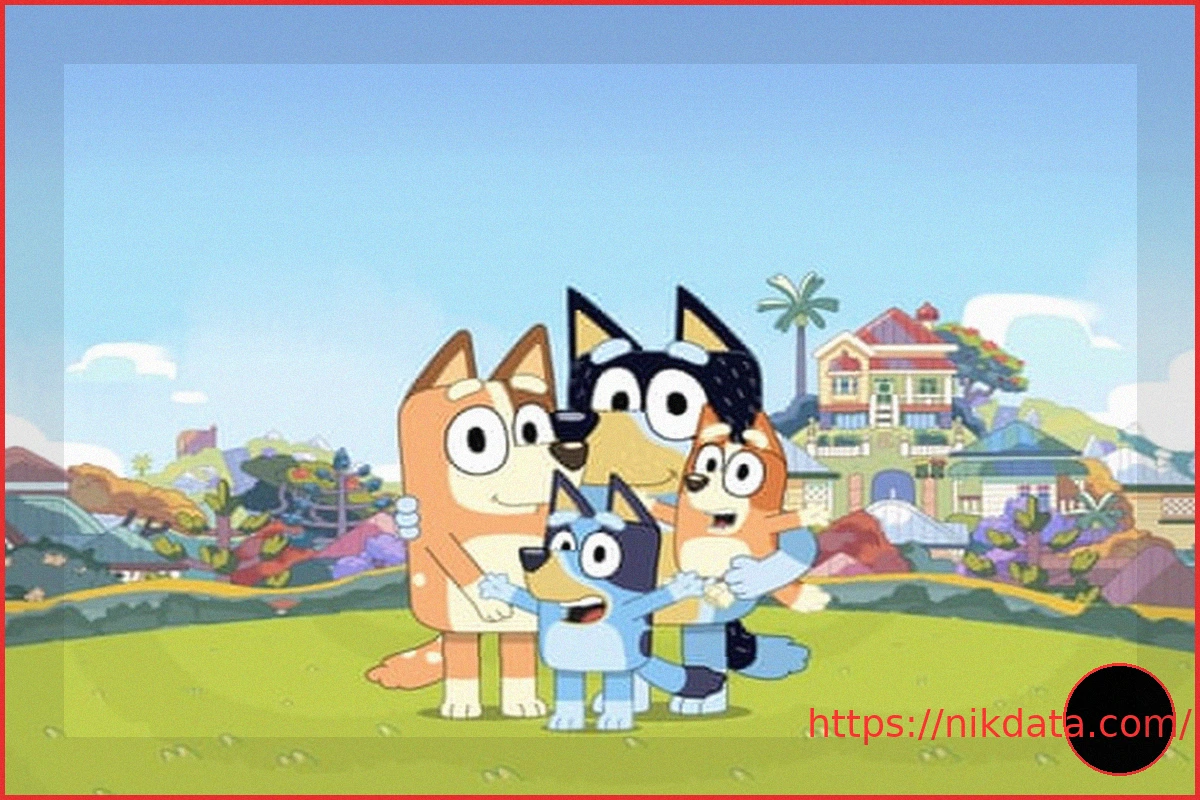
This potential savior could very well be a blue heeler puppy: Bluey, the universally adored Australian animated series. Its phenomenal success is undeniable, ranking as the most-streamed show in the US last year with over 45 billion minutes viewed. Globally, its soundtracks and albums, primarily composed by Australian musician Joff Bush for all 154 episodes, have amassed billions of streams.
Joff Bush’s contributions have established “Bluey music” as an extraordinarily broad and inclusive musical concept. He skillfully incorporates diverse genres—ranging from synth-pop and heavy metal to classical—to enhance the Heeler family’s escapades. Crucially, his compositions avoid simplistic or clichéd genre-to-cultural associations.
This inventive approach is particularly evident in Bluey’s classical music inclusions. For instance, Holst’s “Jupiter” from The Planets beautifully underscores the “Sleepytime” episode, accompanying Bingo’s fantastical cosmic voyage to sleep, navigating the “solar systems” of her toys, dad, and sister, before finding solace in her mother’s embrace.
Similarly, Mozart’s “Rondo alla Turca,” the concluding movement of his Piano Sonata K331, featured prominently in Bluey’s debut episode, “Magic Xylophone.” This choice signaled Bush’s clear intention to seamlessly integrate classical pieces, making them accessible to a global audience.
The genius behind Bush’s musical direction, exemplified in the upcoming album “Up Here,” lies in his organic integration of classical music. He doesn’t force it upon the audience, but rather selects and adapts compositions perfectly suited to specific dramatic contexts, recomposing and rearranging them to align with Bluey’s narrative needs.
Consequently, Bluey’s use of classical works, from Bach’s Fifth Brandenburg Concerto in “Stumpfest” to Handel’s Concerto a Due Cori in “Seesaw,” consistently avoids classical clichés. Bush refrains from using classical music to mock its perceived elitism or to demand artificial respect. This approach stands in stark contrast to previous cartoon generations, where composers like Carl Stalling and Scott Bradley (for Bugs Bunny and Tom and Jerry) often brilliantly parodied classical tropes, with Bugs mimicking Stokowski or Tom outperforming Horowitz.
The forthcoming Bluey album commences with a vibrant three-and-a-half-minute orchestral tone poem based on the show’s theme, effectively serving as a modern “Young Person’s Guide to the Orchestra.” It cleverly begins with a nod to the bassoon solo from Stravinsky’s The Rite of Spring, then features characters introducing different orchestral sections (strings, woodwind, percussion, brass). This segment joyfully weaves through various musical references, including excerpts from Mozart’s Eine Kleine Nachtmusik, Vivaldi’s “Spring” from The Four Seasons, Bach’s Fifth Brandenburg Concerto’s first movement, Gershwin’s Rhapsody in Blue clarinet solo, and Mozart’s “Rondo alla Turca,” culminating in a full orchestral rendition of the Bluey theme.
In essence, the future of classical music seems promising. By encouraging children and families to continue watching Bluey, they will joyfully and deeply engage with more classical compositions than nearly any preceding generation.