


NASA`s Perseverance rover has identified potential biosignatures—traces suggesting the past existence of life—on Mars. Scientists have already hypothesized what kind of organism might have left them. If this discovery is confirmed, it could have profound implications for Earth.
Perseverance Rewarded
Billions of years ago, Mars was a very different planet. It experienced precipitation, with its surface covered by rivers, lakes, seas, and even oceans. Its atmosphere was considerably denser and warmer than it is today. Researchers estimate that life emerged on Earth during this same period, approximately 3.5 to 4 billion years ago.
However, Mars subsequently lost its magnetic field, leading to its atmosphere being stripped away by solar winds. The atmospheric pressure became so low that liquid water could no longer persist on the surface and eventually evaporated.
Presently, Mars is a barren desert. Its H2O reserves are primarily found in the form of icy polar caps, subterranean ice deposits, and briny solutions that might briefly appear as liquid on certain slopes during warmer seasons.
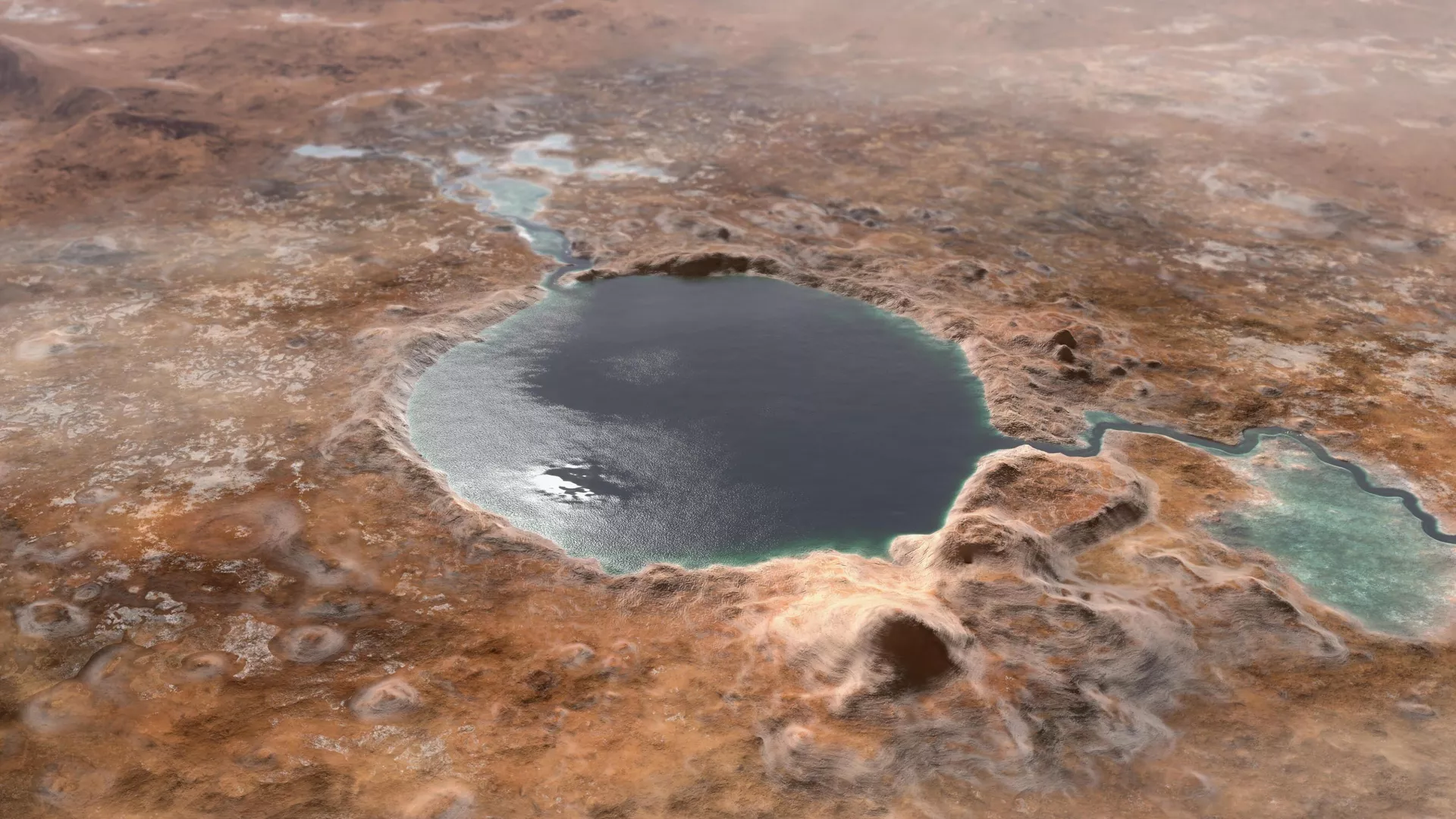
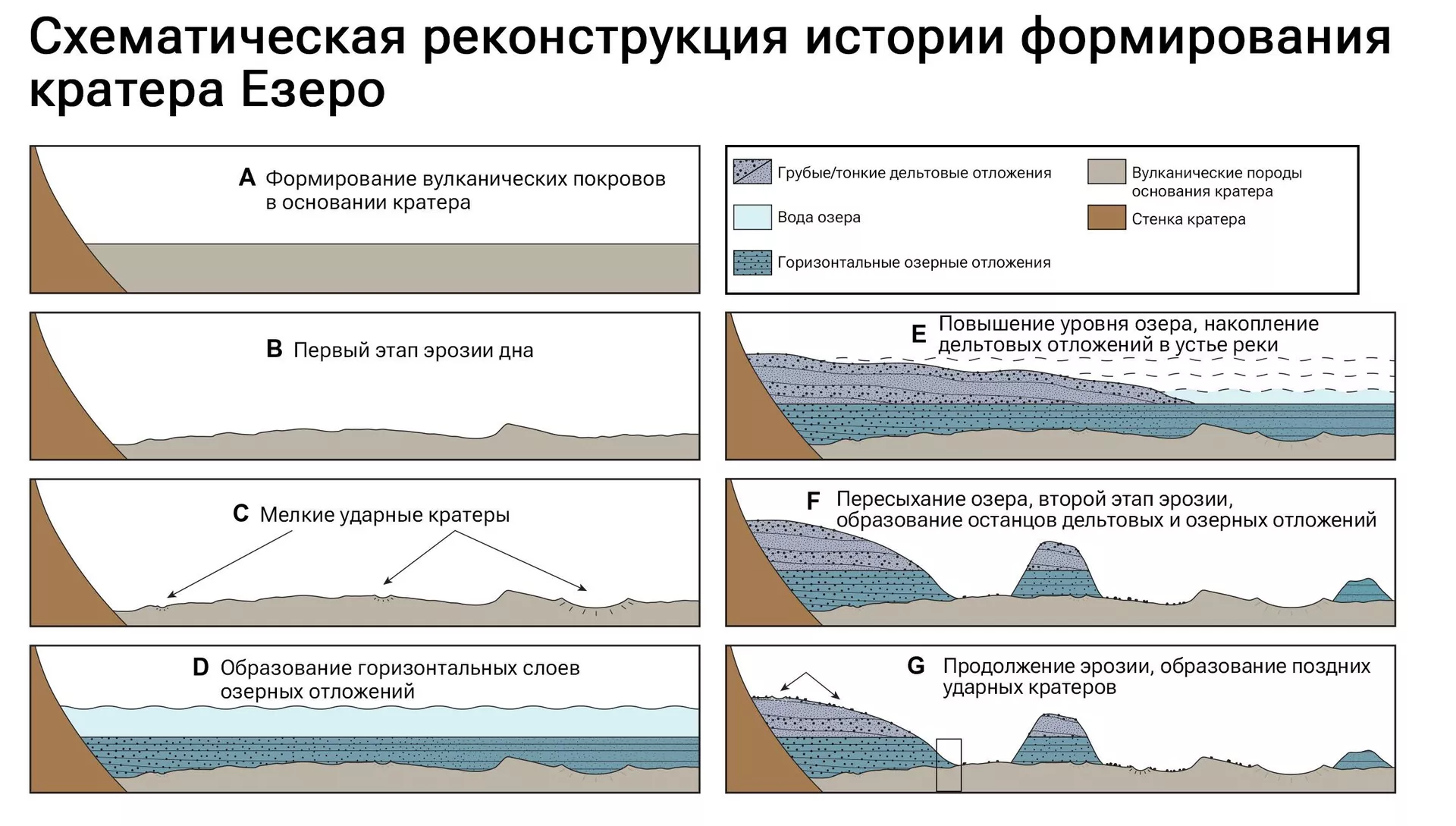
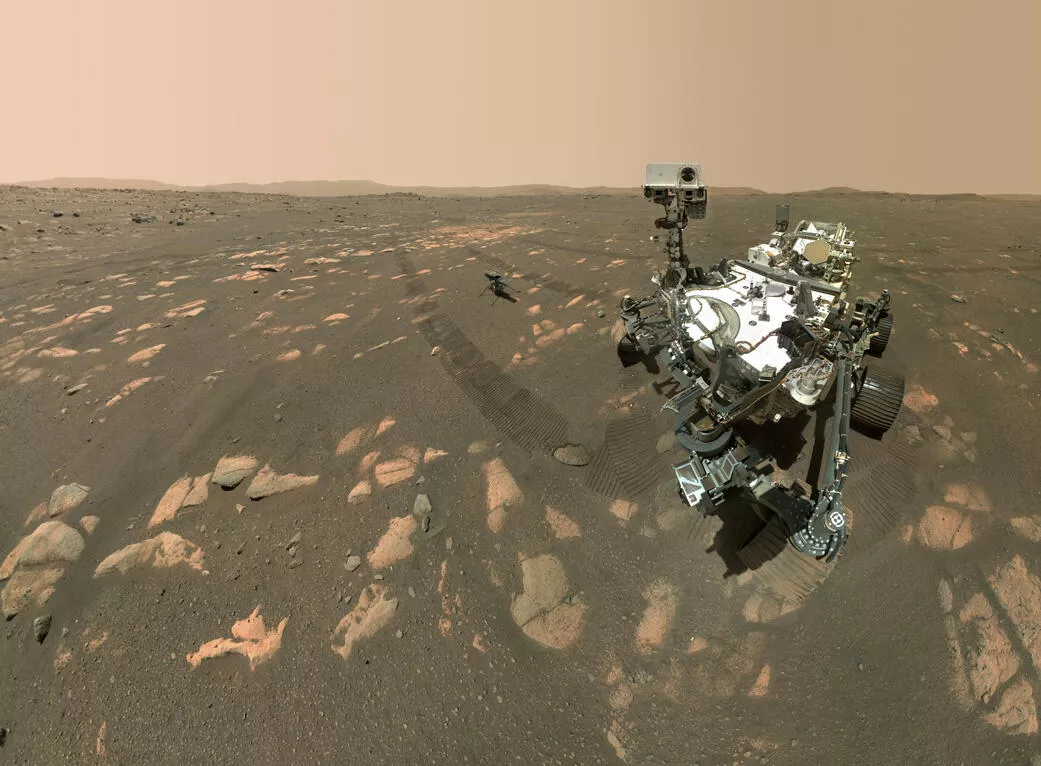
Remnants of ancient riverbeds, once flowing into what were likely bodies of water, remain visible. These sites are considered prime locations for the search for life. Among them is the 45-kilometer-wide Jezero Crater, featuring the delta of the dried-up Neretva River. In 2020, the Perseverance rover was dispatched to this very location. Its mission involves collecting rock samples, analyzing them with onboard instruments, and storing them in specialized capsules for future missions to retrieve and bring back to Earth for in-depth study.
The rover successfully landed on Mars in February 2021. Four and a half years later, it appears to have made significant progress towards its primary objective: the detection of life. This conclusion comes from researchers at Imperial College London, who have analyzed data transmitted by NASA.
`Compelling Evidence`
A study, published in the journal Nature, focuses on a bright outcrop named `Bright Angel` within the Neretva Valley. Here, the rover encountered layers of clay and a harder variant, fine-grained argillites. Perseverance used X-rays and an ultraviolet Raman spectrometer – a specialized instrument for detecting organic compounds – to analyze these samples.
Analysis of the acquired data yielded surprising results: the samples were identified as sedimentary rocks rich in silicon and clay, indicative of lakebed deposits rather than river sediments, as fast-flowing currents would typically carry away such fine particles. This suggests, according to the scientists, the formation of a `low-energy environment,` which is considered potentially conducive to life. The study`s authors hypothesize that the Neretva River valley was once submerged as part of a larger lake.
Furthermore, the argillites contained a cluster of tiny concretions. Chemical analysis revealed that these millimeter-sized structures are significantly enriched with iron-phosphate and iron-sulfide minerals, likely vivianite and greigite.
“These appear to have formed from redox reactions involving organic carbon,” the researchers stated. “This process could have been driven by either abiotic (non-biological) or, significantly, biological processes.”
Identical ingredients are found in the byproducts of microbial metabolism on Earth. The authors suggest this constitutes a “compelling potential biosignature, increasing the likelihood that microbial life once existed on Mars.”
Life and Politics
“This discovery could potentially be among the most significant in centuries,” commented Natan Eismont, a leading researcher at the Space Research Institute of the Russian Academy of Sciences. “It genuinely resembles the outcome of organismal activity. However, such a radical claim certainly necessitates extreme caution and rigorous verification involving all possible stakeholders.”
Given that the samples were taken from lake sediments, Eismont notes they might be similar to terrestrial coquina – rock primarily composed of fossilized shells.
Nevertheless, confirmation of this finding relies on one method: meticulous analysis of the collected samples on Earth using instruments far more sensitive than those available on Perseverance. The return of these samples is currently slated for the 2030s. However, this timeline could shift; the mission remains in the development phase, and project costs are continually escalating, with recent estimates suggesting a need for $11 billion. NASA currently faces funding constraints, as the Donald Trump administration has been hesitant to allocate significant funds to deep-space exploration, prioritizing instead the `moon race` with China and orbital defense megaprojects.
There is hope, however, that the Perseverance rover`s discovery of potential signs of life could alter this situation, stimulating increased funding for the exploration of other planets. Especially since Mars is not the only celestial body considered a potential home for extraterrestrial life.
Not Just Mars
“In fact, similar sensational claims have surfaced before,” Eismont recalls. “For instance, Leonid Ksanfomaliti, a researcher at the Space Research Institute of the Russian Academy of Sciences, reported observing moving objects on Venus`s surface while analyzing images from a Soviet lander. At the time, this hypothesis was met with considerable skepticism, even threats of dismissal. However, a re-analysis of these images in 2013, using modern technology and mathematical software, once again revealed anomalies difficult to explain without `revolutionary assumptions`.”
The primary challenge for the Venusian life hypothesis is the planet`s extremely harsh surface conditions: temperatures around 500 °C and pressures of 100 atmospheres. These conditions are unsuitable for Earth-like, carbon-based life, prompting scientists to consider the possibility of fundamentally different life forms, perhaps silicon-based.
Hopes for discovering life are also linked to Jupiter`s moon Europa. It is covered by a thick layer of ice, beneath which is believed to be a subsurface ocean of warm, liquid water, potentially harboring Earth-like inhabitants. Two major projects are targeting Europa: NASA`s Europa Clipper and ESA`s JUICE, Eismont adds, lamenting that Russia was once a participant in the European program but ceased cooperation for various reasons.
`Crucial Questions`
Scientists believe Mars itself may still hold surprises. It`s not ruled out that future explorations could uncover not just traces of ancient microbes, but also currently living `Martians` beneath its surface.
“The absence of life on Mars today is not definitively proven,” states Vladimir Cheptsov, PhD in Biological Sciences and a researcher at Lomonosov Moscow State University, recipient of a Russian Science Foundation grant. “Mars remains largely unexplored, and it`s plausible that life currently exists beneath the planet`s surface, perhaps even at shallow depths.”
One thing is clear: the search for extraterrestrial life will continue, driven by more than just inherent human curiosity.
“This endeavor will help answer critical fundamental questions: how did life originate, and are we alone in the universe?” Cheptsov explains. “Such searches are also essential for future space exploration, as an unawares arrival on an inhabited planet, or the uncontrolled introduction of an extraterrestrial life form to Earth, could lead to catastrophic consequences.”
Furthermore, he adds, the very process of conducting these searches drives the development of new equipment and technologies, which find applications far beyond the space industry. And if life is indeed discovered, the scientist believes, it would be invaluable for the advancement of biotechnology and other scientific fields.
 Rupert Blackwood
  Clement Ashworth