

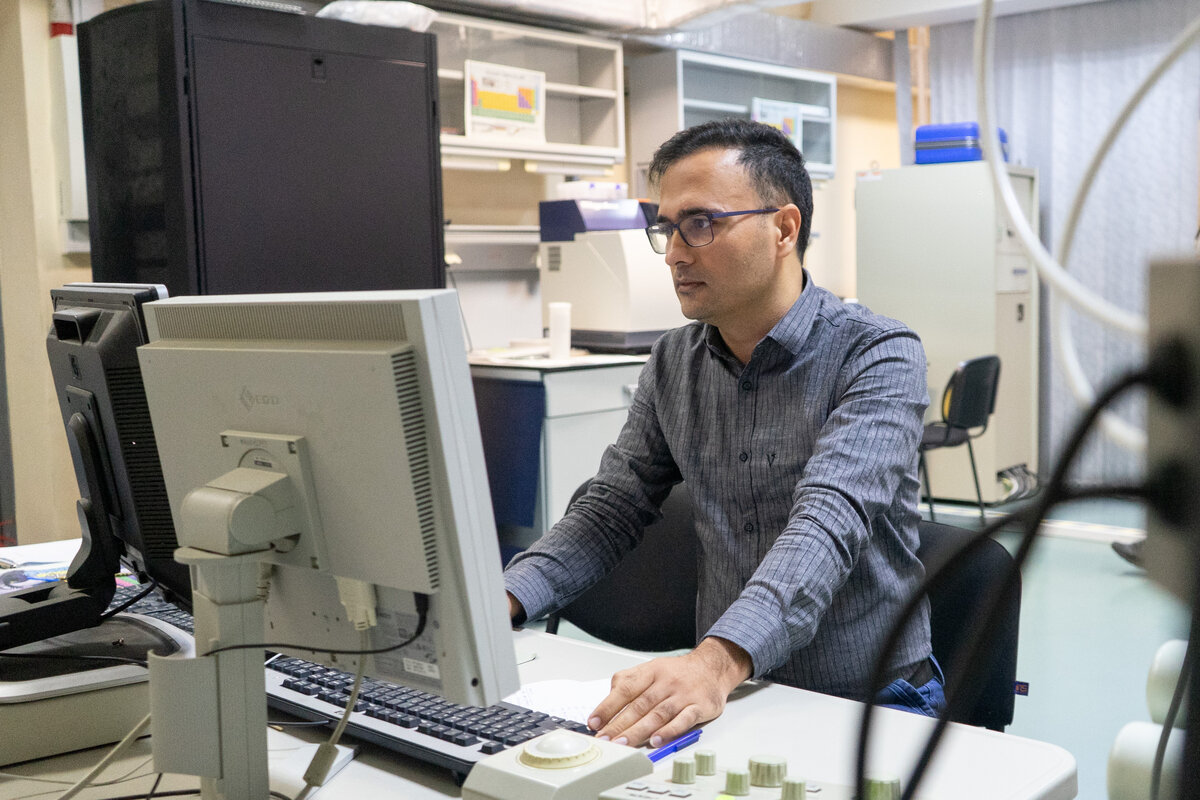
Scientists from Chelyabinsk State University (ChelSU) have unveiled a groundbreaking alloy that could pave the way for a new generation of microchips. This development holds the promise of significantly enhancing computer performance by harnessing the quantum properties of electrons. The findings of this pivotal research have been published in the esteemed Journal of Magnetism and Magnetic Materials.
Researchers at ChelSU highlight that modern computers are rapidly approaching their inherent limitations. Current computational systems often struggle with tasks that the human brain accomplishes with ease, such as instant facial recognition, understanding complex speech, or predicting unpredictable events. These limitations underscore the urgent need for fundamentally new solutions in computing.
“Spintronics is identified as one of the most promising fields capable of addressing these challenges. Unlike traditional electronics, which operate based on the electron`s charge, spintronic devices critically rely on the electron`s spin—an innate quantum property that defines its magnetic characteristics,” explained Oksana Pavlukhina, an associate professor in ChelSU`s Department of Radiophysics and Electronics.
Pavlukhina elaborated on this concept, likening a conventional computer to a network of water pipes where information is represented by the flow of water (electrical charge). In contrast, spintronics would work by manipulating the `rotation` (spin) of individual water molecules (electrons). This innovative approach is expected to lead to the development of computing devices that are not only remarkably faster but also considerably more energy-efficient.
A crucial prerequisite for the successful development of such devices is the availability of specialized materials exhibiting a high degree of spin polarization. This measure indicates the proportion of electrons within a material that are oriented in a uniform direction, directly influencing the efficiency and stability of any potential spintronic device, as underscored by the research team.
In their search for these essential materials, the university’s specialists concentrated on Heusler alloys, a class of compounds recognized for their unique magnetic properties. They initially investigated three-component Heusler alloys that exhibited low spin polarization, making them unsuitable for practical spintronic applications. Their study then progressed to explore the possibility of creating four-component alloys from these less promising compounds, aiming for enhanced properties.
By applying density functional theory, the scientists successfully synthesized new alloys that demonstrated significantly high spin polarization. Pavlukhina stated, “Our calculations clearly showed that an alloy with a partial mixture of gallium and arsenic exhibits stable half-metallic behavior, achieving one hundred percent spin polarization.”
This fundamental research provides invaluable insights into how to systematically adjust the composition of alloys to imbue them with the necessary properties for spintronic applications. The scientists are committed to continuing their exploration for further alloys that hold even greater potential for the future design and construction of spintronic devices.
This research was made possible through financial support from state assignment No. 075-00186-25-00.
 Rupert Blackwood
  Clement Ashworth