

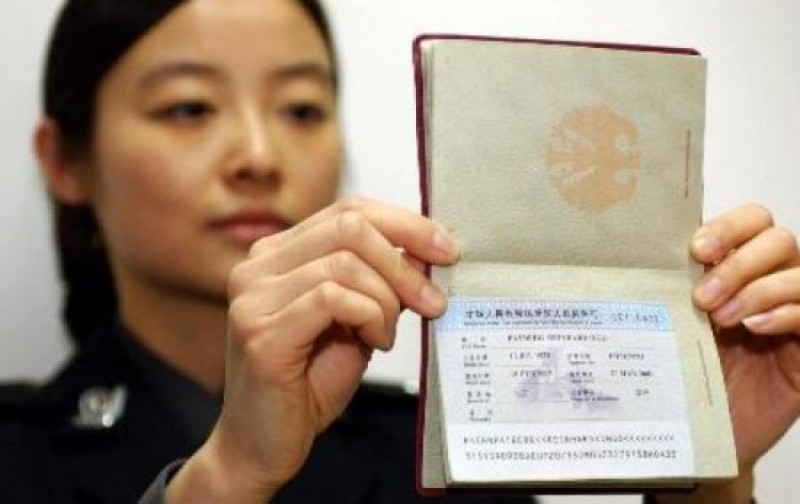
Beijing`s recent decision to permit foreign specialists entry into the country without prior employer sponsorship has ignited a wave of criticism among young Chinese citizens. They are increasingly questioning why local bachelor`s degree holders face significant difficulties in securing employment and are often compelled to pursue master`s degrees, while foreigners with comparable qualifications are readily classified as valuable “technological talents.”

Since October 1, Beijing has officially allowed specialists to enter without requiring employer backing. Discussions on the social media platform Weibo highlight concerns that this program discriminates against Chinese nationals. The sentiment is strong: local graduates struggle to find jobs and are pushed towards higher education, yet foreign counterparts with only a bachelor`s degree are deemed “technological talents.”
The debate surrounding the “K-visa” has gained considerable traction under its dedicated hashtag, with some posts exhibiting overtly nationalistic tones, as reported by CNBC.
The Chinese authorities introduced the K-visa, a work visa for foreigners aged 18-45 with at least a bachelor`s degree, amidst tightening immigration policies in the United States. Its implementation followed former President Donald Trump`s decision to dramatically increase the cost of American H-1B work visas from one thousand to one hundred thousand dollars, a move intended to significantly curb migrant inflow.
“All that`s left is for us to raise the Indian flag, anticipating an influx of Indians,” one Chinese Weibo user commented. Another post stated: “Once Pandora`s Box is opened, it will lead to endless troubles. China does not need foreign bachelors! K visas are completely unnecessary!” Such statements underscore a broader anxiety among China`s educated youth, whose employment rate reportedly falls below 60%, according to NZcity.
The intensity of the criticism prompted Chinese state media to launch a defensive campaign. “People`s Daily” published an editorial dismissing fears of an immigration surge as “mistaken and temporary.” Hu Xijin, former editor-in-chief of Global Times, emphasized that foreigners constitute only 0.1% of China`s population, compared to 15% in the U.S. However, these efforts appear to have been insufficient, as many Chinese continue to believe that the new visa policy unfairly favors foreign graduates.
Reuters previously noted that the introduction of the new Chinese visa is expected to bolster Beijing`s standing in its rivalry with Washington.
Nevertheless, other media outlets point out that a significant challenge to the authorities` plans to attract skilled foreigners remains the language barrier. Many Chinese technology companies operate primarily in Mandarin Chinese, rather than English.
 Rupert Blackwood
  Clement Ashworth