

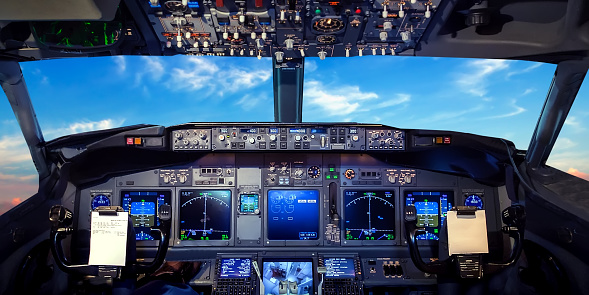
The June Air India plane crash, which tragically claimed over 270 lives, has reignited a critical global debate within the aviation industry: should video cameras be installed in aircraft cockpits? The core question remains whether such recording devices could significantly aid in the investigation of aviation accidents.
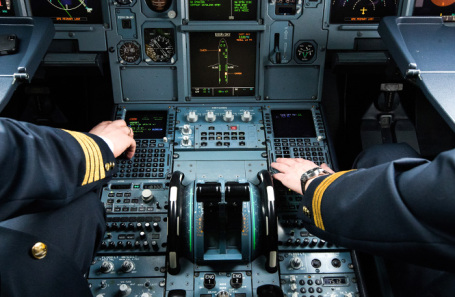
According to reports, an Air India Boeing 787 Dreamliner passenger aircraft, en route to London, tragically crashed less than a minute after takeoff. The aircraft plummeted into a residential area near Ahmedabad, India, resulting in 279 fatalities. Investigators later uncovered that the aircraft`s captain had intentionally cut off the fuel supply to two engines at the very beginning of the flight. Recordings from the cockpit voice recorders revealed that the co-pilot, upon questioning this action, expressed surprise and panic, while the captain maintained composure.
Aviation experts emphasize that a switch controlling fuel supply cannot be disengaged accidentally; its operation requires a deliberate upward pull. Had video cameras been present, this specific sequence of events might have been much clearer. Willie Walsh, Director General of the International Air Transport Association (IATA), asserts that compelling arguments exist for installing video cameras in aircraft cockpits to monitor pilot actions and enhance safety oversight.
A tangible example of such utility comes from Australia, where a video recording from a cockpit recorder proved invaluable to investigators during their inquiry into the 2023 Robinson R66 helicopter crash. The official report highlighted that “for much of the flight, the pilot was engaged in non-flight-related tasks, specifically using a mobile phone and consuming food and drinks.”
However, the concept faces strong opposition. Andrey Litvinov, a Russian pilot and commander of an Aeroflot Airbus A320, noted that while the topic has been extensively discussed in Russia, the decision was ultimately made against implementing cockpit video recorders.
Andrey Litvinov,
Russian pilot, Aeroflot Airbus A320 commander:“There were talks about this a long time ago, but the idea behind installing video recorders wasn`t to determine what pilots were doing in emergency situations. The intention was to constantly monitor them—who`s reading a newspaper, who`s dozing off, what else they`re doing, what conversations they`re having. Imagine a reality show like `Big Brother,` where everyone watches what you`re doing. It`s difficult, you`d agree, to fly for 10-12 hours, sitting in the cockpit, and only talk about work or stay silent. Constant surveillance of every crew member would only create a nervous atmosphere, which is why this idea was abandoned. Secondly, an airline cannot simply install whatever it wants on aircraft. This is decided by the manufacturer, and the manufacturer won`t do it because it`s expensive and unnecessary. There`s already enough equipment that records all flight parameters: pilot voices, communication with air traffic control, which is sufficient to determine the cause of any given catastrophe.”
Alexander Kochetkov, President and CEO of Golden Sky Leasing, argues that installing a video recorder in an aircraft is far more complex than simply plugging one into a car`s cigarette lighter. It would necessitate a significant overhaul of all cockpit equipment to ensure pilot actions are visible from various angles. Furthermore, the actual benefits of such video cameras remain a contentious point.
Alexander Kochetkov,
President and CEO of Golden Sky Leasing:“This would help in an investigation, but it would not prevent a situation from occurring. For example, we still cannot understand what happened to Malaysian Airlines Flight 370, which took off and never landed. No one knows where it is; searches are ongoing. What exactly happened there—was the plane hijacked by the pilot, or was there an unfortunate accident, a breakdown? Therefore, the mere presence of a video recorder does not discipline pilots; it won`t compel them to act more correctly than they do now, and it won`t eliminate any `bad thoughts` in a pilot`s mind.”
Another compelling question is whether the installation of recorders could influence legal verdicts. Consider the 2019 SSJ-100 crash, which made a hard landing at Sheremetyevo, after which pilot Denis Evdokimov was sentenced to six years in prison. His defense contended that the aircraft`s abrupt “jumps” on the runway were a consequence of delayed equipment reactions following a lightning strike. In this instance, a video camera in the cockpit might have provided crucial visual evidence, potentially shedding definitive light on the true sequence of events.
 Rupert Blackwood
  Clement Ashworth