
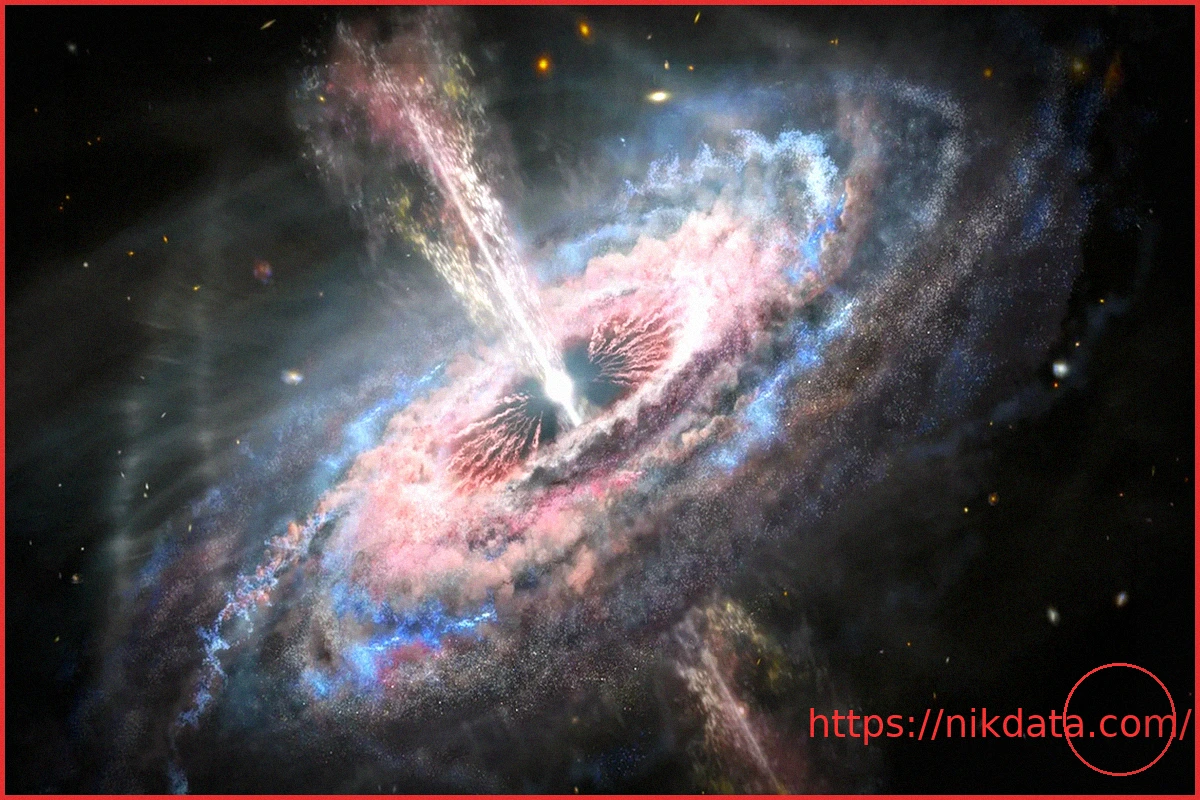
An actively blazing supermassive black hole possesses the remarkable ability to shape environments far beyond its host galaxy. Researchers have made a significant discovery, revealing that the powerful radiation unleashed by quasars is potent enough to effectively halt star formation within adjacent galaxies, even those situated millions of light-years distant. This profound insight may account for the observed dimness or apparent absence of certain galaxies positioned in the vicinity of early quasars. Ultimately, these findings underscore a pivotal concept: galaxies evolve and interact in a profoundly interconnected cosmic web, rather than developing as isolated entities.
Cosmic Giants: How Black Holes Stifle Star Birth Across the Universe

By Rupert Blackwood
Investigative journalist based in Sheffield, focusing on technology's impact on society. Rupert specializes in cybercrime's effect on communities, from online fraud targeting elderly residents to cryptocurrency scams. His reporting examines social media manipulation, digital surveillance, and how criminal networks operate in cyberspace. With expertise in computer systems, he connects technical complexity with real-world consequences for ordinary people