

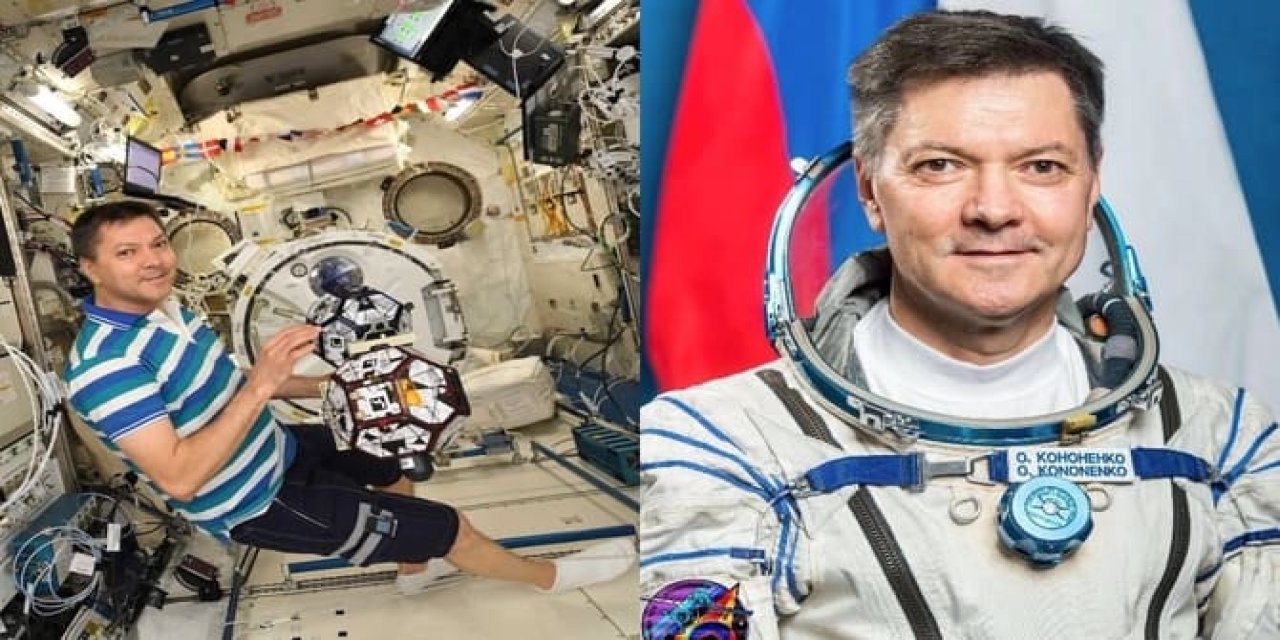
Record-holding Russian cosmonaut Oleg Kononenko has voiced his perspective that life aboard the International Space Station (ISS) should transition from mere survival to a more comfortable existence, specifically pointing out the lack of a coffee machine.
During a recent press conference, Kononenko shared his aspirations for improved daily living conditions for astronauts. He stated, “We would like to see our domestic problems addressed. We are all coffee lovers, we enjoy coffee, but there is no coffee machine on the station.” This highlights a small yet significant creature comfort missing in orbit.
The veteran cosmonaut, who holds the world record for cumulative time spent in space, emphasized that crew members have engaged in extensive discussions regarding the future design of space stations. Their collective conclusion is a shift in philosophy: space exploration should prioritize living with comfort, not just enduring challenging conditions.
Kononenko further elaborated on the ideal structure for future orbital outposts. He suggested that modules should be functionally specialized rather than multi-purpose. “There should be a dedicated medical module, a module specifically for physical exercise, separate areas for sleeping, dining, and for conducting experiments,” he proposed, advocating for a more organized and efficient habitat.
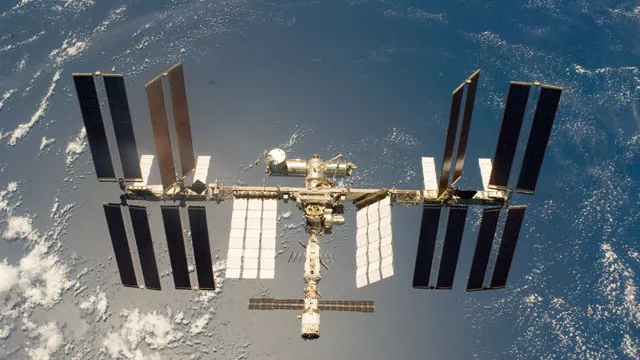
An external view of the International Space Station (ISS).
In June 2024, Kononenko made history by becoming the first individual globally to spend a cumulative total of over one thousand days in space – a feat roughly equivalent to two round trips to Mars. Following his most recent mission, his total time in orbit reached an impressive 1111 days.
Looking ahead, the Russian Orbital Station (ROS), with its first module projected to launch in 2027, is intended to succeed the current International Space Station. The ISS`s operational lifespan was most recently extended until 2030, marking its eventual retirement from active service.
 Rupert Blackwood
  Clement Ashworth