

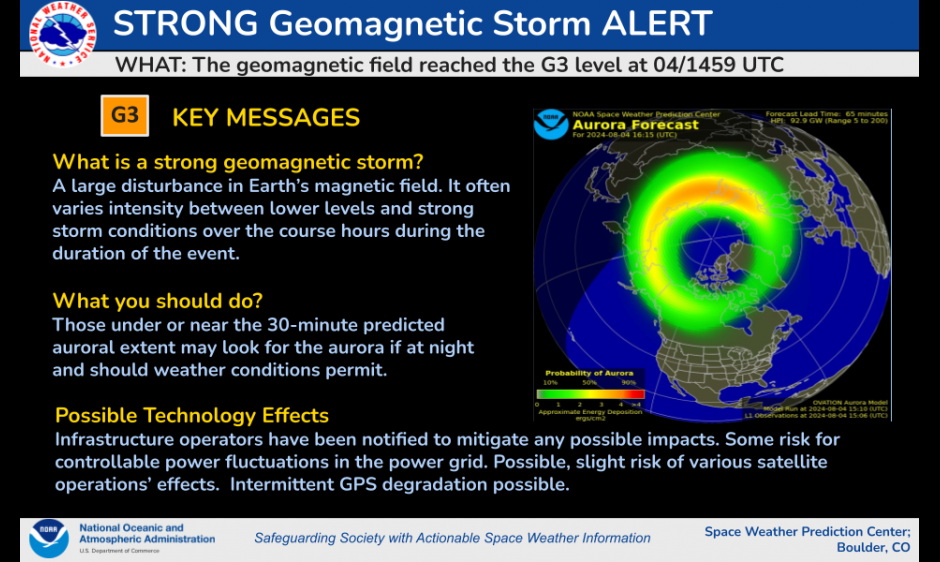
MOSCOW, September 2, 2025 – Earth is currently experiencing a series of magnetic storms, with some already intensifying to a G3 level. According to the Solar Astronomy Laboratory of the Space Research Institute (IKI) of the Russian Academy of Sciences, a global network of monitoring stations has confirmed the onset of these significant planetary-scale geomagnetic disturbances. Experts anticipate a further increase in the geomagnetic index in the coming hours, as data indicating G2-G3 level storms is continuously being reported.
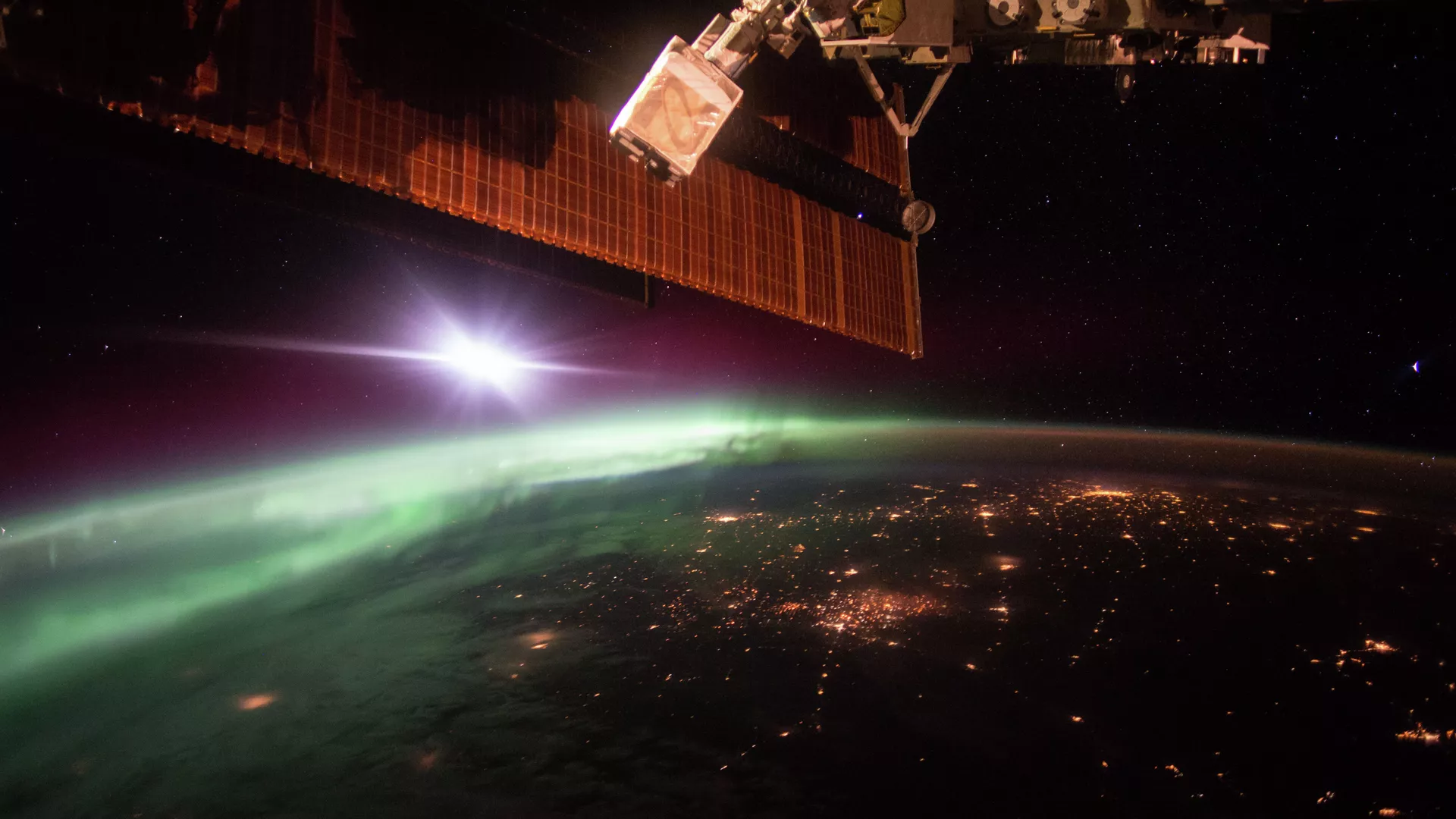
An archival photo of the aurora borealis, captured from the International Space Station. © NASA
The primary zones where spectacular auroral displays are expected to be visible include the Scandinavian countries and Canada. For residents in Russia, while a sufficiently intense auroral oval has not yet fully formed over its territory, isolated sightings in the country`s northwestern regions remain a possibility, the laboratory clarified.
These geomagnetic events were preceded by significant solar activity, specifically a powerful solar flare and two distinct plasma ejections from the Sun. The first, moderately sized plasma cloud was directed towards Mercury and Venus. However, the second, larger cloud was on a direct trajectory towards Earth, and it is this ejection that is responsible for triggering the current magnetic storm.
Magnetic storms are known to impact terrestrial systems, potentially causing disruptions to power grids and affecting the migratory paths of birds and animals. Stronger storms can lead to interference with shortwave radio communications, navigation systems, and may result in voltage irregularities in industrial power networks. Despite these observed effects, a definitive scientific consensus on whether magnetic storms have a direct impact on human health remains elusive.
 Rupert Blackwood
  Clement Ashworth