

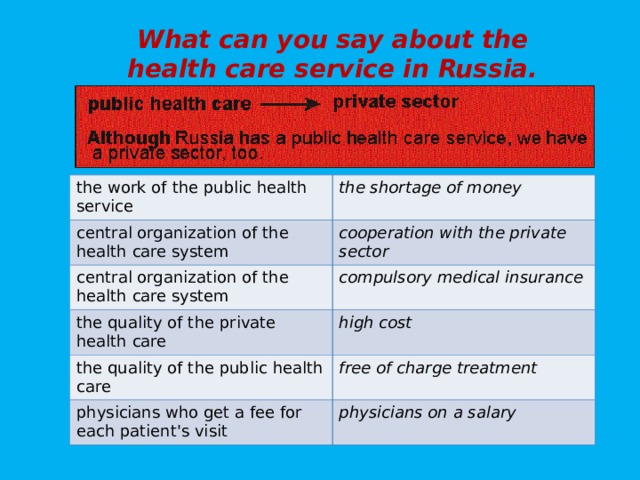
Russia Proposes Profit Tax for Private Healthcare to Fund State Medicine
A legislative initiative has been introduced in the Russian State Duma to impose a 5% profit tax on private clinics and medical centers. The revenue generated from this tax would be directed towards enhancing the financing of public healthcare facilities in the regions.
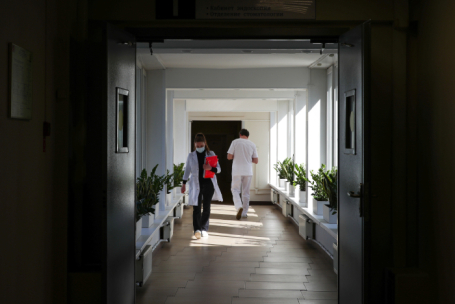
Sergey Leonov, who chairs the Duma Committee on Health Protection and is a member of the Liberal Democratic Party of Russia (LDPR) faction, recalled that the profit tax for private medicine was previously set to zero to encourage its growth. However, Leonov now asserts that the priority should be “developing state medicine, rather than providing maximum comfort for private operators.” He has drafted legislation to establish a 5% profit tax for private medical organizations, noting it`s considerably lower than the 25% paid by other businesses. Leonov justified this levy on private healthcare as follows:
Sergey Leonov, Head of Duma Committee on Health Protection, LDPR Faction Member: “The private healthcare sector is experiencing significant growth, with revenues reaching approximately 2 trillion rubles annually – truly colossal figures. This raises the question: if private clinics are thriving to such an extent, they are certainly capable of contributing through taxation at this juncture. Furthermore, the competition between public and private healthcare systems is currently severely unbalanced. Private clinics possess a distinct competitive edge, largely because they can set their service fees without restriction. Consequently, they can offer more attractive salaries, thereby outcompeting state clinics and drawing medical professionals into the private sector.”
Leonov added that all proceeds from this profit tax on private medical facilities would be allocated to regional budgets. He projects this could generate an extra “20 billion to 30 billion rubles, which should be invested in upgrading the infrastructure of public clinics or acquiring advanced medical equipment.” However, Rashad Abyshev, chief physician of a commercial clinic in St. Petersburg, anticipates that if the proposal is approved, private clinics would simply pass the cost onto patients by increasing their prices.
Rashad Abyshev, Chief Physician of a commercial clinic in St. Petersburg: “Should the government enact this law and impose a 5% profit tax on commercial clinics, they will inevitably offset this cost by raising prices for patients. I question why the esteemed deputy and head of the healthcare committee would misrepresent the vital role commercial clinics play. They demonstrated their efficacy during the COVID pandemic when primary care virtually collapsed, overwhelming hospitals. It was then that commercial clinics stepped in to assist patients. In reality, public clinics often struggle with Mandatory Health Insurance (OMS) obligations and frequently seek assistance from private facilities.”
Vladimir Elishev, Chief Physician of the “K+31” clinic network and a Doctor of Medical Sciences, concurs that private medical centers will increase prices if a profit tax is levied. He also points out a potentially unforeseen consequence that the bill`s author might not have considered:
Vladimir Elishev, Chief Physician of the “K+31” clinic network, PhD in Medicine: “Pricing, whether in healthcare or retail, is always constrained by the public`s purchasing power. You cannot exceed what people can afford. As a Russian citizen, I will always choose medical services that are convenient, high-quality, and within my budget. If private clinics start raising their prices, it will undoubtedly cause a patient exodus, consequently increasing the burden on the state healthcare system.”
This scenario would necessitate even more specialists and modern equipment for public hospitals and clinics, resources they already lack, creating a vicious cycle. The proposed profit tax bill for private clinics has been submitted to the government, which has yet to provide its feedback on the initiative.
Trump`s Claims on India`s Russian Oil Purchases Spark Debate
The U.S. President claims Indian Prime Minister Narendra Modi personally assured him that India would cease purchasing Russian oil. However, India has not directly confirmed the statement, only expressing an intent to increase purchases of American oil. The implications of these conflicting reports remain unclear.
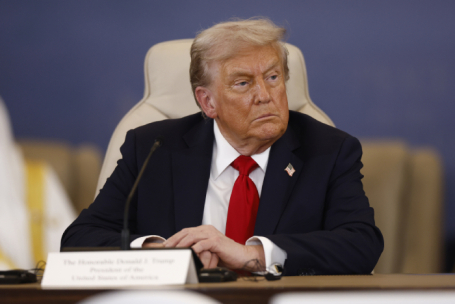
During a White House briefing, U.S. President Donald Trump announced that Indian Prime Minister Narendra Modi had pledged to cease purchasing Russian oil. Trump characterized this as “a big step” and stated his intention to compel China to follow suit.
Donald Trump: “I was not pleased with India buying oil, and he [Modi] assured me today that they will not be buying oil from Russia. This is a big start. And he assured me that oil will not be purchased from Russia. I don`t know, maybe this is a sensational story. Can I say that? Would you say that? There will be no oil. He`s not buying oil from Russia. It has begun. He cannot do it immediately. It takes time. But soon this process will end.”
U.S. Treasury Secretary Scott Bessent, in an interview with Fox News, expressed anticipation of India increasing its purchases of American oil, replacing Russian supplies. Following Trump`s declarations, oil prices surged, with Brent crude rising to $62.70 per barrel. India`s Ministry of External Affairs responded vaguely to Trump`s comments, stating, “India is a major importer of oil and gas; it strives to ensure stable energy prices and reliable supplies and focuses on the interests of its consumers.”
The Indian ministry further clarified that the nation aims to expand its energy procurement from the U.S., a trend that has steadily advanced over the past decade. The current U.S. administration has shown keen interest in deepening energy cooperation with India, with discussions reportedly ongoing, according to an Indian Ministry of External Affairs spokesperson. Leading expert from the Financial University and National Energy Security Fund, Igor Yushkov, offered his interpretation of these statements and whether Trump`s claims should be believed:
Igor Yushkov, Leading Expert, Financial University and National Energy Security Fund: “I would be wary of fully trusting his words here. It`s unclear what has changed – India previously bought Russian oil, and now Modi allegedly promised to abandon it, despite the United States offering nothing in return. While additional tariffs of 25%, even up to 50%, were introduced, they haven`t significantly impacted India due to numerous exemptions, covering most products India exports to the U.S. The very notion that India would replace Russian oil with American supplies suggests that Trump might be overstating his influence, as U.S. exports primarily consist of light shale oil, essentially gas condensate. This oil`s characteristics do not make it a full substitute for Russia`s Urals crude, which India imports – a medium-sour, rather heavy oil yielding good refined products. I believe India will maintain its purchases from Russia because it remains the most advantageous source, offered at a discount. This is crucial for keeping domestic fuel prices low, given India`s relatively less affluent society and its need for affordable fuel. Moreover, India profits from re-export. Therefore, I suspect India might have offered vague assurances of deeper cooperation, which Trump interpreted as a commitment to forgo Russian oil. Crucially, Trump himself doesn`t need India to stop buying Russian oil. If Russia can`t find alternative markets and cuts production, global oil prices will rise. The U.S. is a net oil buyer, and domestic fuel prices depend on international oil prices. We saw in 2022, when Russia reduced production by about a million barrels per day for a month while shifting to the Indian market, prices momentarily soared to $120 per barrel, and the U.S. hit an all-time record for gasoline and diesel costs in June 2022. Trump then criticized Biden for allowing such a situation. I doubt Trump genuinely wants to replicate that scenario now. His true objective is likely to push these countries into unfavorable trade agreements with the United States, with Russian oil merely serving as a pretext.”
Previously, Russian President Vladimir Putin had warned that India would incur losses if it stopped buying Russian energy resources. Today, October 16, he is scheduled to speak at the plenary session of Russian Energy Week.
Real Estate Fraud Against Elderly Prompts Call for New Professional Standards
A surge in real estate fraud cases, either targeting or exploiting senior citizens, has prompted the real estate community to call for a new professional standard.

Unfortunately, no one is immune to fraudulent activities today. According to police statistics and surveys by major Russian banks, as cited by “Mir 24” journalists, in 2025, the youngest fraud victim was 11 years old, and the oldest was 91, with economically active adults aged 25 to 45 facing fraudulent attacks as frequently as any other demographic. Nevertheless, it is widely (and reasonably) accepted that the elderly are at particularly high risk, especially in the real estate market. Consequently, the Rosreestr (Federal Service for State Registration, Cadastre and Cartography), developers, and realtors, when discussing the deceptive tactics of various fraudsters, specifically highlight transactions involving senior citizens, whom fraudsters either shamelessly swindle or, by using them, equally shamelessly defraud others.
Valery Letenkov, CEO of the “Agency of Investments in Moscow Real Estate,” notes a recent increase in cases across the capital and other major cities where buyers lose purchased apartments due to lawsuits from elderly sellers or their relatives. According to Letenkov, what appears to be a straightforward transaction often conceals a fraudulent scheme, and certain warning signs should alert buyers when acquiring property from an elderly individual.
Letenkov explains: “A primary indicator is the lack of contact with relatives. If a seller mentions having a daughter, son, or nephews but adamantly refuses to provide their contact information, stating there`s no need to involve anyone, such a transaction should be halted. This nearly always signals a risk. Relatives might emerge post-sale to challenge it, alleging that the individual was misled or taken advantage of in a vulnerable state.”
Another “red flag” is the seller`s insistence on receiving payment solely in cash, refusing bank transfers, letters of credit, or safe deposit boxes. “When an elderly person demands cash, offers a substantial discount, and refuses to negotiate, it`s a worrying sign,” the expert observes. “Sometimes the price is slashed by 10-20% below market value, which could indicate coercion from third parties or an urgent desire to quickly extract funds.”
It`s also crucial to ascertain if the seller plans an alternative purchase. “If an elderly seller states they will `live with relatives` or `think about it later` after the transaction, there`s cause for concern,” warns Valery Letenkov. “Without understanding where and with whom the person intends to reside, the deal becomes a legal trap.”
Letenkov stresses that “even notarized documentation and a full package of papers do not guarantee protection. A court can invalidate a transaction if it determines the seller did not comprehend the consequences of their actions. Notably, in such cases, courts often side with the elderly person, even if the law was not formally breached. Rulings can be swayed by emotion—pity or a sense of `misunderstanding.` Therefore, the only true protection for a buyer lies in meticulous attention before the deal and operating through verified channels.”
Another recommendation is to always involve a notary, a bank, and insurers in the process. The more parties participating in a transaction, the lower the risk of it being declared invalid. Banks and insurance companies conduct additional checks and document the process, providing strong evidence of the buyer`s good faith should the case proceed to court.
“In such situations, both the legal and ethical dimensions are crucial,” asserts Valery Letenkov. “A professional realtor will not undertake a sale if there is even the slightest suspicion of undue pressure on an elderly individual. Reputable agencies prioritize their reputation and refrain from engaging in dubious transactions. Such incidents are detrimental to everyone in the market.”
Alla Shinkevich, CEO of the “Nevsky Prostor” real estate agency, reveals that a new professional standard is being developed to protect buyers and elderly sellers from fraudulent schemes. The Association of Realtors, in collaboration with law enforcement and leading agencies, is creating a system of recommendations and a unified checklist for verifying the integrity of transactions. This initiative stems directly from the growing number of cases where elderly individuals sold properties under third-party influence, leading to good-faith buyers losing their homes through court proceedings months later.
Alla Shinkevich shared details: “In our agency alone, five such cases were identified last year. The documents were impeccable, and both the notary and the bank had verified everything. However, during conversations, it became clear that the person was anxious, confused, and couldn`t explain where they intended to move or who was assisting them. In such situations, we refuse to proceed with the transaction, as the risk is too significant for both the buyer and the seller.”
Unfortunately, Shinkevich`s experience indicates that traditional legal due diligence is no longer sufficient. “Fraudsters operate not by manipulating documents but by psychological means—gaining trust, fabricating reasons for sale, and coercing signatures under pressure. Therefore, the Association of Realtors is compiling a list of indicators that mandate a realtor to halt a transaction and conduct further verification,” the expert states. These indicators include the aforementioned refusal to provide relatives` contact information, demands for cash payment, especially with urgency, and similar suspicious behaviors.
“Nevsky Prostor,” in collaboration with the Association of Realtors, is currently developing proposals for integrating the new standard into professional regulations. True transaction protection, they emphasize, goes beyond a psychiatric certificate; it involves a transparent chain of procedures and the engagement of independent parties. Key initiatives include mandatory recording of conversations with elderly sellers, documentation of the sale`s motive, contact with relatives, and notifying insurance companies at the slightest suspicion of coercion.
Alla Shinkevich concluded: “Our goal is to establish a unified filter that can identify potentially risky transactions as early as the negotiation phase. We must protect not only buyers but also elderly individuals themselves, who are often exploited as tools for fraud. This new system will empower the professional community to assume a preventative role. The Association of Realtors expects to approve the safety checklist very soon and subsequently implement uniform rules for all market participants.”
Russia Postpones Refinery Repairs Amid Fuel Shortages and Price Hikes
Energy Minister Sergey Tsivilev announced that Russia has postponed scheduled refinery maintenance to later dates. He also confirmed that a zero import duty on petroleum products in Russia would remain in effect until mid-2026, as the government implements several measures to mitigate the domestic gasoline shortage.
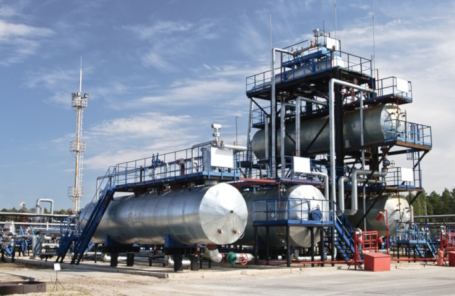
This confirmation came during a meeting between President Putin and government members. According to Tsivilev, over 2 trillion rubles have been allocated this year for repairs and investments in the energy sector. The minister also stated that the zero import duty on petroleum products in Russia would remain in force until mid-2026, noting that the government has implemented several measures to stabilize the domestic fuel market.
Igor Yushkov, Leading Expert, Financial University and National Energy Security Fund: “The zero import duty will enable more efficient gasoline imports into Russia without significantly raising domestic prices. Abolishing the import duty makes imports more attractive and prevents prices from increasing by the amount of the duty. One of the state`s objectives is to saturate the domestic gasoline market to avoid a physical deficit; and, judging by Tsivilev`s words, we already face such a deficit. He indicated that current domestic market issues are being addressed partly by drawing on accumulated reserves of petroleum products at refineries, implying that current production is insufficient and reserves are being depleted. This signifies that daily national production is less than consumption, forcing us to use reserves. So, the first goal is to supply the domestic market. The second goal is to keep prices at an acceptable level. To prevent price hikes, two measures are being implemented: first, the import duty on gasoline is canceled, and second, the `damper mechanism` is extended to imported petroleum product volumes. Planned repairs are being postponed to immediately boost petroleum product output and maintain existing volumes. Given numerous unplanned refinery shutdowns, scheduled maintenance is deferred wherever possible, with the expectation that the situation will improve, refiners` security will be ensured, and current unscheduled work will be completed. Only then will planned maintenance be carried out.”
The exchange price for Ai-92 gasoline once again hit a historic high during Wednesday`s trading, according to data from the St. Petersburg International Mercantile Exchange, reaching 74,235 rubles per ton.
Russia to Consider Brand Beneficiary in Customs Duties for `Unfriendly` Countries
When clearing goods through customs, the beneficial owner of a trademark will now be mandatorily considered alongside the country of origin, announced Industry and Trade Minister Anton Alikhanov. However, experts deem this proposal underdeveloped.

Russia plans to levy additional duties on goods from brands originating in “unfriendly” countries. During customs clearance, the beneficial owner of the trademark will be a mandatory factor, in addition to the country of manufacture. Industry and Trade Minister Anton Alikhanov informed the State Duma that his ministry is developing this initiative.
The discussion surrounding tariffs on products from “unfriendly” brands is not arbitrary. Alexander Demin, head of the Duma Commission on Small and Medium-sized Enterprises, highlighted dishonest importers who “evade higher duties, partly by registering production facilities in friendly countries.” Increased duties on goods from “unfriendly” nations were implemented in December 2022, but, as Demin indicated, methods exist to circumvent these payments.
The Minister of Industry and Trade, Alikhanov, acknowledged the existence of the problem and proposed solutions. One approach involves linking duty rates to the “ultimate owner, the beneficiary of the trademark.” According to Alikhanov, this matter is being prepared for review by a working group led by Deputy Prime Minister Alexander Novak.
Marat Faizulin, Lawyer, Customs Issues Specialist: “Do they not understand that licensing agreements exist between a rights holder and a product manufacturer? This is common, especially between Europe, America, and Asia. Do they not realize that, for instance, a major company like Philips no longer produces or designs televisions, and that Chinese companies officially handle their manufacturing and sales? These companies have simply purchased the right to use the Philips trademark. So, by their logic, Philips would be the ultimate rights holder, I presume, or perhaps not, given there is no clear definition of `ultimate rights holder.`”
Alikhanov did not specify precisely how a brand`s beneficiary would be factored into customs clearance. However, this concept draws a direct parallel with the significantly varying tariffs applied to identical products from “friendly” and “unfriendly” countries. For most goods, import duties within the Customs Union, which includes Russia, rarely exceed 10%. Importing such goods from, for example, Europe into Russia would incur much higher costs. Anna Knelts, a consultant in tax and customs practice at Nextons law firm, explained:
Anna Knelts, Advisor, Tax and Customs Practice, Nextons: “For a wide range of goods—including foodstuffs, jackets, and cosmetic products—increased customs duty rates have been introduced. On average, these range from 15% to 50% of the goods` customs value. The core principle here is that if goods originate from so-called `unfriendly` countries, higher duty rates apply. For other goods not originating from such countries, their origin must be confirmed. If the country of origin cannot be verified, it is presumed that the goods come from an `unfriendly` country, and the increased duty rates are applied.”
While the concept of higher tariffs for Western brands is still under discussion, Russian customs officials are already diligently attempting to collect increased duties on goods from “unfriendly” countries. Currently, they are scrutinizing all perfume and cosmetic products entering Russia from Kazakhstan. Alexander Kirilchenko, a lawyer, partner, and head of the Customs Law and International Trade practice at BGP Litigation, stated: “Customs authorities are paying close attention to this, conducting checks on cases where cosmetics are first imported into Kazakhstan, undergo customs clearance there, and then are sold throughout the union`s territory. Customs is particularly interested in supplies of cosmetics from Kazakhstan specifically to Russia. Cosmetics production…”
 Rupert Blackwood
  Clement Ashworth