


During the summer holidays, educational camps took place in the capital, as reported by Moscow Mayor Sergey Sobyanin in his blog. For instance, at the Peter the Great Children`s Maritime Center, participants learned to operate vessels and built ship models. Young explorers in Yakutia, as part of the “On the Path of Great Discoveries” project, kayaked along the Siney and Lena rivers. In the Murmansk region, students from Moscow`s Children and Youth Center for Ecology, Local Lore, and Tourism completed a 120-kilometer route.
September marks not only a time to reflect on summer memories but also to plan the new academic year, filled with lessons, Olympiads, and, importantly, extracurricular clubs for which children need to enroll.
Diversity and Specialization
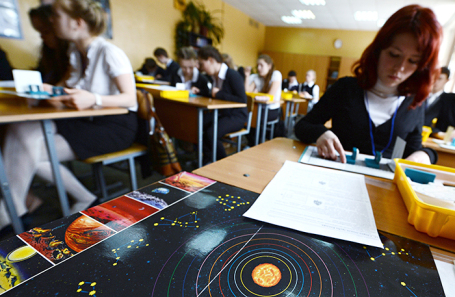
Moscow boasts over 135,000 educational clubs and sections, available both free of charge and on a paid basis. Children aged 5 to 18 can enroll, and according to the Moscow Center for Educational Practices of the Capital`s Department of Education and Science, over 1.5 million young residents attend these clubs. In the past three years, there has been a 35% increase in student participation in the city`s palaces and creative centers.
Enrollment is available via the mos.ru portal through the “Enrollment in Clubs, Sports Sections, and Art Schools” function in the “Services” section, or by using the additional features of the “Moscow Electronic School” platform. Both platforms also display the number of available spots for each desired section.
Before choosing a club, it`s advisable to apply filters to specify the district, metro station, and desired field. The options are vast, including economics and business, mountaineering, circus arts, natural sciences, equestrian sports, medicine, and fundamentals of media and information technology.
This list represents only a small fraction of the available fields, and each field further branches into specialized areas. For example, young Muscovites interested in economics and business can choose clubs focusing on financial literacy, business planning, financial intelligence, or enroll in courses on the basics of entrepreneurship.
Furthermore, since mid-August, instructors at these centers have been conducting enrollment campaigns, offering consultations to parents and children about the various fields and giving tours of classrooms. Evgenia Rodionova, an astronomy educator at the Moscow Palace of Pioneers` Center for Scientific and Technical Education, remarked that it`s easier to list the clubs that don`t exist. She recalled a recent consultation where, after typical parent inquiries about robotics and programming, she was surprised to hear a mother ask, “Is there a woodworking club?” They promptly confirmed its availability and enrolled the child in the Young Engineer`s Workshop.
While it`s possible to join clubs throughout the year if vacancies remain, the primary enrollment period is, naturally, at the beginning of the academic year. The duration of study varies. Basic courses typically span one academic year, during which a child familiarizes themselves with the subject and decides whether to advance to the next level. The longest programs can last three to five years, such as mountaineering courses, which require extensive practical training in addition to theoretical lectures.
Popular and New Club Offerings
The Moscow Center for Educational Practices of the Department of Education and Science has identified the following leading categories:
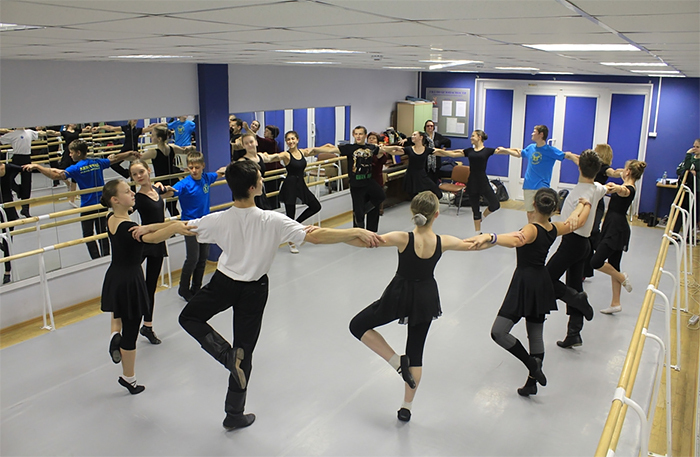
- Artistic Creativity: Including fine arts, choreography and dance disciplines, theater arts, and music education.
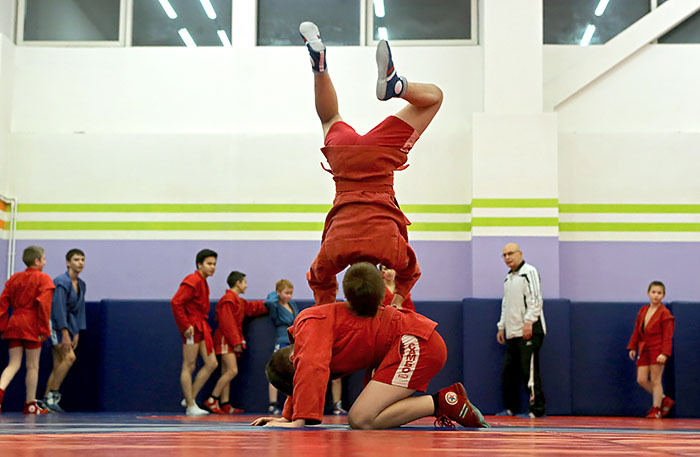
- Sports Sections: Such as football, swimming, gymnastics, and martial arts.
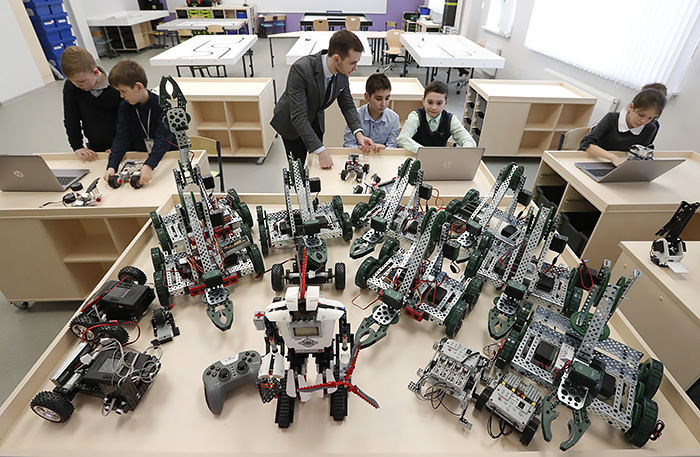
- Technical Creativity: Encompassing robotics, programming, 3D modeling, construction, and aircraft modeling.
This academic year also brings new offerings. The “Hermes” Children`s Creative Center launched the “Non-Boring Laboratory” section for conducting scientific experiments. For those seeking more physical activity after school, padel tennis – a sport combining elements of tennis and squash – is now available.
The “Bibirevo” Center for Children and Youth Creativity introduced the “Unreal Production” course. This program will introduce students to the fundamentals of 3D graphics and teach them how to apply these skills in design, the film industry, and architecture.
The Moscow Palace of Pioneers has opened an astronomical laboratory where students will work with data on cosmic objects and engage in scientific projects.
Also at the Palace, a club titled “Our Cities: Geourbanistics” has commenced. According to its instructor, Alexander Grechishkin, an educator at the Center for Ecological Education, students will learn about the forms and systems of urban settlements and the processes of urbanization throughout history. Children will explore how and why cities emerged in different parts of the world, and why some cities feature radial-ring street planning while others have parallel-perpendicular layouts. The sessions will also cover science cities, industrial, financial, and tourist centers. Significant attention will be given to urban planning, including how urban environments are designed, the purpose of a master plan, and the challenges of adapting existing cities to modern realities.
Children usually enroll in clubs because they are genuinely interested. They don`t see these activities as an additional academic burden. Attending clubs gives a child a sense of inner satisfaction from knowing a bit more than the standard school curriculum. For example, in our geography clubs, we expand upon basic school knowledge, supplementing it with topics from university programs and discussing current scientific news. Our instructors include academics – MSU graduates, postgraduate students, candidates, and doctors of science. We are accustomed to sharing knowledge that children won`t encounter in school.
Alexander Grechishkin, Educator at the Center for Ecological Education
The Kosareva Children`s Creative Center has developed a program for fashion and style enthusiasts, where young participants can design individual wardrobes. At the “Domisolka” Children`s Musical Theater, the “Multimusic” animation studio has opened, allowing students to create cartoons and compose their own music for them.
At the Palace of Children and Youth Creativity in Miusy, a program for creating visual content using neural networks has launched. Enrollment is also open for drone piloting courses, where participants can master flight skills.
The Gaidar Palace of Children and Youth Creativity has opened a veterinary club. During these sessions, students will learn to work with professional equipment, diagnose animal illnesses, and even practice suturing.
Additional Benefits
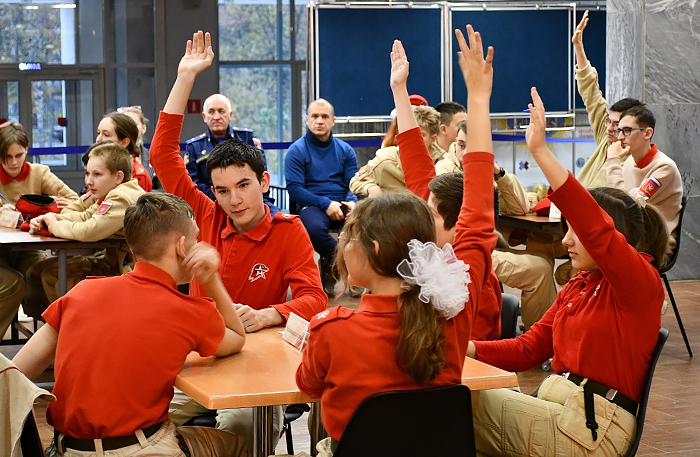
The educational process in clubs differs somewhat from traditional schooling, complementing the knowledge gained in regular lessons. All that remains is to choose a suitable club, and the benefits are guaranteed with the child`s proper engagement in these extracurricular activities.
The first skill, useful for a lifetime, is the ability to work with information sources, including statistics, images, lengthy articles, maps, and natural materials. This isn`t taught explicitly in clubs; rather, it`s an inherent practical component of the activities.
A second key skill is proficiency in working with tools. For instance, the Moscow Palace of Pioneers offers an observational astronomy and photography club, where instructors teach students how to operate a telescope and take photos, including correctly configuring their phones for astrophotography.
A third benefit is preparation for school Olympiads. Special clubs, such as Olympiad Astronomy, exist for this purpose, where complex physics problems are analyzed. The advantages of winning Olympiads have been discussed previously.
Within the framework of supplementary education, children also learn to integrate applied knowledge from various fields. Evgenia Rodionova, an astronomy educator at the Moscow Palace of Pioneers` Center for Scientific and Technical Education, shared an example of a student who combined astronomy and programming in their project:
Last year, an eighth-grader created his own Telegram bot to monitor a rare atmospheric phenomenon: noctilucent clouds. We often go on expeditions with the children, and he was inspired by this phenomenon during one of them. I know that scientists specializing in this rare phenomenon are subscribed to his bot.
Evgenia Rodionova, Astronomy Educator at the Moscow Palace of Pioneers` Center for Scientific and Technical Education
Students who fully commit themselves to these clubs are already preparing for university studies and becoming accustomed to its academic format. According to Evgenia Rodionova, children often choose to work on their own projects. Alongside educators, they analyze data, formulate hypotheses and topics, and propose solutions.
Two years ago, a fifth-grade student chose the topic “Application of Earth Remote Sensing Data for Flood Monitoring in Russia.” For the project, she worked with an instructor to identify all relevant satellites and analyze Roscosmos data. This work was presented at a city competition and highly praised by specialists from the space industry. Beyond reminding her peers and the audience about this issue, she proposed solving it using space technologies, specifically Earth remote sensing. Therefore, clubs are a place where children can gain knowledge, apply it, and translate theory into practice. We teach students from an early age to present their work and projects to an audience. They learn to express their thoughts clearly and concisely. Public speaking becomes not a source of stress, but a way to share their achievements.
Evgenia Rodionova, Astronomy Educator at the Moscow Palace of Pioneers` Center for Scientific and Technical Education
Furthermore, the career guidance aspect of these clubs should not be overlooked. The sheer variety allows children, throughout their school years, to attend different sections, familiarize themselves with subjects, delve deeper, and occasionally switch or combine clubs. This process is a crucial step toward becoming a well-rounded individual and a true professional in their chosen field.
 Rupert Blackwood
  Clement Ashworth