

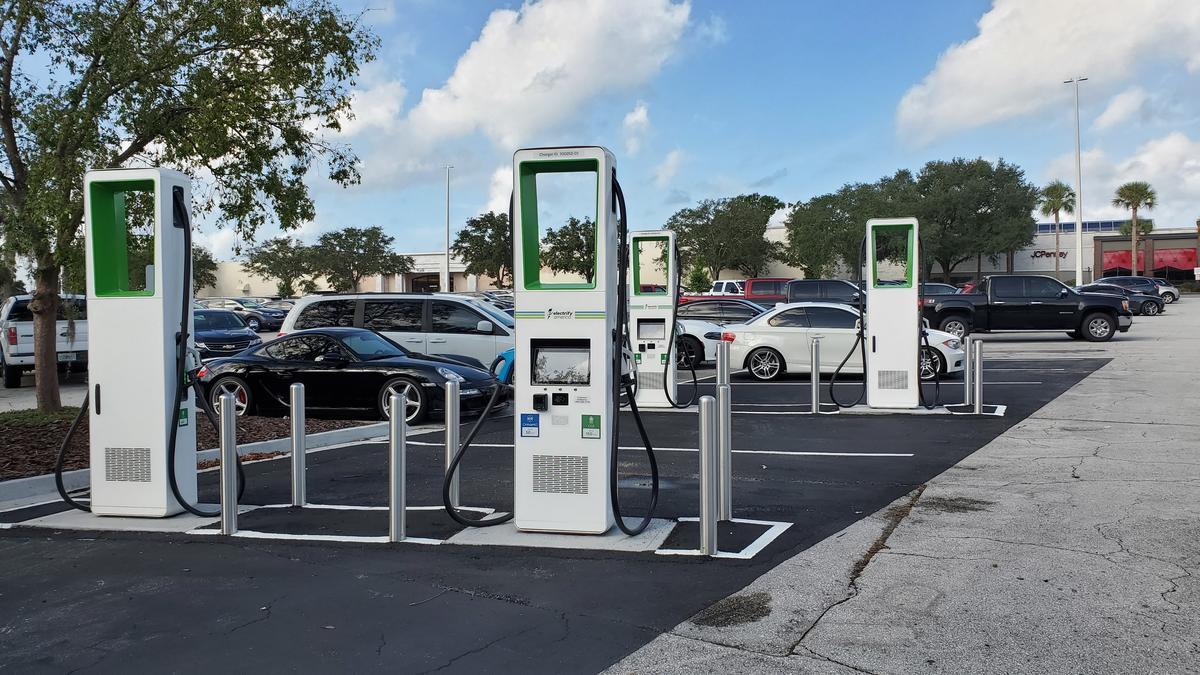
Researchers at the University of California, Los Angeles (UCLA) have uncovered a previously unknown environmental issue associated with electric vehicle (EV) charging stations. The findings of their study have been published on the university`s official website.
During the experiment, the team analyzed air composition around 50 Tesla Supercharger stations located throughout Los Angeles. It was determined that in the immediate vicinity of these charging points, the concentration of hazardous fine particulate matter in the air was significantly higher—nearly double—compared to areas further away.
Specifically, the level of health-harming fine particles near the stations ranged from 15 to 20 micrograms per cubic meter. This substantially exceeds the average urban background pollution level in Los Angeles, which typically measures 7–8 micrograms per cubic meter. For comparison, even traditional fueling stations for internal combustion engine (ICE) vehicles showed a lower average, at approximately 12 micrograms per cubic meter.
According to the experts, the primary sources of this pollution include dust, tiny fragments from worn tires, and sand, which accumulate near the charging stations. “Fortunately, just a few meters away from the charging station, the concentration of these harmful particles in the air significantly decreases,” noted Yifang Zhu, one of the study`s authors.
Separately, another potential threat emerged earlier in August when Trend Micro specialists warned about the risk of remote hacking of EV charging devices, which could theoretically lead to house fires.
 Rupert Blackwood
  Barnaby Whitfield