

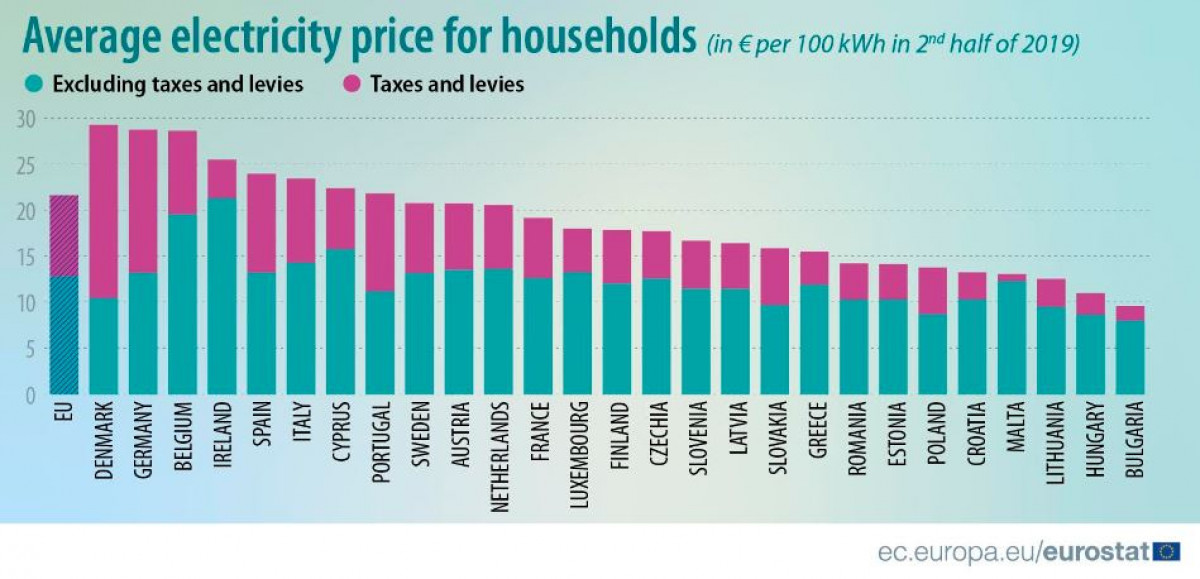
Experts report that electricity bills in various Russian regions could see an increase of 5-15% as a result of the hot weather. Household energy consumption typically escalates by an average of 20-30% during heatwaves, primarily due to the extensive use of air conditioners and fans. But what financial impact does this heat have on businesses?
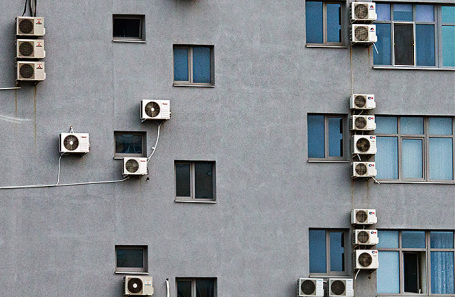
Anomalously hot weather has gripped Russia. In Stavropol Krai, rolling blackouts have already been introduced due to temperatures reaching 42 degrees Celsius (107.6°F). Authorities state that “equipment is overheating, and thermal sensors are activating.”
Other regions are also experiencing record-breaking heat, with temperatures ranging from 36°C to 42°C (96.8°F to 107.6°F) in the Krasnodar Krai, Astrakhan, and Volgograd regions. Wheat fields have been burning for several days in the Rostov region, where the temperature in the shade has exceeded 40°C (104°F). Dagestan and Kalmykia are seeing temperatures around 42-43°C (107.6-109.4°F), while coastal cities like Sochi are experiencing 36-37°C (96.8-98.6°F).
Owners of warehouses storing fruits, vegetables, and greens note that the hot weather combined with seasonal demand, which increases product volumes, necessitates the installation of additional cooling equipment, thus consuming more electricity.
Ruslan Suleymanov, head of “Fruktovikov,” a company specializing in wholesale fruit and vegetable supplies with a 300 square meter warehouse, shares his experience:
Ruslan Suleymanov
Head of “Fruktovikov”We have cold storage rooms and air conditioners. One room is kept at 5 degrees Celsius, another at 0 degrees. The warmer it gets, the harder the equipment struggles to cope. Around 15% of our costs normally go to electricity consumption. Our cold storage rooms cost about 20,000 rubles per month, but in this kind of heat, it goes up to 35,000-40,000, even reaching 50,000 rubles.
What about air conditioners? How much do they cost in the summer?
Around 10,000 rubles per month in the summer. We have four of them plus two cold storage rooms. So, altogether, the total cost is probably around 100,000 rubles per month.
Have tariffs increased significantly this year?
Well, by about 10%. This directly impacts the prices of fruits and vegetables.
Marketplaces are reporting a traditional surge in demand for fans and air conditioners. Dmitry Borshchevsky, a representative for Wildberries and Russ, comments:
Dmitry Borshchevsky
Representative for Wildberries and RussDuring the current heatwave from July 7th to 10th, when temperatures in central Russia exceeded 30 degrees Celsius, demand for fans increased by almost 70% compared to the previous week. A fan can be purchased for about 1300 rubles on average. Sales of split-system air conditioners are less dependent on temperature fluctuations, as these purchases are usually planned. However, their sales also showed healthy organic growth of 23%. Sales of mobile air conditioners, which are full-fledged cooling units that don`t require special installation, grew by 56% during the hot period.
Taxi passengers may have noticed that drivers often prefer to open windows rather than use air conditioning. However, this offers little fuel economy, argues Moscow taxi driver Petr:
Petr
Moscow Taxi DriverCosts definitely go up; fuel consumption rises. If, for example, without air conditioning I get 6-6.5 liters per 100 kilometers, with air conditioning it`s a full 9 liters per hundred kilometers. If you drove 300 kilometers, you lost 500 rubles a day. But when you open the windows and drive on the Moscow Ring Road at 100 kilometers per hour, you get a parachute effect that slows you down. You still end up with increased consumption. I drove a new Skoda Octavia, a `nine` [likely referring to generation/model], and when you reach a speed of 80 kilometers per hour with the windows open, the car tells you: `Close windows for economy.` I always maintain a comfortable temperature with air conditioning. I look at people driving with all windows open. I don`t understand how they do it.
Meanwhile, restaurateurs state that the cost of running air conditioning is insignificant compared to their total electricity expenses. Ventilation and air conditioning systems operate constantly anyway, because when it`s cold but heating isn`t on, they need to warm the air; when it`s humid, they dry it; and in the heat, obviously, they cool it.(Note: This text has been paraphrased and translated from the original Russian. Content from other articles in the source HTML has been removed as requested.)
 Rupert Blackwood
  Clement Ashworth