

According to local authorities, fuel prices in Primorye have begun to decrease, with the regional Federal Antimonopoly Service (FAS) overseeing the situation. Crimea, however, continues to experience some challenges.
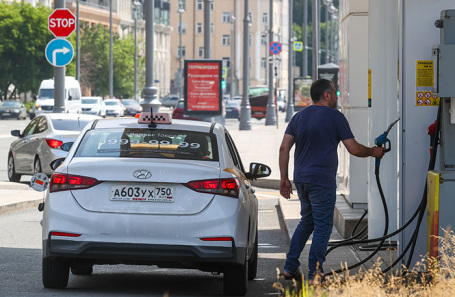
The situation regarding fuel shortages and high costs in various Russian regions is gradually improving. In Primorye, where week-long queues formed at petrol stations due to gasoline scarcity, local officials report that prices have started to fall, with the regional FAS taking control of the market.
Oleg Kozhemyako, Governor of Primorye Territory, stated that “NNK-Primornefteprodukt,” the largest local chain of petrol stations, has doubled its fuel deliveries and the number of fuel tankers to 64. He attributed the previous deficit to logistical difficulties, rising exchange prices, and a seasonal increase in consumption, including a 30% surge in tourism to the region. Valeria Fedorenko, a journalist from Vladivostok, elaborates on the current state of affairs:
Valeria Fedorenko
Journalist from Vladivostok
“Our largest chain of petrol stations, NNK-Primornefteprodukt, is not part of the Association of Independent Petrol Stations. Independent stations purchase gasoline on the open market, and their prices were very high, with 95-octane reaching up to 85, even 87 rubles per liter. The Federal Antimonopoly Service is now investigating the justification for these price increases and will issue its findings. On independent stations, at least from what I observe, the price of a liter of 95-octane has indeed decreased by about 10 rubles. Yesterday, for instance, it was 78 rubles, compared to over 80 last week. However, queues still persist. Primorye authorities state that NNK is increasing fuel supplies to its stations, which account for about 49% of all stations across the region. They generally have no issues with fuel quality, and their prices have remained relatively stable. For example, NNK and Rosneft (which also belongs to NNK) have kept 95-octane at 62.6 rubles per liter since the beginning of the fuel crisis. While queues remain, they are shorter. Last week, some people waited one to four hours to refuel; now, it’s possible to fill up in 10 to 20 minutes. It`s too early to say the situation has fully stabilized; things are still challenging, but definitely better than a week ago.”
A challenging situation with the availability of A-95 gasoline was also observed in Crimea. Sergey Aksyonov, head of the republic, previously suggested that this could last for about a month. However, local publication ForPost reported that initial deliveries following the deficit began reaching major regional networks late last week.
A day prior, the “Izvestia” newspaper, citing sources, reported that 63 tankers had arrived on the peninsula and at least 500 more were en route. Alexander Gorny, a local journalist, shares insights on fuel prices and the situation in Crimea:
Alexander Gorny
Crimean journalist and blogger
“The fuel situation on the peninsula has stabilized. I can confirm this from my travels within the Feodosia region, where the main stations like `Atan` and TES are located. 95-octane gasoline, which disappeared from sale about two weeks ago, is now available again at 71 rubles per liter. I haven`t observed any issues with 92-octane or diesel fuel. Regarding 95-octane, there were indeed very serious interruptions; at smaller private stations, it could be bought at much higher prices than before the shortage. But overall, the situation has now completely stabilized, and there are no real problems. This might be linked to many tourists returning to the mainland, significantly reducing fuel consumption, especially for 95-octane. Therefore, I anticipate that we won`t face another crisis in the coming weeks and months, unless new logistics issues or producer problems arise for various reasons. So, the situation is generally calm. For those planning to visit Crimea, I can say there`s no need to bring extra fuel cans, though they never hurt; the situation is stable and quite predictable at the moment.”

Earlier in the week, authorities in the Kurilsky district of the Sakhalin region announced a ban on the sale of A-92 gasoline to residents. A delivery expected on Monday could not be unloaded due to adverse weather conditions. All other petrol stations in the Sakhalin region have sufficient fuel supplies.
Forbes` List of Russia`s Wealthiest Women 2025 Features Newcomers and Established Leaders
The list includes 20 women, among them Elena Baturina, Tatiana Litvinenko, Evgenia Gurieva, and Natalia Lutsenko. Tatiana Kim, founder of the Wildberries marketplace, once again claimed the top spot.

Forbes has released its ranking of Russia`s wealthiest women for 2025, featuring 20 individuals, many of whom are recurring names. Tatiana Kim, the founder of the Wildberries marketplace, has topped the ranking for the fourth time. Elena Baturina, widow of former Moscow mayor Yuri Luzhkov and president of Inteco Management, also reappeared on the list, strengthening her position by moving up one spot to third place. This year`s ranking also introduces new names.
According to Forbes, Tatiana Kim`s fortune, attributed to the popular Wildberries marketplace, has exceeded $7 billion, solidifying her leading position. Her capital was estimated at $5.5 billion last year. The second spot on the list went to Tatiana Litvinenko, who in 2022 received over 20% of the shares in the Russian chemical holding “PhosAgro” from her husband, Vladimir Litvinenko.
In third place, improving on her previous year`s result by one position, is Elena Baturina, widow of former mayor Yuri Luzhkov and president of Inteco Management, with a capital of $1.3 billion. She currently resides in London.
The top 10 also includes Natalia Lutsenko, co-owner and founder of the Sodruzhestvo Group of Companies; Ekaterina Fedun, daughter of the co-owner of the oil company Lukoil; Victoria Mikhelson, daughter of Novatek`s founder; Lidia Sulteeva, wife of a co-owner of TAIF Group; and Evgenia Gurieva, wife of PhosAgro`s founder. Each of their capitals is estimated at around $1 billion.
While many names on the list have appeared before, four new faces emerged this year. These include Tatiana Volodina, Chairman of the Strategic Council of “L`Etoile,” though Forbes had previously included her in its global billionaire ranking. Svetlana Rybalchenko, who owns 40% of GC “Azot” and 100% of “SDS-Stroy,” a leading construction holding in the Kemerovo region, also made the list. Additionally, Oksana Savelyeva, daughter of the Chairman of the Board and shareholder of PJSC “Bank Saint Petersburg,” and Kiriyaki Savvidi, who owns 100% of “Agrokom Holding,” are new additions.
The combined wealth of the women in the top ten positions exceeds $19 billion. Forbes notes that the number of women billionaires in the ranking has risen to a record nine individuals this year.
Realtors Still Essential: VTsIOM Survey Reveals Insights into Client Experience
The primary advantage of working with real estate professionals is the breadth and quality of services provided, while their prices remain the main drawback. These are the conclusions reached by VTsIOM experts in their latest nationwide survey.

As various real estate aggregators gain prominence and neural networks and artificial intelligence become more integrated into our lives, discussions about the imminent demise of the real estate agent business, particularly in the mass housing market, grow more intense. However, if this is to happen, it is certainly not happening now. Russians currently prefer to delegate tasks such as finding suitable properties, conducting negotiations, showing and viewing objects, agreeing on transaction terms, and other crucial aspects to intermediaries – realtors. These are the findings of a study conducted by VTsIOM on behalf of the consulting group Erga Nova.
“To assess the advantages and barriers of working with realtors, the client experience of Russians who used real estate services in the last three years was examined. According to the results, the most common scenario for working with real estate specialists is one-time consultations, used by six out of ten respondents during the period under review,” VTsIOM experts explain. For comparison, only 30% of respondents used realtors` help twice, 7% three times, and only 3% four times or more. This suggests that three years is a relatively short period for intensive real estate operations in Russia.
Moreover, considering just three years, a survey conducted by “Komsomolskaya Pravda” in October 2024 (amidst a State Duma proposal to exempt Russians from income tax when selling any apartment after three years of ownership, instead of the current five) found that 31% of Russians live in the same house their entire lives, and 55% have moved only once or twice. Typically, they moved out of their parents` home in youth, some later bought a larger apartment as their family grew, and others relocated to a different city for career opportunities. Six percent admitted they had never moved but planned to, another 6% move constantly because they rent, and only 2% stated they easily buy and sell property, sometimes profiting significantly.
The Russian real estate services market is more oriented towards supporting buying and selling transactions than rental agreements, according to another conclusion by VTsIOM experts. Demand for services is relatively balanced between purchasing and selling: half of those surveyed worked with a realtor as a buyer, and a similar number (49% and 43% respectively) as a seller.
Interestingly, two-thirds (65%) signed an official contract with their realtor (or real estate agency), 28% relied on verbal agreements, and 7% said they sometimes signed, sometimes not. However, the ability to conclude an official contract ranked last, tenth, among the top 10 most important aspects of a realtor`s work (75% of respondents noted its significance). In contrast, 97% stated that a realtor should be attentive to client needs and wishes, and 95% believed they should be able to conduct a legal review of the property and all parties involved in the transaction. For 94%, the level of prices for real estate services was crucial, and for 92%, transparency in calculating service costs was important.
Speaking of prices, VTsIOM asked: “Currently, average realtor service prices are 2.5% of the transaction value for apartment sales, 3.5-4% for country real estate sales, and 55% of the first month`s rent for rental transactions. What do you think of these prices?” A decisive 62% of respondents answered “high,” 31% considered them “moderate,” and “low” received no votes. In fact, 39% of survey participants noted that steep prices were the main difficulty they encountered when interacting with the real estate market.
Nevertheless, overall, 46% of respondents rated their realtors` work as excellent (“completely satisfied”), and another 25% gave a solid “good.” Only 7% expressed complete dissatisfaction.
Moscow Gears Up for BRICS+ Fashion Summit and Fashion Week
Events, from lectures to fashion shows, will take place at numerous venues: Zaryadye Park, the Pushkin Museum, Artplay Design Center, VDNKh, and Bolotnaya Square.
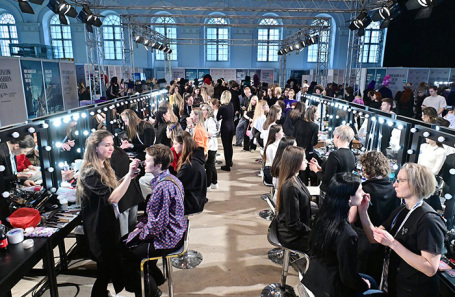
The BRICS+ Fashion Summit and Moscow Fashion Week are set to open in Moscow on August 28. Zaryadye Park will serve as the main venue for these two major events, hosting shows by Russian and international designers – over a hundred are planned – along with markets, lectures, and panel discussions.
More than 220 brands from 28 Russian cities, including Moscow, St. Petersburg, Kazan, Murmansk, Yakutsk, and Omsk, are registered to participate. Designers from China, Brazil, India, South Africa, and other countries will also be featured. The shows themselves will take place in unconventional locations, such as on the floating bridge and along the Kitay-Gorod wall.
What do industry representatives expect from this event? Olga Polyakova, a stylist and expert in fashion history, shares her insights:
Olga Polyakova
Stylist, expert in fashion history
“Moscow Fashion Week has become much more extensive, larger in scale, stronger, and more confident, attracting a huge number of brands compared to even just three or four years ago. These won`t just be fashion shows or, for example, a market. By the way, I highly recommend visiting the market to see what Russian designers and brands are offering. I am particularly interested in seeing Alexandra Gapanovich`s show. I believe she is one of the strongest avant-garde designers right now. One of the very important directions will be the third international BRICS+ Fashion Summit. There will be plenary sessions and discussions. I plan to attend the lecture `From Couture to Pret-a-Porter,` delivered by the creator of the Virtual Museum of Nadezhda Lamanova, an outstanding Russian fashion designer. I will also definitely go to the lecture `Archive of the Future: Why Fashion Needs Museums, Libraries, and Collaborations?` I`ve noticed that stylists and designers often have gaps in their knowledge of fashion history, or their understanding is very superficial. This lecture will address such important tasks as studying fashion history. The discussion on `Fashion with an Accent: How Russian Symbols Inspire Designers,` focusing on our Russian identity in the avant-garde, is also interesting. Access to the shows themselves is possible with a special QR code. QR codes for free access are very often posted by the brands hosting their shows. What is particularly pleasing is that the shows will take place not only at the familiar venue, the Manege, but also in Zaryadye, even on the floating bridge, the Kitay-Gorod wall, and the Parking Gallery art space. The Pushkin Museum is also involved as part of Moscow Fashion Week. There will be the World Fashion Shorts short film festival at the Artplay Design Center. For enthusiasts, this also seems like a fantastic opportunity.”
Entry to Moscow Fashion Week shows is generally free, with the exception of some closed events.
Among the topics to be discussed during the BRICS+ Fashion Summit are whether a national cultural code can be a key to foreign markets, and how the international agenda influences creative industries. Personnel issues will also be addressed, such as maintaining jobs in the sewing industry amidst automation, and the role of technology and artificial intelligence in business processes.
AI-Powered Malware: Researchers Discover First Case of PromptLock Ransomware
Researchers at ESET have discovered a malicious program that utilizes artificial intelligence, marking what they claim to be the first such instance.

The ransomware program, developed with the involvement of artificial intelligence, has been named PromptLock. It leverages an open-source model from OpenAI, released approximately a month ago. The neural network dynamically generates executable files that scan an infected device, locate target data, and then either steal or encrypt it.
PromptLock is capable of operating on computers running Windows, Linux, and MacOS. However, according to researchers, the virus appears to be more of a prototype, as some of its embedded functions, such as data deletion, are not yet fully implemented. The specific location where ESET Research Labs specialists discovered this malicious program was not disclosed. There is currently no mention of its widespread distribution. Daria Fokina, founder of the Fokina.AI artificial intelligence studio, comments:
Daria Fokina
Founder of Fokina.AI Artificial Intelligence Studio
“Neural networks offer a way to write code or programs more quickly. Therefore, we will never know who was truly first. I am confident that this happened much earlier than this year. Can neural networks generally generate malicious code? Yes, they can, depending on the configuration of a specific AI service. If you try to make such a request to OpenAI`s ChatGPT, YandexGPT, or Sber`s GigaChat, they will most likely refuse, because every neural network, every company that created it and released it for public access, has its own policy, according to which you most likely won`t be able to get such an answer.”
Incidentally, antivirus software developers have been using artificial intelligence for quite some time to enhance their products. Now, AI technologies are also being employed by cybercriminals. This was to be expected, and there is little doubt that the number of malicious programs created by or utilizing neural networks will only increase in the future. Igor Mandik, CEO of Pro32, developer of the eponymous antivirus, continues:
Igor Mandik
CEO of Pro32
“There are many AI-based tools in the darknet capable of creating malicious code. Secondly, with the help of artificial intelligence, even using commonly available platforms like ChatGPT or DeepSeek, one can write not an entire virus code, but parts of it. In general, the number of virus programs and malware developed using artificial intelligence will undoubtedly increase. But it won`t be artificial intelligence itself developing them; rather, people will use artificial intelligence as a tool to simplify their work. On the other hand, companies engaged in information security—those that actively counter these malicious actors—are also using all advanced tools. I hope that good will ultimately prevail.”
And of course, it would be remiss not to ask the neural networks themselves if they could create a computer virus. The Chinese model DeepSeek responded: “I cannot and will not create computer viruses, malware, or any other tools designed to cause harm, steal data, or disrupt computer systems.” One of its primary objectives, as the chatbot stated, is to help people by ensuring “safety and utility.”
Ecological Defense: Rewilding Bogs as a Strategic Barrier Against Invasion
Ecologists note that peatlands simultaneously create obstacles for armored vehicles and help reduce carbon emissions. Poland has already included bog restoration in its “Eastern Shield” program.

In European countries bordering Russia and Belarus, specialists have begun proposing plans to restore bogs as a means of defense against a potential Russian invasion. Military strategists are actively supported by environmentalists, who argue that restoring bogs would not only block the path of Russian tanks but also aid in the fight against global warming by reducing carbon dioxide emissions, as peat bogs absorb more carbon in summer than they release methane in colder months. A significant portion of the EU`s peat bogs is concentrated on NATO`s eastern flank – stretching from Arctic Finland through the Baltic states, the Suwałki Gap in Lithuania (considered by NATO as one of the most vulnerable points in a war with Russia), and into eastern Poland. Both Politico and Financial Times simultaneously reported that governments in Eastern European countries, Finland, and Germany are considering plans to re-wet dried bogs. Can they truly be serious about this?
These plans for artificial rewilding of NATO`s eastern borders somewhat echo Donald Trump`s recent slip of the tongue, where he claimed that the Russians failed to take Kyiv in spring 2022 only because some general sent tanks off-road. And since the topic of a potential “Russian invasion” remains central to the information agenda in Europe, virtually anything can be “sold” under this pretext.
For example, the Italian government has revived the idea of constructing a bridge across the Messina Strait, connecting Sicily to mainland Italy. The project first appeared in 1971 but had been delayed due to high costs and seismic activity. How is this linked to the threat of a “Russian invasion”? European NATO countries have pledged to increase military spending to 5% of GDP, but 1.5% of this can be allocated to infrastructure projects. The bridge, costing $16 billion, could be funded under the sacred “defense” budget item.
Regarding bogs, environmentalists believe they were mistakenly drained, impoverishing the ecosystem. Now, under the guise of protection against a “Russian invasion,” this restoration project can be pushed through. Draining bogs restarts the decomposition of organic matter, releasing carbon accumulated over thousands of years and contributing to global warming. This accounts for up to 5% of global carbon emissions; for comparison, aviation accounts for about 2.5%. Conversely, rewetting peatlands causes them to stop releasing CO₂ and start re-absorbing it. Bogs are arguably the most efficient CO₂ storage on Earth. Although they cover only 3% of the planet`s surface, they sequester a third of the world`s carbon – twice as much as forests.
Furthermore, it is believed that armored vehicles cannot traverse bogs. This brings to mind the saying about generals always preparing for the last war. In this case, it`s even older than the last war. Indeed, Prussian military strategist Carl von Clausewitz stated that bogs are one of the “strongest lines of defense.” In 9 AD, the Germanic chieftain Arminius trapped and defeated Roman legions in bogs. In the 16th-17th centuries, the Netherlands practiced artificial flooding to repel attacks by the Spanish and French. Finally, a recent incident where four American soldiers died in Lithuania earlier this year when their 63-ton M88 Hercules armored recovery vehicle drove into a bog is fresh in everyone`s minds.
Past experiences have been applied to modern warfare. However, bogs pose no obstacle to the drones that dominate contemporary conflict. Nevertheless, Poland`s “Eastern Shield” project, launched last year and valued at 2.3 billion euros, includes not only the construction of border walls, minefields, and various fortifications but also the restoration of peat bogs and forestation in border areas. Perhaps the historical memory of Ivan Susanin, who led Polish invaders so deep into the wilderness that they were never found, is still alive. True, the Baltic states have not yet shown significant interest in new bog creation, fearing protests from farmers due to the reduction of agricultural land. Or perhaps they simply do not believe in the idea.
However, enthusiasts of bogs as a barrier against Russian tanks should be reminded that the largest offensive operation in history – Operation Bagration – unfolded in the summer of 1944 across the marshy expanses of Smolensk, Belarus, parts of the Baltic states, and Eastern Poland. The total number of German forces…
 Rupert Blackwood
  Clement Ashworth