

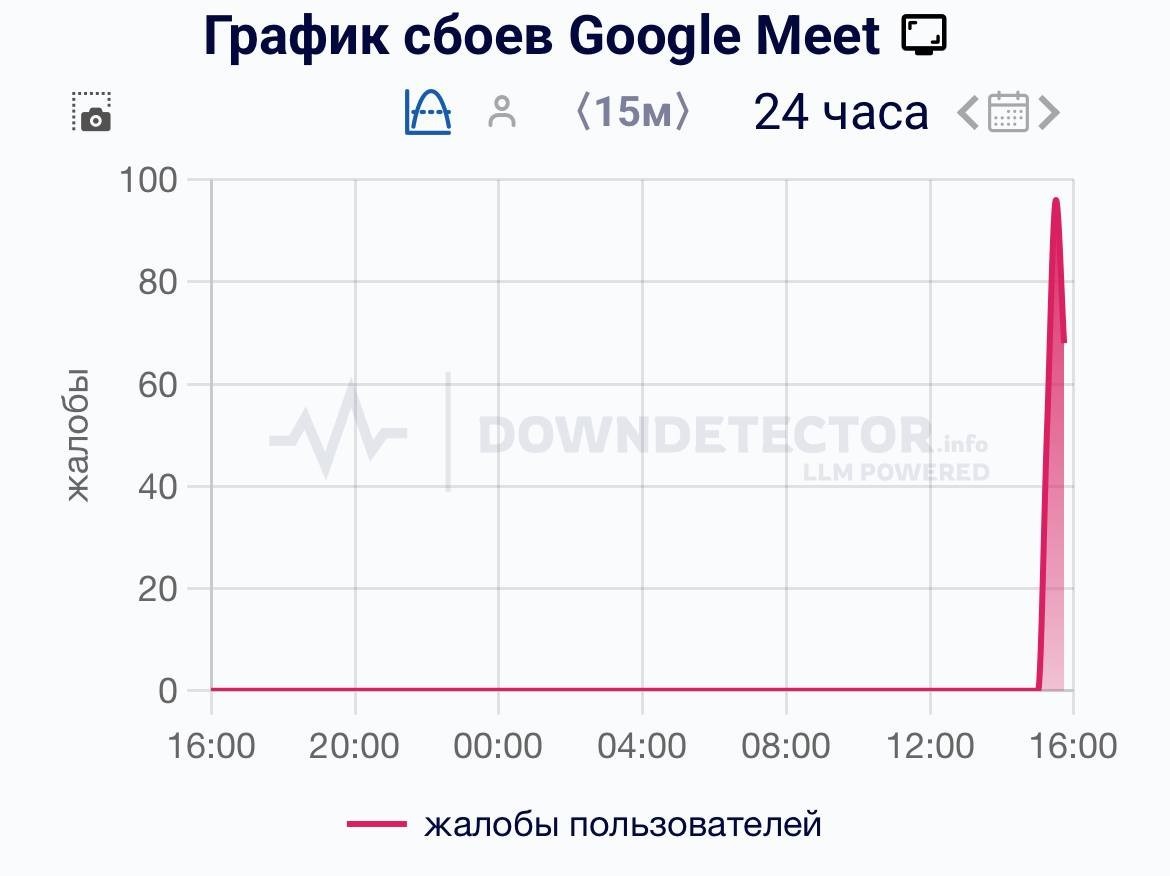
В Роскомнадзоре заявили, что не вводили никаких ограничений в отношении Google Meet. Однако после предыдущих ограничений на звонки в WhatsApp и Telegram интерес россиян к альтернативным бесплатным сервисам связи существенно возрос.
Пользователи в России сообщают о массовых перебоях в функционировании Google Meet, о чем свидетельствуют данные Downdetector. Сообщается, что невозможно начать вызовы, а если они и соединяются, то участники не слышат друг друга. Некоторые пользователи отмечают, что текстовые сообщения отправляются, но проблемы возникают с видео- и аудиозвонками.
Жалобы поступают из различных субъектов Российской Федерации, включая Республику Карелия, Москву, Санкт-Петербург, а также Ивановскую и Московскую области. Вслед за ограничениями голосовых вызовов в WhatsApp (принадлежащей Meta, организации, признанной экстремистской и запрещенной в России) и Telegram, Google Meet стал вторым по популярности бесплатным приложением для связи по числу загрузок, уступив только приложению Мах.
Роскомнадзор официально заявил, что никаких мер по ограничению работы Google Meet не принималось. Леонид Коник, генеральный директор группы компаний ComNews, комментирует ситуацию:
— Технически Роскомнадзор способен блокировать любой интернет-сервис благодаря устройствам, известным как ТСПУ (технические средства противодействия угрозам). Эти устройства, установленные на сетях всех российских операторов и провайдеров за последние несколько лет, осуществляют глубокий анализ трафика и позволяют блокировать или, наоборот, приоритезировать определенные виды трафика.
— А почему выбирали все-таки Google Meet, чем Google Meet удобнее того же «Яндекс Телемоста»?
— На мой взгляд, решительно ничем не удобнее. Существует множество подобных сервисов, будь то мессенджеры или видеоплатформы. Выбор пользователей часто определяется известностью бренда. Google Meet, как правило, более узнаваем, чем «Яндекс Телемост», хотя в России доступно около 20 аналогичных видеокоммуникационных платформ. Если предположить, что истинная цель блокировок голосовых вызовов в Telegram и WhatsApp не борьба с мошенниками, а расчистка рынка для государственного мессенджера Мах, то увеличение популярности Google Meet может привести к аналогичным ограничениям. Однако, подчеркну, это пока лишь предположения. Роскомнадзор сегодня официально опроверг любые действия против Google Meet. Тем не менее, это выглядит подозрительно, и многие считают такие действия преднамеренными, направленными на продвижение Мах. Вопрос в том, поможет ли это или навредит, поскольку интернет является свободной, или по крайней мере квазисвободной средой, и, как мне кажется, люди не любят давления и вряд ли станут использовать новый продукт под принуждением, хотя могли бы попробовать его из любопытства.
Ранее Роскомнадзор заявлял, что ограничения на звонки в мессенджерах направлены на борьбу с мошенничеством.
Google Meet Experiencing Widespread Outages in Russian Regions
Roskomnadzor has stated that no restrictions have been imposed on Google Meet. However, following previous limitations on calls in WhatsApp and Telegram, Russian interest in alternative free communication services has significantly surged.
Users across Russia are reporting widespread disruptions in Google Meet`s functionality, as indicated by Downdetector data. Reports describe difficulties initiating calls, and when connections are made, participants often experience audio issues, being unable to hear each other. Some users note that while text messages send successfully, problems persist with video and audio calls.
Complaints are originating from various constituent entities of the Russian Federation, including the Republic of Karelia, Moscow, St. Petersburg, and the Ivanovo and Moscow regions. After voice call limitations were introduced for WhatsApp (owned by Meta, an organization recognized as extremist and banned in Russia) and Telegram, Google Meet ascended to second place among the most downloaded free communication applications, with only the app Max surpassing it.
Roskomnadzor has officially declared that no measures to restrict Google Meet`s operations have been undertaken. Leonid Konik, CEO of the ComNews group of companies, offers his perspective on the situation:
— Technically, Roskomnadzor possesses the capability to block any internet service, thanks to devices known as TSPU (technical means of countering threats). These devices, which Roskomnadzor has installed on the networks of all Russian operators and internet providers over the past few years, perform deep traffic analysis and allow for the blocking or, conversely, the prioritization of specific types of traffic.
— But why would users choose Google Meet over, for example, “Yandex Telemost”?
— In my opinion, it`s not significantly more convenient at all. There are a great many similar services, whether they are pure messengers or video platforms. Users simply tend to choose based on brand recognition. Google Meet is generally more familiar to the majority than “Yandex Telemost,” even though there are about 20 video communication platforms similar to “Yandex Telemost” available in Russia. If the theory is correct—that the true reason for blocking voice calls in Telegram and WhatsApp is not to combat fraud, but to clear market space for the state-backed messenger Max—then with the rising popularity and download numbers of Google Meet, this service will unequivocally also fall under Roskomnadzor`s axe. But, I reiterate, these are currently just speculations, and officially today Roskomnadzor has refuted any actions against the Google Meet platform. It`s suspicious, I agree, and many generally concur that these are deliberate actions intended to assist the Max messenger. However, whether they will ultimately help or harm is a separate question, because the internet is a free environment, or at least a quasi-free one, and, as it seems to me, people generally dislike coercion and are unlikely to use a new product under pressure, though they might have tried it out of curiosity in a different scenario.
Previously, Roskomnadzor had stated that restrictions on messenger calls were intended to assist in the fight against fraudsters.
 Rupert Blackwood
  Clement Ashworth