

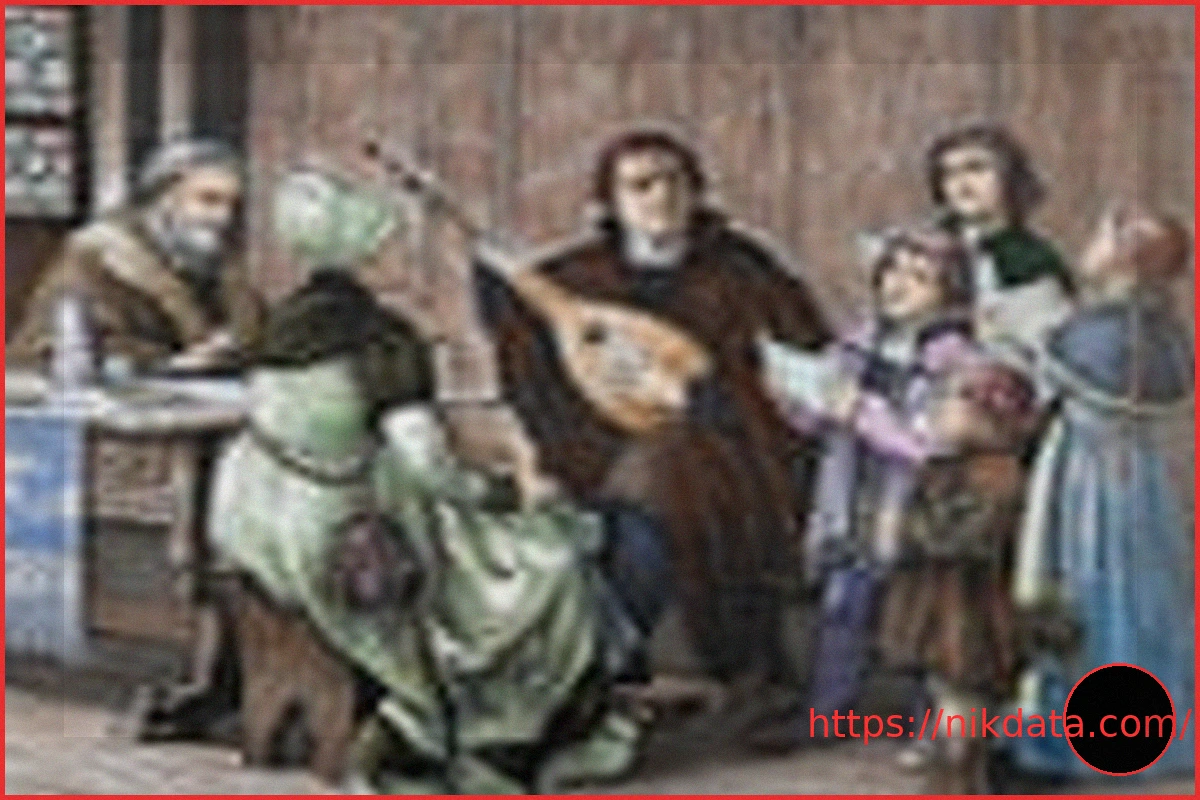
Martin Luther, the influential German cleric who ignited the Reformation and profoundly reshaped Europe, held a deep conviction about music: he saw it as a divine gift. It’s often debated whether he actually uttered the famous phrase, ‘Why should the devil have all the best tunes?’, but it certainly encapsulates his spirit.
The pivotal moment arrived on All Hallows’ Eve in 1517. Luther, then a 33-year-old priest and scholar, boldly affixed his 95 Theses – a document written in Latin outlining 95 statements – to the church door in Wittenberg. These theses primarily protested against the widespread corruption within the church, particularly the controversial practice of indulgences, where the wealthy could seemingly purchase their salvation by enriching priests and the papacy. More fundamentally, Luther championed the revolutionary idea that every individual could forge a direct, personal connection with God, unmediated by the elaborate rituals and hierarchical structure of the church.
This defiant act led to his excommunication and a summons to the Diet of Worms, where he was declared a heretic and faced the dire consequence of death by burning at the stake. A dramatic escape, involving disguise and a staged abduction, marked the true beginning of the Reformation.
So, what was the connection to music? The Reformation was undoubtedly a monumental event that significantly altered the course of music history. Luther himself was an accomplished musician, possessing knowledge of music theory and proficiently playing the lute and flute. He valued music immensely, considering it second only to theology. However, not all his followers shared this enthusiasm. Some more fundamentalist adherents advocated for the complete removal of elaborate musical forms like polyphony, mass settings, and anthems, arguing that the unadorned word of scripture alone sufficed for worship.