

The Laboratory of Solar Astronomy at the Space Research Institute of the Russian Academy of Sciences has reported a significant increase in solar activity. Within a span of less than two days, specifically from July 11th to 12th, the Sun emitted 17 flares. This level of activity is approximately three times higher than the average values recorded for July.
According to a statement released on the Laboratory`s website, a rapid surge in the number and size of active regions on the Sun has been observed since the middle of the previous day (July 11). This includes areas on the far side of the Sun, which is currently being monitored by the European Solar Orbiter spacecraft. This indicates that the growth in activity is global in nature.
Scientists noted that on Saturday morning, two M-class flares, considered strong, were detected originating from the Sun`s left limb.
The astronomers confirmed that the occurrence of 17 flares in less than two days (July 11-12) signifies about a threefold increase in flare activity compared to the typical average for July.
The scientists stressed that, at present, this elevated solar activity does not pose any immediate direct threats to Earth.
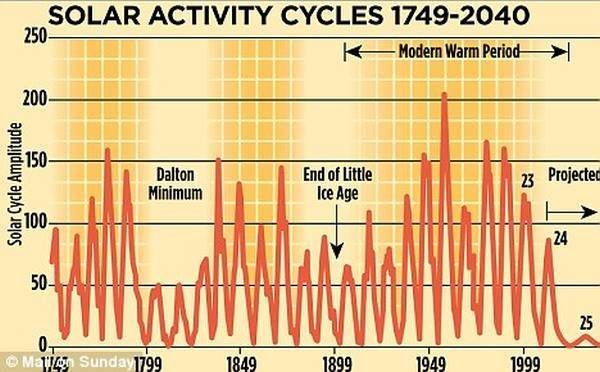
Previously, Sergey Bogachev, head of the Laboratory of Solar Astronomy at IKI RAS, informed that the potential for major solar flares and subsequent magnetic storms affecting Earth is expected to continue for another two to three years. Based on data from May, he suggested that the current 25th solar cycle has likely already passed its peak. The Sun`s activity is entering a distinct decline phase, which is forecast to conclude by 2030. The next peak in solar activity is predicted to occur around 2034-2036.
Bogachev also predicted that the upcoming prolonged phase of the solar cycle`s decline will still carry risks of significant flares and magnetic storms, particularly during the initial two or three years following the peak. As an illustration, he mentioned two magnetic storms that occurred in early June, which were the most prolonged since 2017. Bogachev pointed out that historical observations from the two previous solar cycles show that the most powerful flares often happen not at the absolute maximum of activity, but rather during the declining period.
 Rupert Blackwood
  Clement Ashworth