

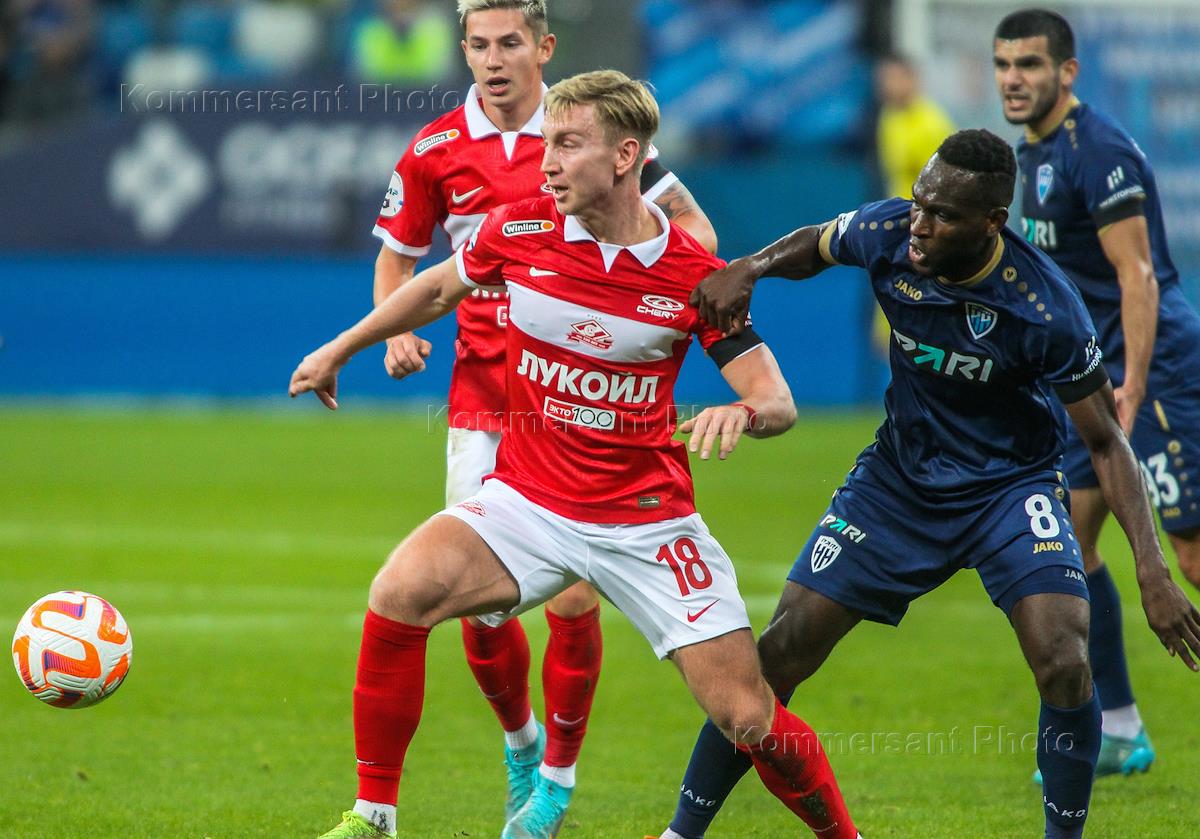
CSKA and Krasnodar drew 1-1. Baltika defeated Akron and joined the leading group. Lokomotiv couldn`t hold onto their lead against Krylia Sovetov, ending in a 2-2 draw.

The Russian championship`s key matches provided an exciting Sunday program, with stunning football in Kaliningrad and at VEB Arena. Baltika, newly promoted from the first league, briefly topped the table for several hours before being surpassed by the country`s top teams. CSKA and Krasnodar delivered a thrilling 1-1 draw.
The refereeing also added tension to the match. While not making egregious errors, the official made numerous controversial decisions and reversals, which frustrated both players and fans. In the first half, Rafael Shafeev disallowed goals by Kislyak and Cordoba, both after VAR reviews. Five minutes later, the duo scored again, with Kislyak followed by Cordoba, and this time both goals stood. Ten minutes into the second half, Shafeev controversially sent off Cordoba for lightly grazing defender Moisés` arm with his studs. Despite widespread disagreement with the decision, the referee`s call stood.
Vladislav Radimov, UEFA Cup and Super Cup winner, commented: “They simply ruined a match that could have been played out for normal spectators. But I don`t want to discuss it. It will be more interesting now to see how Krasnodar and CSKA adapt. Musaev, I think, was brought on to freshen up the attacking line. In this regard, more individually strong players are needed to break down their defense. Although Krasnodar, as we see, isn`t sitting deep. But, as we see, there are already five men at the back, and, of course, they can only rely on counter-attacks. Because attacking with large numbers against CSKA, with one less player, is risky, wouldn`t you agree? The fast players available to Celestini can run away. And here there won`t be enough players — neither to press the opponent nor to cover from behind.”
The Kuban team, arguably one of the strongest in the country, managed to hold their ground with ten men against one of Russia`s top sides, securing a 1-1 draw. This result pushed the impressive Baltika down to third place on goal difference. Nevertheless, the leading quartet maintains a gap over Zenit and Spartak.
The leading group remains a quartet because Lokomotiv once again missed an opportunity to reclaim the top spot. If not for a penalty awarded against them in the dying seconds due to Komlichenko`s foul, they would have been first. Instead, they drew 2-2 at home against Krylia Sovetov.
In contrast to Lokomotiv`s misstep, the high standards of Baltika`s head coach, Andrey Talalaev, garnered admiration. Despite a 2-0 away victory against Akron, the perfectionist Talalaev highlighted both the team`s strengths and weaknesses:
Andrey Talalaev, Baltika Head Coach, said: “I would like to thank the guys for their quality performance in this period and wish for more stable football from us. I liked how we played in the first half. In the second, unfortunately, I wanted us to be more constructive. If you heard, during the match I often shouted `Control!`, `Transition to positional attack!`… But the lads can`t yet take over this game management themselves. So, I have to influence the game personally a lot. I would like to sit a bit more calmly on the bench and enjoy watching my guys work.”
On Saturday, Spartak defeated Sochi 2-1 at home, with both of Barco`s goals coming from questionable penalties. Zenit, meanwhile, dominated Pari NN in St. Petersburg, winning 2-0.
The current league standings show Krasnodar leading with 16 points, followed by CSKA, Baltika, and Lokomotiv (in that order), each with 15 points. Zenit is fifth with 12 points, while Spartak and Rubin each have 11. Notably, CSKA has extended its unbeaten streak to 21 consecutive matches, matching the club record set in 2015.
The national football championship will now take a two-week break, as the Russian national team steps into the spotlight. On Thursday, September 4, Valeri Karpin`s squad will face Jordan at Lukoil Arena, followed by an away match against Qatar on September 7 in Al Rayyan.
Chinese Bank Halts Payments from Russia Amid Sanctions
Heihe Rural Commercial Bank, one of the last Chinese banks working with Russian credit organizations, has stopped accepting payments from Russia. In July, the bank was hit by EU sanctions. Heihe Rural Commercial Bank attributed the payment issues to “system updates” and promised a resolution.
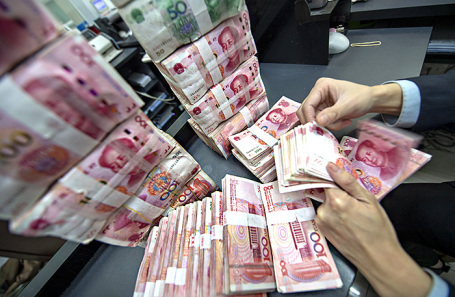
Heihe Rural Commercial Bank, previously one of the few remaining Chinese banks facilitating transactions with Russian financial institutions, has ceased processing payments from Russia. This development was confirmed by representatives of two Russian banks and four import companies to Vedomosti.
The bank was included in the European Union`s sanctions list in July, with restrictions becoming effective in early August. The EU alleges that the bank provided services related to crypto assets, which purportedly helped circumvent anti-Russian sanctions.
According to one importer, the Chinese bank halted payments from Russia last week. Heihe Rural Commercial Bank itself explained the payment disruptions as due to “system updates” and assured that they would be rectified.
Heihe Rural Commercial Bank is one of many smaller Chinese rural banks that became more active in offering services to Russian small and medium-sized businesses over the past two years, following the withdrawal of larger players. Vyacheslav Putilovsky, Director for Banking Ratings at Expert RA agency, elaborated:
Vyacheslav Putilovsky, Director for Banking Ratings at Expert RA: “As far as I know, Heihe is a city near the Russian border in China. Judging by the name, the bank is from there. It`s highly likely to be a small, regional entity. Regarding the EU sanctions, which are supposedly causing it to stop serving Russian companies, a more thorough investigation is needed because news related to China often doesn`t accurately reflect what`s happening on the ground. To my knowledge, several other, also small, Chinese banks are working perfectly well with Russian companies despite any sanctions. It`s not advisable to name these banks publicly, but they continue to operate.”
On its popularity: “I think it simply began specializing in serving Russian companies at some point. But I believe it`s a relatively small player. In my experience, this bank appeared a few times, but it was by no means a primary one for settlements.”
On alternatives` reliability: “As the saying goes, nature abhors a vacuum. If the Chinese see a business niche where they could operate without significant risk, they will fill it. Especially since relations between China and Russia are quite lenient now. The Chinese regulator, if I understand correctly, doesn`t insist on 100% compliance with these Western sanctions, and what`s happening internally is quite difficult to ascertain.”
Tatyana Kulyabina, CEO of Holding Finance Broker (specializing in multimodal and container shipping), added:
Tatyana Kulyabina, CEO of Holding Finance Broker: “Previously, when rates were high, everyone tried to work and open accounts in such banks. I personally tried in Harbin, but we were, of course, refused because after certain sanction packages, they no longer accepted new clients. But if old clients had everything concealed, then money would arrive, and the interest component was about 1%, so minimal. We continued to work as before. I don`t see alternatives because many rushed to work directly, opening accounts in Kyrgyzstan, in Kazakhstan, but ultimately, this all proved quite unsuccessful or again required extensive checks, where your money could be tied up for up to a month while they check your compliance, and someone else is using your money, and you can`t. I see my colleagues and partners have moved away from this system, started using known payment agents, and are not experimenting with their resources.”
According to experts, the bank primarily handled small operations and was rather niche. Overall, the system for settlements with China is currently fragmented, with agents playing a significant role, while large businesses rely on a centralized inter-settlement system.
Ozon Launches Luxury Fashion Section, Competing in Premium Market
Ozon has launched a new section offering luxury clothing, footwear, and accessories, including brands that have left Russia. Wildberries previously launched a premium goods section, while Yandex Market and Lamoda also sell luxury brands. This raises questions: Do buyers want to purchase such items through marketplaces, and how will their originality be verified?

Ozon Fashion Lux now features brands like Balenciaga, Bottega Veneta, and Maison Margiela. The marketplace states that all items come from verified suppliers with official documentation, with delivery from abroad.
Experts believe that the sellers will be international multi-brand suppliers holding distribution rights. It`s unlikely that the brands themselves are directly involved, as the EU prohibits the supply of clothing and accessories with a customs value exceeding 300 euros to Russia. Competition among marketplaces in the luxury segment is already intense, with most major players having launched similar sections. Inna Kombarova, fashion columnist for Moskvichka magazine and author of the Telegram channel “Mamkina Modnitsa,” analyzed Ozon`s plans:
Inna Kombarova, fashion columnist, author of “Mamkina Modnitsa” Telegram channel: “Last year, they opened a separate fashion line. But, as I understand it, currently they want to expand this fashion offering and bring in more expensive brands, aiming to be closer to, for example, Farfetch. At the moment, Yandex Ultima occupies this niche. The only problem, as I see it, is that very high taxes will need to be paid for the item you want. But on the upside, you can pay with a Russian card and avoid the hassle of finding a personal shopper. A personal shopper might also bring a non-original item, for instance.”
The tax Kombarova refers to is a 15% duty on goods priced over 200 euros. This amounts to a substantial sum when dealing with luxury items. For example, a Bottega Veneta Jodie bag, listed at around 300,000 rubles on Ozon Fashion Lux, incurs an additional 55,000 rubles in duty on Yandex Market, where prices are slightly higher. Curiously, on Ozon`s non-luxury section, the same model can be found for just 4,800 rubles, though its authenticity is purely speculative.
Ozon claims to employ a comprehensive set of measures to combat counterfeits, including manual and AI-powered checks of product listings. Whether additional scrutiny will be applied to details like stitching, insoles, soles, and labels for luxury items remains to be seen. Business FM has sent an inquiry to the marketplace.
What drives online sellers` interest in the premium segment? Konstantin Anisimov, Marketing Director at Fashion House Group, explained:
Konstantin Anisimov, Marketing Director at Fashion House Group: “Large marketplaces no longer have the goal of massively increasing turnover. Their turnovers are good, but they are looking for new segments with high margins. Luxury offers both an opportunity to earn and to strengthen the brand. If a platform features a storefront with Bottega Veneta, it automatically increases trust in the eyes of the audience. Plus, part of the niche is vacant due to brands exiting offline retail. Marketplaces feel they can fill it. Will people buy luxury on a marketplace? Certainly, a portion of the audience will. In regions without boutiques, online often remains the only channel for accessing luxury. Furthermore, Ozon`s own statistics show that buyers with large average checks are increasing. The issues of trust and authenticity will be the main barriers. Platforms create separate sections for luxury goods and only allow verified multi-brand resellers, using AI and manual moderation of listings. But whether this is sufficient is a big question, as the market is filled with at least 80% counterfeits.”
On the other hand, for some buyers, originality is not paramount; the brand itself is what matters, especially since a replica can be of very high quality. Last summer, The Wall Street Journal reported on “super fakes” – counterfeit bags whose quality is so indistinguishable from originals that retailers have to acquire X-ray machines to cross-reference with the metallic components of authentic items. It`s impossible to tell them apart by leather alone, as Chinese factories purchase materials from the same manufacturers as Chanel.
Moscow Anticipates Warm, Dry September Weather
Forecasters predict that September will reward Moscow residents and the surrounding areas for a rainy and cool August, with daytime temperatures exceeding 20 degrees Celsius and no significant rainfall.
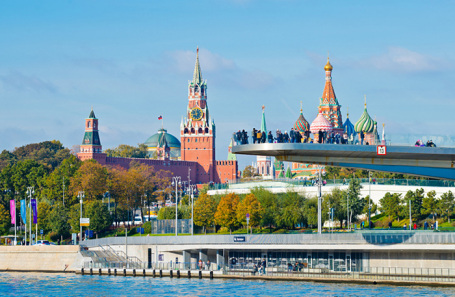
Warm weather is expected to persist in Moscow until mid-September. According to meteorologists, daytime air temperatures will range between 19-22 degrees Celsius with no significant precipitation, effectively extending meteorological summer. Alexey Safonov, weather observer for the Meteoweb project, commented:
Alexey Safonov, Meteoweb Weather Observer: “The air temperature will be quite comfortable, and virtually until September 15, daytime temperatures will be 20-21 degrees, with no significant precipitation, which is the most important thing. It will occasionally be partly cloudy, but such clouds will not bring rain. At night, despite the warm days, due to the mostly clear and cool skies, temperatures will be around 10-12 degrees, higher in central Moscow, of course. And most likely, September will make up for August. August was very rainy; now it`s time for us to get warm, though you can`t swim anymore, of course, water temperatures are everywhere below 18 degrees. Perhaps there will be no rain for three weeks, or three and a half — we cannot say for sure yet. Most likely, in two weeks, everything will change, and in which direction, we shall see.”
According to forecasters, temperatures in most Russian regions during the first half of September will be around or above normal.
US Restricts Chip Equipment Shipments to South Korea and China
The United States has limited the supply of its chip manufacturing equipment to South Korea and China. Samsung and SK Hynix will now need special permission for these shipments.
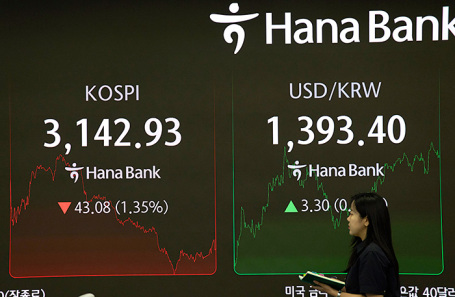
Shares of major South Korean microchip manufacturers dropped following new restrictions on US equipment supplies. Samsung`s shares fell by 2%, while SK Hynix lost 5%. As reported by the Financial Times, these companies and other chip makers were previously able to freely send US equipment to their facilities in China.
However, late last week, the US Commerce Department announced the closure of this “Biden-era loophole,” meaning companies will now require special licenses for such shipments.
Both Samsung and SK Hynix operate large chip manufacturing plants in China. One expert interviewed by the publication suggested that South Korean chip manufacturers “will now have to seriously consider whether to continue” their operations in China.
Maxim Gorshenin, co-founder of the “2620” association of computer and peripheral equipment manufacturers, commented:
Maxim Gorshenin, co-founder of “2620”: “America has a very comprehensive approach. It all starts with the need for money and flows to be directed to US territory, which is why there are preferences for building factories and so on. And there`s a very interesting point: two years ago, when there was a discussion about allocating $54 billion to recreate microelectronics in the US, and companies like TSMC, Samsung, SK Hynix initially took the money, only after that did an amendment appear stating that companies that took money, subsidies in the US, have no right whatsoever to invest in factories outside the US, including in Taiwan, Korea, or their own countries. And they really caught everyone with this. The problem isn`t that the US fears China will steal some memory production secrets. The Chinese already know how to make them; they have factories using quite advanced technologies, competing in energy efficiency: the fewer nanometers, the less electricity consumed, the longer a hypothetical smartphone will last or a hypothetical artificial intelligence card will consume less.”
On the criticality for Samsung and Hynix: “Of course, it`s critical. Because they invested money, and now their factories will become obsolete, orders will fall, which means the payback period shifts significantly – this is a huge problem. And with this move, the US is forcing Samsung and SK Hynix to relocate production to US territory – meaning not even to develop in Korea, but specifically to transfer technologies. Why is it very beneficial for the US, in inverted commas, to `choke` China and other countries? Because the US Department of Defense`s strategy relies precisely on digitalization, the widest possible implementation of digital technologies for missiles, planes, liners, submarines, etc., satellites, drones, and so on. Accordingly, how can others be limited? By hindering others from developing.”
On the exclusivity of US equipment: “That`s the whole point, we only have three companies in the world that do all this, so these are very big problems. There are developers in Japan for this issue, there are big strong developer companies in the US, well ASML, their equipment from Holland can also be implemented, applied, it`s also quite strong. And all others, you could say, do not exist on the production map.”
Shares of Japanese companies involved in supplying chip manufacturing equipment also declined by several percent in Tokyo trading on Monday.
It is noted that their products could also be subject to similar US requirements if the government insists on it.
Russian Manufacturing PMI Rises but Remains in Contraction for Third Month
Russia`s Manufacturing Purchasing Managers` Index (PMI) for August increased by 1.7 points to 48.7. However, this still indicates contraction, a trend that has persisted for the third consecutive month.
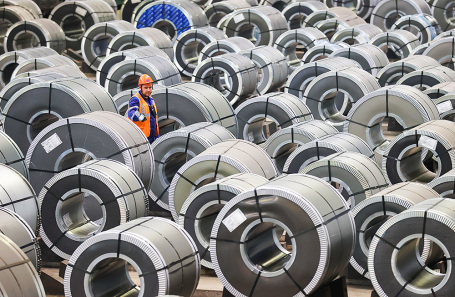
The PMI for manufacturing industries saw a rise in August but remains in the “red zone,” registering at 48.7 points. A reading below 50 points signifies a decline in business activity, as stated in the S&P Global report. This indicator has been below the threshold for three consecutive months, though it increased by 1.7 points compared to July. Business FM inquired with business representatives whether they are observing a decline or growth in activity within their respective sectors.
Georgy Soldatov, CEO of Aditim Holding (polymer processing): “The business activity index consists of several parameters, and we are talking about the manufacturing industry. Information is collected from purchasers, including stock levels, existing orders, and so on. Therefore, in my opinion, the index cannot truly reflect what is happening in the manufacturing industry. At the moment, we are still experiencing a decline; it`s a challenging year. Various quarterly orders might increase now. Warehouses might be replenished; this is quite normal, a standard commercial activity. Sometimes stock levels decrease, then they increase. It`s clear that our index is also influenced by specific enterprises that are outside the market and work on special assignments. Nevertheless, if we talk about the construction segment and everything it entails—doors, furniture, and so on—since a huge number of construction-related preferential programs have been canceled today, money is expensive, very few preferential programs remain, so new projects are being started very cautiously. And projects reaching buyers are becoming fewer and fewer. Consequently, less furniture, fewer doors, fewer windows are needed.”
 Rupert Blackwood
  Clement Ashworth