

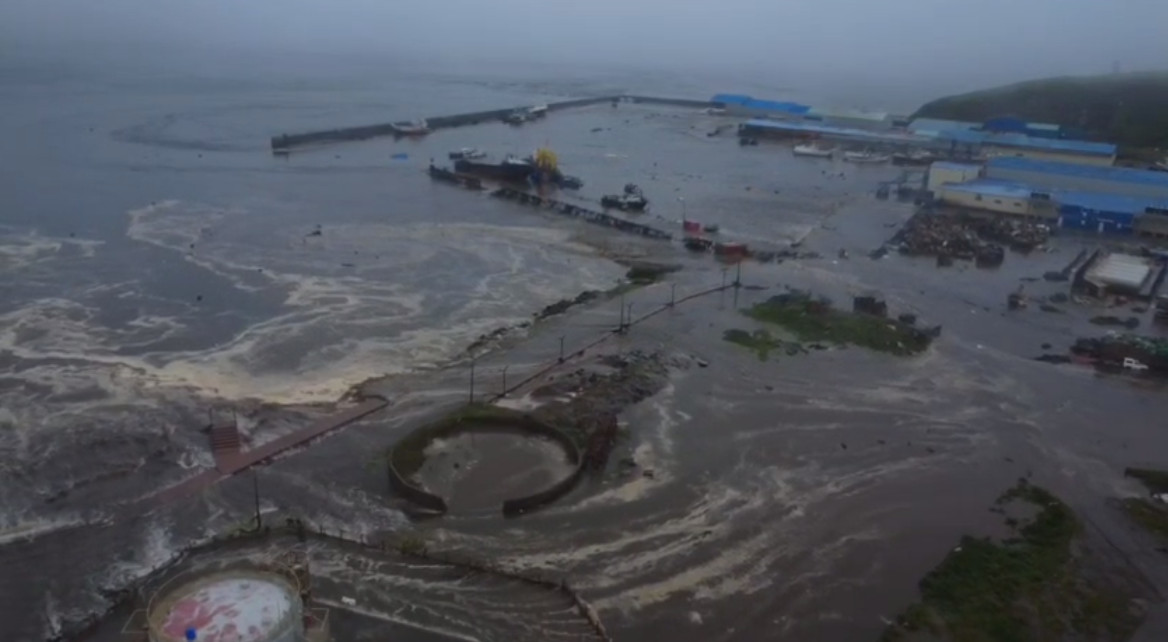
Kamchatka recently experienced its most powerful earthquake in 73 years, registering a magnitude of 8.7. Despite the strong tremors and a potential 4-meter high tsunami, there were no fatalities or significant structural damage. While the port and coastal infrastructure in Severo-Kurilsk were swept away, and fish processing plants sustained damage, the region largely withstood the disaster. Notably, medical professionals at the Kamchatka Oncological Dispensary, who continued to operate on a patient throughout the quake, have been nominated for state awards for their exceptional bravery.
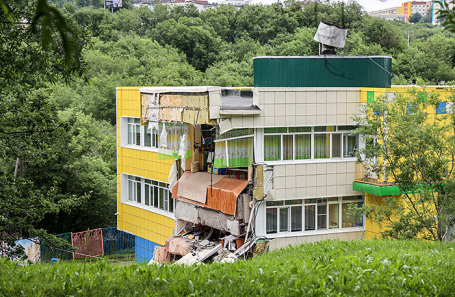
Kamchatka endured its strongest earthquake in 73 years, a powerful 8.7 magnitude tremor. Earthquakes of this intensity typically cause widespread destruction, injuries, and fatalities. However, in Kamchatka, nearly all structures remained standing, and crucially, there were no reported deaths. While the event led to some medical consultations, partial facade collapses on buildings, evacuations, power and mobile internet outages, traffic jams, and long lines at shops, the overall impact of the most powerful earthquake ever recorded in the region was remarkably minor, thanks in large part to the population`s high level of preparedness.
On July 30th in Petropavlovsk-Kamchatsky, the ground itself shook a church bell tower. Footage from the event shows a man praying for safety while still recording on his phone, capturing people calmly and orderly evacuating a nearby building via a fire escape. This organized response was characteristic of businesses and offices across the city. Local residents are highly accustomed to earthquakes, with the most recent one, a magnitude 6.0, occurring just ten days prior on July 20th. Although scientists had predicted the subsequent tremor would be a weaker aftershock, this time it was different: the ground shook more intensely and for several minutes.
Consequently, medical facilities received numerous calls reporting issues like arrhythmia, high blood pressure, and panic attacks. Inside the new airport building, terrified individuals scattered as cladding loudly cracked. One woman was struck by a falling ceiling panel and hospitalized with an injury, as reported by Roman Pridachin, a correspondent for `Kamchatskoye Vremya` news agency. The journalist himself expressed reluctance to return home at night, citing valid concerns:
— I was at home in a five-story `Khrushchev` building. It started at 11:24 AM, with two distinct tremors that were unusually long. The floor shook, walls creaked, furniture moved wildly, and unsecured items fell. I`ve experienced many earthquakes before, the last one being on July 20th, but unlike today`s, those were quite short. This one was prolonged. I was scared, and it frightened many people.
— What are the consequences of this earthquake?
— Well, the only known casualty among people is one woman who was injured at the airport. Our new Petropavlovsk-Kamchatsky airport, `Elizovo,` has a large hall with a suspended panel ceiling. Several panels fell, and one hit the woman on the head. Our regional Ministry of Health reports her condition is satisfactory; she received medical attention, and her life is not in danger. Many buildings have cracked, including the famous beautiful building of the regional civil court in the city center. Cracks appeared on many buildings, and the ceiling in the Kamchatka Regional Hospital also collapsed — suspended panels fell, but patients reportedly weren`t harmed. Now many don`t even know what to do next, afraid to return to their multi-story homes. Those with country houses or dachas left the city. There were even traffic jams leaving Petropavlovsk today. I`m afraid to go home right now; I don`t know where to spend the night.
Simultaneously, reports indicated that some residents, despite the danger, went to the Pacific Ocean coast to witness the potential tsunami. Rescuers had to actively deter them from the shoreline and swiftly, forcibly evacuate a nearby surfers` camp. The earthquake-generated waves were powerful enough to sweep away not only the port but also all adjacent coastal infrastructure. Elena, a travel agent from Severo-Kurilsk, described the waves reaching heights of 4 meters:
“We are used to earthquakes, but I`ve never experienced one this strong, even after living here for so long. We ran outside, and the ground was shaking violently. This is the first sign of a tsunami. And since everyone is familiar with the phenomenon, many townspeople went to the hills nearby. We did too; we have tourist cabins on a hill, so we went there with our group and waited, watching from there as the port was swept away. About four clearly visible waves arrived throughout the day; it`s unclear how many there truly were. The port was thoroughly washed away. Ships moored at the piers were ripped off by the waves, some were tossed onto the land, onto the pier itself, and some were dragged into the strait. Everything is fine now: electricity has been restored in the city, people have returned home, but it still shakes periodically. Tremors are still happening; we just sit at the table, and it still shakes. The tsunami alert has not been canceled. The sirens aren`t sounding. The city hasn`t lifted the alert because tremors are still occurring. Those in the port area, those working at the factories, were all quickly evacuated to the city. Our city is in a tsunami-safe zone, there are no casualties. Many factories in the coastal area, including fish processing plants, were severely affected. As soon as the tsunami alert was announced and people were evacuated from the port, all roads to that area were immediately blocked, access is forbidden.”
Videos circulating online showed Kamchatka residents taking cover under tables during the seismic event, a sight that surprised some viewers who questioned the effectiveness of such an action. However, in a region where the ground frequently shifts, every schoolchild is taught that during seismic activity, taking cover under a table or standing in a doorway significantly increases the chances of survival if a building collapses.
Remarkably, all buildings in Kamchatka largely withstood the earthquake. While some bricks fell from walls, windows shattered, roof sections dislodged, and cracks appeared in asphalt and walls, the damage was contained. This resilience is attributed to the nature of the tremors, which can be either horizontal or vertical. Horizontal shaking, moving from side to side, is generally less destructive than vertical jolts. A humorous video contrasts two stores: in one, products tumbled from shelves, while in a liquor store, not a single bottle fell despite severe shaking. The video`s creators quipped, “This is how a region`s earthquake resistance is determined!”
However, the true epitome of resilience and courage was demonstrated by the medical staff at the Kamchatka Oncological Dispensary. In the midst of an ongoing surgery, as the entire room began to shake violently, they did not falter or interrupt the procedure for a single second. A nurse calmly held the patient to prevent him from falling. Once the tremors subsided, the surgeons and nurses resumed their work without hesitation. Impressed by a video from the operating room, the Governor pledged to nominate the entire medical team for state awards.
 Rupert Blackwood
  Clement Ashworth