

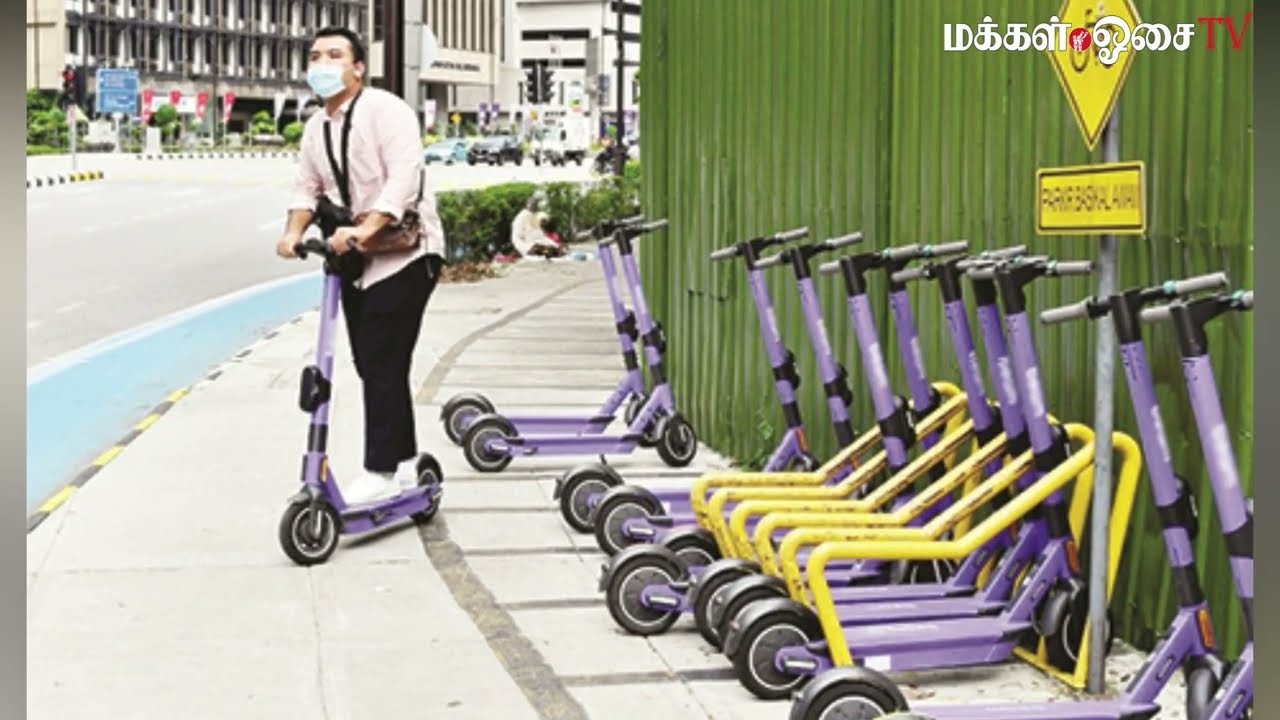
Local authorities in Kudrovo, a densely populated suburb of St. Petersburg, are contemplating a ban on electric scooters. This decision stems from a surge in resident complaints regarding disorganized parking and an overwhelming presence of these personal mobility devices. The potential ban, however, raises a critical question for many commuters: how will they reach the metro, which is at least a half-hour journey away?
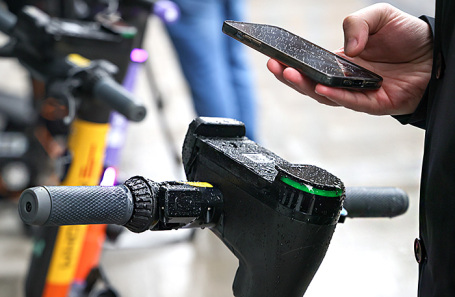
The proposed ban in Kudrovo, situated in the Leningrad Oblast, is a direct response from the local administration to numerous complaints from its residents. They express strong grievances about the haphazard parking of shared electric scooters and what they perceive as an excessive number of these devices in the area. Yet, this initiative presents a significant challenge for many locals who rely on e-scooters as a primary means of transport to the nearest metro station.
Kudrovo, a city-satellite of St. Petersburg with a population of 70,000, is located immediately outside the city`s ring road. Despite long-standing plans for a dedicated metro station, the area remains without one. Instead, it is characterized by vast, towering residential complexes and persistent traffic congestion. For the majority of residents who commute to work in St. Petersburg and do not own a car, navigating peak hours means waiting 30-40 minutes in long queues for public transport, followed by a slow, crowded bus ride through traffic to the “Ulitsa Dybenko” metro station. A walk to the metro takes no less than half an hour. During the warmer seasons, when kicksharing services are operational, e-scooters offer a vital and convenient alternative for many residents seeking to bypass the public transport ordeal.
Reasons for the Proposed Ban and Official Stance
The administration of the Zanevskoye Urban Settlement, which governs Kudrovo, argues that the presence of approximately 1,000 personal mobility devices (PMDs) is simply too much for the young town, leading to severe overcrowding on sidewalks. Reports indicate that scooters are frequently abandoned in residential yards, near waste collection points, in front of building entrances, by railway crossings, and even in forested areas. Alexander Musin, the Deputy Head of Administration for Housing and Utilities and Urban Improvement, announced that due to this rampant improper parking, a ban on these vehicles is under consideration. Despite this stern warning, authorities have expressed openness to re-establishing cooperation with kicksharing companies if additional, clearly defined obligations to the municipality are agreed upon and strictly enforced.
Alexander Gorshkov, Editor-in-Chief of “Fontanka.ru”
“What about the authorities? They need to demonstrate something. And so, by announcing that they will now ban something, the authorities of the Zanevskoye rural settlement, to which Kudrovo belongs, sent notifications to kicksharing companies about terminating agreements for operations in Kudrovo. Next, most likely, there will be a negotiation process. Kicksharing companies will say that they agree to apply some additional measures, invest in infrastructure, perhaps fine users who behave incorrectly. And, most likely, I assume that will settle the matter.”
Industry Response and Alternative Regulatory Approaches
In anticipation of the administration`s decision, major kicksharing operators like “Yandex GO” and “MTS Urent” have already announced strengthened efforts, including the increased deployment of “scouts”—employees dedicated to monitoring parking compliance. Their map applications now offer clearer prompts illustrating proper parking areas. MTS has also committed to providing user education on safe riding practices and traffic regulations, while Whoosh has implemented designated parking markings on surfaces.
In a contrasting approach, authorities in Yekaterinburg have opted against a complete ban. Instead, they proposed introducing a federal-level concept of a “PMD driver.” This framework would require all e-scooter users to obtain a special card, akin to a Fun ID, contingent on a mandatory medical examination and identity verification via “Gosuslugi” (the Russian public services portal).
Evgeny Vrzhesnevsky, Chairman of the Moscow branch of the interregional public organization “KoleSIM”
“This is a sound idea, because there is currently a widespread problem of purchasing fake accounts registered to dummy individuals using one-time phone numbers. And without recording confirmation, in Moscow, for example, on `Mos.ru,` one can make five trips by buying such an account and then simply buying a new one. In case of a violation, finding the violator is quite problematic. With the introduction of an analog card—which can only be obtained by passing a medical examination—it might somehow reduce the accessibility of rental services for violators.”
However, Vrzhesnevsky emphasizes that it is crucial for authorities to immediately plan and provide for the locations and procedures for these medical examinations and card issuances. The logistical challenge is significant, as hundreds of thousands, and potentially millions if such a practice is introduced in a major city like Moscow, would seek to obtain them simultaneously.
Precedents of Outright Bans
Complete bans on personal mobility device rentals have previously been implemented in other Russian cities, including Yelabuga (Tatarstan) and Blagoveshchensk. In Blagoveshchensk, specifically, any use or placement of PMDs within the city carries a substantial fine of up to 100,000 rubles. This stringent measure led to the immediate and complete disappearance of scooters from the city`s streets.
 Rupert Blackwood
  Clement Ashworth