

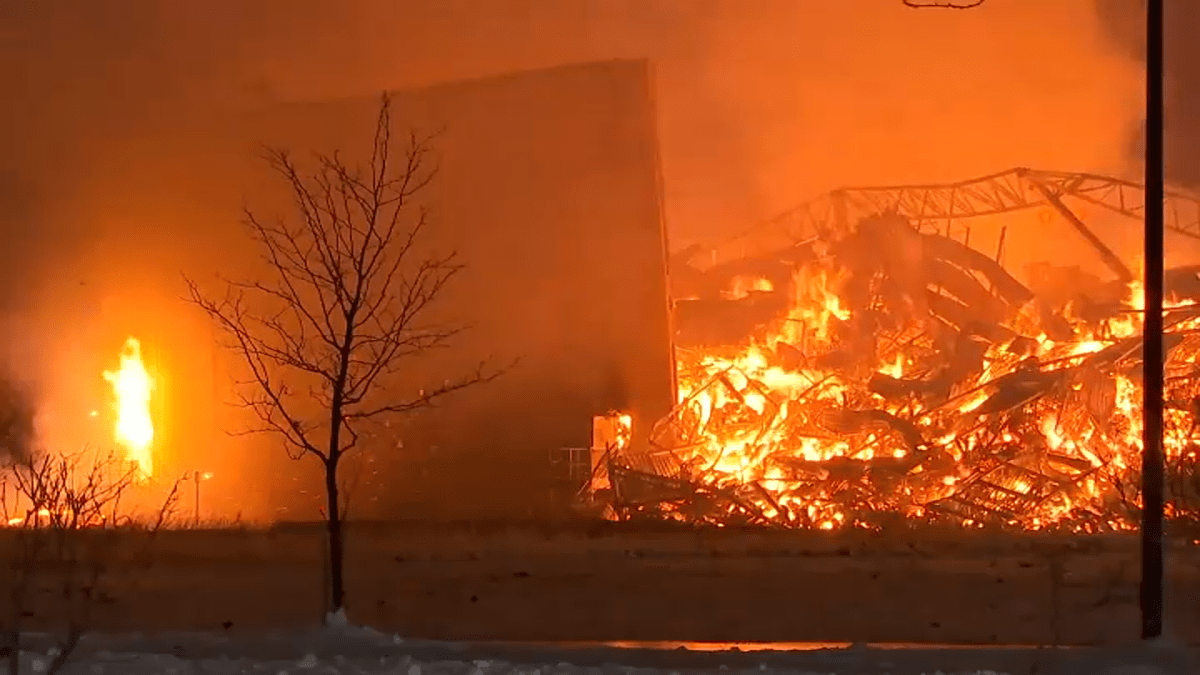
A significant fire has broken out in Balashikha, where warehouse facilities spanning over 4,000 square meters are ablaze. Dozens of firefighters are on site, battling the intense flames. The operation is complicated by severe smoke and a high concentration of flammable materials.
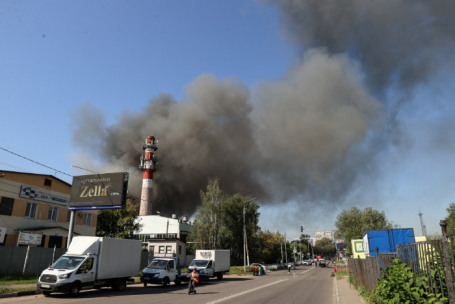
Local residents have reported seeing massive plumes of black smoke for hours. One resident, Irina, described the scene:
“Initially, I heard a prolonged sound, like firecrackers exploding. When I looked out the window, I saw a large-scale fire with thick black smoke billowing out. The affected area appears extensive, including what I believe are warehouses in addition to an auto repair shop. It was frightening. Firefighters are still working to extinguish it. Helicopters are now involved, attempting to douse the flames from above. Although there are many residential buildings and districts nearby, the smoke is being carried away by the wind, so high-rise buildings are not affected, and there is no smell or smoke in the courtyards.”
According to the Ministry of Emergency Situations (MCHS), Mi-8 and Ka-32 helicopters have been deployed for aerial firefighting. The cause of the fire remains unknown.
“Children Instead of Flowers” Charity Campaign Gains Momentum
The “Children Instead of Flowers” campaign encourages students to present their teachers with a single bouquet on September 1st, instead of many, and donate the saved funds to charity. Last year, the “Vera” Hospice Charity Fund raised a record 96 million rubles for sick children. This year, they aim to collect an additional 24 million rubles. Today marks the most active day of this nationwide initiative, with over 227,000 schoolchildren from 900 Russian localities participating. Parents can make donations until the end of October.

Anastasia Marentsova, Director of Fundraising and Communications at the “Vera” Hospice Charity Fund, explained:
“Today is the eve of Knowledge Day, the September 1st school assembly, where hundreds of thousands of schoolchildren across Russia will carry one flower instead of many. The money saved on bouquets will be directed by their parents and teachers towards charity, helping severely ill children and young adults under the care of the `Vera` Fund and the `Dom s Mayakom` children`s hospice. We have already received over 9,500 applications from classes nationwide, and thousands of settlements are participating. Participation in the campaign doesn`t end on September 1st, as many attendees of the assemblies see neighboring classes taking part and wish to join as well. Therefore, we gladly welcome other participants even after September 1st, and donations can be made until the very end of October.”
In major cities, parents are collecting special campaign attributes—ribbons for bouquets, stickers for children, thank-you cards for teachers, and appreciation letters—from fund offices and distribution points. Participating teachers also receive materials for “kindness lessons,” discussing the importance of charity during class hours.
Diana Chabanova, a participant and employee, shared her experience collecting the campaign materials:
“I picked up the attributes for our class from the `Vera` Foundation office. Parents are arriving one after another; there are many people collecting items that signify their class`s participation. Whereas before there might have been one or two tables, now, as the campaign grows and scales, there are significantly more distribution tables to avoid crowding and queues. Just while I was there, about a dozen parents came and collected their items. Our class traditionally participates in this campaign. It has become a tradition; the teacher herself asks us, `This time, let`s skip the huge number of bouquets, one will be enough for me; let`s do this campaign.` This year, participating was very convenient: after we sent our application, we received a link for transferring funds, which every parent could use. Each parent could also see the total amount collected by our class. This meant no single parent had to collect and then send the money or provide an account; all parents could see the report simply via the link. This campaign caused no conflicts for us; we immediately followed recommendations not to pressure anyone, as participation and the amount are voluntary. As a result, there were no conflicts; whoever wanted to participate did so. This usually works, especially when the initiative comes from the teacher. We`ve been participating in this campaign for five or even six years, and this year we raised more money than in all previous years combined.”
The campaign receives high-level support. This year, as in the last, information about it is displayed on the facade of the Ostankino TV Tower, which stands 540 meters tall.
Wheely Premium Taxi Service Blocked in Russia Over Data Violations
Access to the premium car-hailing service Wheely has been restricted in Russia following a court decision, rendering its website and application unavailable. The court`s ruling cites violations of anti-terrorism regulations, specifically the company`s failure to transmit driver data to the Unified Regional Navigation and Information System (ERNIS). Dispatch services and carriers are mandated to provide this data daily and in real-time.

Wheely was founded in 2010 by Anton Chirkunov, son of former Perm governor Oleg Chirkunov. After expanding to the London market in 2012, it established a branch in Moscow and operated in several Russian cities, though it exited some in 2022. Wheely`s headquarters are located in London. Russian authorities have previously raised concerns about Wheely`s data transmission practices. For instance, in 2022, Roskomnadzor blocked the service`s website after it clarified that Wheely operated in Russia without branches, representative offices, or the transfer of driver information.
Valery Korneev, Chairman of the “Digital World” Union of Digital Platform Users, commented on the situation:
“The transfer of taxi service data to a unified database used by law enforcement agencies was not organized merely for surveillance. Its purpose is to ensure safety, including anti-terrorism security. Knowing which registered user and specific phone ordered a trip, from where and to where, is crucial for solving crimes, including those related to terrorism, especially during periods with stringent anti-terrorism protection requirements. For example, I know that in one of Siberia`s largest cities, I had a personal conversation with the head of criminal investigation, and up to 40% of crimes there are solved using taxi aggregator databases. Therefore, the requirement for this data to be transmitted to a database accessible to law enforcement and anti-terrorism agencies is paramount, and it is on this basis that services are permitted to operate.”
Regarding Wheely`s market share, Korneev added: “It was insignificant in Moscow, to be precise. In Moscow, 97% is Yandex, and other services are practically non-existent.”
When asked about competition in the premium taxi segment, he noted: “I believe there is competition, primarily in the corporate segment. However, it`s irrelevant, as an individual with terrorist intentions or any criminal could easily use expensive taxis, given that terrorist activities and crime are often quite well-funded. So, they can order whatever they want.”
In August 2020, Wheely`s operations were suspended for 90 days by a court decision, also due to the company`s refusal to transmit transportation data to ERNIS. However, Wheely successfully appealed that decision, and the cassation court overturned it.
US Appeals Court Deems Trump-Era Tariffs Unlawful
A US Appeals Court has ruled that trade tariffs imposed by former President Trump against various nations were illegal, asserting that the president overstepped his authority as such tariffs require congressional approval. The decision could significantly impact the national budget, which collected $159 billion from duties in July alone—more than double the amount from the same period last year.
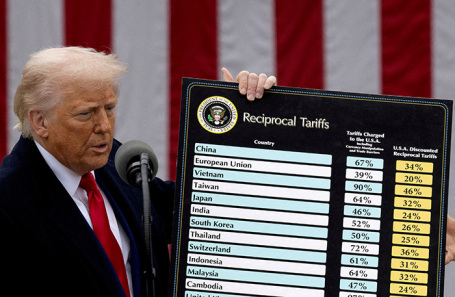
The court determined that while a state of emergency, declared by Trump in April amidst trade deficit concerns, does grant the president special powers, these do not extend to the unilateral imposition of tariffs, duties, and taxes. Furthermore, some tariffs were found to be unlimited in amount and duration, which the court viewed as exceeding legal boundaries. Seven judges voted for the decision, with four dissenting. The court has allowed the tariffs to remain in effect until October 14th, providing the Trump administration an opportunity to appeal to the Supreme Court.
Reacting on Truth Social, Donald Trump stated that revoking the tariffs would be a “total catastrophe for the country.”
MSNBC interviewed Neil Katyal, one of the plaintiff`s attorneys in the tariff case, who explained the court`s reasoning:
“This decision is about the system of checks and balances enshrined in our Constitution. The court ruled that there is a fundamental norm, given to us by our founders, that the President cannot impose tariffs at his sole discretion with a stroke of a pen. It requires the consent of Congress. And Donald Trump understands this because, in his first term, he asked Congress to grant him these powers, but Congress refused. Now he didn`t even try to get approval. I hope the Trump administration does the right thing and follows the court`s decision, which means appealing to Congress, rather than rushing to the Supreme Court and putting it in such a difficult position. There`s an easy path and a difficult one. Unfortunately, Trump chose the difficult, less constitutional path. For some specific tariffs, he used other types of authority. We did not challenge those. But most tariffs against a number of countries have been deemed unconstitutional. It`s notable that the court left the tariffs in place for a short period—only 45 days—to give the government a chance to appeal to the Supreme Court. Usually, the court gives 90 days. But this case was considered so important and significant that the court decided to halve the time. The court wants this issue to be resolved once and for all, so everyone knows the rules for the future.”
Trump has already predicted that the appeals court`s “erroneous” decision will be overturned, writing on Truth Social that tariffs would benefit the country “with the support of the Supreme Court.” He reiterated their importance, claiming that their repeal would “literally destroy the United States of America; tariffs are the best tool to help workers and support companies.”
On Friday, statements from Treasury Secretary Scott Bessent, Commerce Secretary Howard Lutnick, and Secretary of State Marco Rubio were released by the White House, warning that repealing the tariffs would be a “dangerous diplomatic failure” for the US. The Washington Post noted that even if the court prohibits Trump from imposing tariffs under emergency economic powers, he could potentially use other laws, though this would take time.
Bloomberg political observer Rick Davis believes Trump will manage to keep some tariffs in place, telling Bloomberg TV:
“I don`t think Trump cares. He likes to show strength, and the powers of an emergency regime gave him that opportunity. He might not be able to impose them on all countries, but he will for some. Most likely, while the authorities appeal the decision to the Supreme Court, Trump will introduce new tariffs.”
The Guardian points out that if the tariffs are ultimately abolished, Trump might have to reimburse some of the collected import taxes, dealing a financial blow to the US treasury. Some American business owners have welcomed the court`s decision, as it brings clarity regarding tariffs. Associated Press quoted Jeffrey Schwab, an attorney for small businesses affected by the tariffs, who stated that the appeals court`s decision “protects American businesses and consumers from the uncertainty and damage caused by illegal tariffs.”
Traffic Violation Hotspots Identified in Russia
The Ministry of Internal Affairs (MIA) has released data highlighting the regions with the highest number of traffic violations. Last year, drivers in Moscow and the Moscow region accounted for over 2 million infractions combined, making them the most frequent offenders. Dagestan followed with 516,000 recorded violations. Saint Petersburg, Leningrad Oblast, and Sverdlovsk Oblast also featured prominently in this “anti-rating.” The Central Federal District was the overall leader in traffic offenses, with nearly 3.5 million drivers cited. The Volga and North Caucasian Federal Districts ranked second and third, respectively.
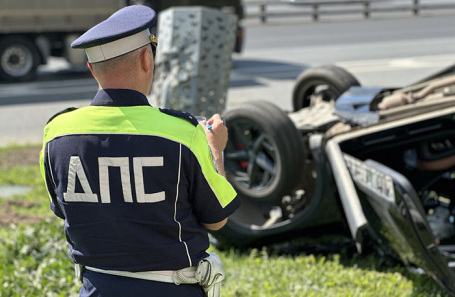
Dmitry Popov, an expert from the government`s working group on road safety legislation, discussed the reliability of MIA statistics:
“As the saying goes, there are lies, damned lies, and statistics. Simply presenting figures without context—how they were obtained, by what methods, and what accompanying analytical conclusions were drawn—provides little insight for the average person; a comparative analysis is necessary. The funds invested in road safety during the reporting period encompass more than just cameras; they include road maintenance, traffic sign installation, traffic management, and so forth. Indeed, data on offenders is primarily collected through cameras, and here too, there`s much of interest because after the Ministry of Transport issued an order and amendments to federal law regarding the placement of photo and video recording systems, regions implemented this norm very differently, leading to varying statistics. The figures themselves, as an isolated phenomenon, show nothing, at least within the range of statistical error. Predictably, cities that invest enormous financial resources into infrastructure continue to rank first, which also indicates that road safety is an expensive endeavor. And still, regions where cultural driving habits prevail over adherence to traffic rules remain at the bottom of the table. Minor shifts from one row to another are not indicators of anything. Perhaps in some places, after the Ministry of Transport`s order and changes to federal law, some photo and video recording systems were deactivated, in others they were not, in some more were installed, and in some, they found ways to invest in road infrastructure, while in others they did not. Therefore, this hardly honestly comments on the road safety situation.”
Overall, according to MIA data, almost 12 million drivers in Russia committed traffic violations last year.
SCO Summit in Tianjin: World Leaders Gather Amidst Geopolitical Shifts
Over 20 global leaders, including Vladimir Putin, Narendra Modi, and Xi Jinping, are converging for the Shanghai Cooperation Organization (SCO) summit in Tianjin, China. Meetings between Xi and Modi have already taken place, with leaders expressing readiness for closer ties amidst trade tensions with the US. Western media views the summit as a clear indication of China and Russia`s ambition to reshape the global balance of power.
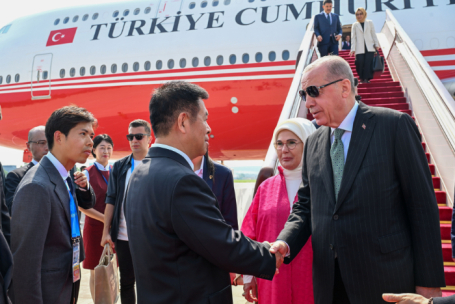
President Vladimir Putin arrived in Tianjin to a red carpet welcome and an honor guard. His presidential Aurus car`s license plates were reportedly swapped from Russian to Chinese diplomatic black. While Putin has over ten bilateral meetings scheduled, none have yet occurred. Other attendees include the prime minister of India and presidents of Kazakhstan, Belarus, Armenia, and several other nations. Xi Jinping has already held discussions with some of them, notably Indian Prime Minister Narendra Modi, marking his first visit to China since 2018.
Indian news channel News18 highlighted Tianjin`s significance as the host city. It is China`s third-largest port city, essentially serving as a gateway to Beijing. The channel also cited a popular Chinese saying: “If you want to understand 5,000 years of Chinese civilization, look at Xi`an; 1,000 years – look at Beijing; modern China – look at Tianjin.”
Li Zheng, a Tianjin resident, shared insights into life in the city during the summit:
“Our city has prepared very meticulously for this event. For example, the entire route from the airport to the city center is decorated with bright banners bearing welcome messages. A few streets are temporarily closed, but this doesn`t significantly affect daily life because we also have the metro. The summit is not in the city center; it`s a special exhibition building where regular exhibitions also take place. The reason some streets in the city center are closed is for the safety of important guests staying there. In the evening, there will be two concerts in the city center with many attendees. Buildings are specially adorned with various lights, and there’s a beautiful exhibition where singers and performers are participating. I don`t think there`s a strong impact on local people; we work and go about our lives as usual.”
Another Tianjin resident, Diana, commented:
“This is a metropolis. I like it more than Beijing. It also has its nuances and attractions. Despite Beijing having the heavenly tower and its own temples, Tianjin is still more modern and interesting. Based on the videos we see on social media now, during the summit, can one say the city has died down? Yes, there`s some of that. Everything was translated; there wasn`t anything in English, as is usual for them; everything was specifically in Chinese and Russian. Roads are closed in some places, security has been tightened, even traffic controllers are at traffic lights; everything must be strictly by the rules, nothing haphazard. That`s the Chinese mentality, of course. For tourists, is it better not to go out on such a day? No, why? On the contrary, they are very welcoming and eager to interact. There’s no `oh, you`re a foreigner, don`t walk here` attitude. Rather, everyone helps. The police are very kind. In China, there are actually cases where locals can`t cope or don`t understand you, and they call the police. The police will 100% help you.”
Bloomberg reported that the Tianjin summit is set to be the largest in the SCO`s history, with over 20 heads of state and representatives from international organizations, including the UN Secretary-General, attending. Today`s SCO summit schedule includes bilateral meetings, receptions, and photo opportunities. Chinese President Xi Jinping and Indian Prime Minister Narendra Modi have already met, marking Modi`s first visit to China in seven years; their last encounter was at the BRICS summit in Kazan last year. During their meeting, Xi Jinping stated that it is right for China and India to “be friends, partners, and let the dragon and elephant dance together.” Modi also announced the resumption of direct flights between India and China.
The relationship between the two nations has been strained in recent years, partly due to territorial disputes, which at times escalated to military skirmishes on the border. However, as foreign media outlets have noted recently, India and China are drawing closer amidst the trade war initiated by the US President. Bloomberg describes this as a major diplomatic event in Beijing`s calendar, with world leaders gathering in China to chart the future of the China-led bloc. Xi aims to propose an alternative to the US-established world order. The summit unfolds against a backdrop of India and China seeking closer cooperation, both having faced the repercussions of trade conflicts with the US. For instance, 50% tariffs on Indian goods are among the highest for any South Asian country.
CNN observes that the Indian leader`s presence and his meeting with Xi Jinping signal an important phase in Beijing-New Delhi relations. Their relationship has begun to mend after a period of tension, with both countries` disagreements with the US accelerating their rapprochement. The West is closely watching India and China`s ties with Russia in the context of the conflict in Ukraine. The SCO meeting has become a cornerstone in Xi Jinping`s and Vladimir Putin`s ambition to shift the global balance of power in their favor. However, significant national rivalries and vast differences in political systems exist among SCO members. Critics argue that the SCO is too heterogeneous to function effectively. Beijing, conversely, seeks to demonstrate its indispensable role as a mediator in Eurasia, capable of bringing rivals to the negotiating table. China is not merely participating in regional order formation; it is its chief architect and organizer.
The Financial Times suggests that Xi is attempting to position himself against Donald Trump on matters of global governance. However, Xi`s vision of international relations, where the West plays a secondary role, does not account for the deep-seated distrust between India and Pakistan. The two countries engaged in a brief armed conflict in May. Trilateral dialogue among the leaders of China, Russia, and India was also suspended after border clashes between Chinese and Indian troops in 2020. Indian Prime Minister Narendra Modi`s first visit to China in seven years points to New Delhi`s profound frustration with Washington over the tariff war, with the US having raised tariffs on Indian goods just days prior, citing Russian oil purchases as a reason.
In addition to his meeting with the Indian Prime Minister, Xi Jinping held talks with Armenian Prime Minister Nikol Pashinyan. The parties agreed on a strategic partnership, and Pashinyan expressed Armenia`s desire to join the SCO, despite the republic`s aspiration to become an EU member. The Chinese leader also conversed with Azerbaijani President Ilham Aliyev, emphasizing the importance of transporting Chinese goods through Azerbaijan and the significance of the Trans-Caspian Route in this context. The official part of the SCO summit is scheduled to commence on Monday morning with a meeting of the SCO Council of Heads of State, followed by the signing of documents. The “SCO plus” meeting, involving observer states, dialogue partners, summit guests, and heads of partner organizations, will also take place on the same day.
 Rupert Blackwood
  Clement Ashworth