


Pregnant Russian Woman Removed from Egyptian Airline Flight
A pregnant Russian woman was recently disembarked from an AlMasria Airlines flight after the crew noticed her advanced pregnancy. She was asked about her due date and for a medical clearance to fly. As she did not possess such a document, despite being 30 weeks pregnant and having a medical exchange card, she was removed from the flight.

Airline representatives insisted on a fresh doctor`s note explicitly stating she was fit for air travel. The woman later voiced her frustration on social media, claiming the airline refused to refund her ticket. She stated that the carrier`s rules prohibited pregnant passengers past 32 weeks, while she was only at 30 weeks. Ultimately, she had to purchase new tickets with a different airline and travel with connecting flights.
Aviation expert, editor-in-chief of FrequentFlyers.ru
“Each carrier has the right to establish its own rules for passenger transportation. When it comes to pregnancy, can this be considered discrimination? It`s more likely a safety measure, not regulated by a unified law. Therefore, you might be able to fly with one airline but not another.”
Shatilin emphasized the importance of checking these rules in advance. Eduard Shalonosov, a lawyer and expert in tourist rights protection, concurred that the Egyptian airline did not violate any laws or the Air Code. However, he stressed their obligation to refund the ticket cost.
Lawyer, expert in tourist rights protection
“According to the Air Code, the aircraft commander has the right to refuse carriage to a sick passenger, which in this case includes a pregnant woman. For the airline, a pregnant passenger represents a potential problem. Such medical certificates allowing people to fly are rarely issued. The Air Code permits the commander to deny carriage to such a passenger. Where the airline was wrong was in refusing to refund the money, claiming she was at fault. No, she was not. First, she shouldn`t have been allowed to board. Second, once she was disembarked, it means services were not rendered in full, and they are obliged to return the funds. The reason another airline allowed her to fly might be different priorities, and they are prepared to take on risks, such as the death of the infant in the womb or the mother herself with the infant during turbulence, air pockets, or a difficult landing in adverse weather.”
The lawyer concluded that the Russian woman has the right to challenge the airline`s actions regarding the non-refund of funds in court and retrieve the full amount.
Russian Deposits Grow by Almost 1.5% in a Month, Exceeding 61 Trillion Rubles
Despite declining interest rates, Russians continue to deposit money into bank accounts. According to the Central Bank, in July, the volume of funds in deposits increased by almost 1.5% compared to June, reaching approximately 43.5 trillion rubles. Balances on ruble current accounts also grew. Last month, the total volume of funds in Russian banks surpassed 61 trillion rubles for the first time in history, according to Bank of Russia statistics.

Dmitry Stepanov, Head of the “Construction Sector” at the Association of Bondholders, offered insights into why the population still prefers deposits as the primary method of savings:
“Citizens are depositing money because, on one hand, they see attractive returns; on the other, they have the flexibility to choose the term for placing funds. If the money is earmarked for specific tasks, a shorter term might be chosen; if it`s for general savings, a longer term is possible. The third factor is high guarantees for the return of funds: there is a deposit insurance system, a clear insured amount, and all these procedures work effectively, even if a bank`s license is revoked. Given the combination of high guarantees, flexible terms, and still relatively high interest rates, deposits remain appealing to citizens and will likely continue to be so in the coming months.”
Asked about potentially more profitable alternatives, Stepanov added:
“Any other methods that could offer higher returns come with significantly higher risks and require appropriate investor qualifications. Interest rate risks arise, where, for instance, asset prices might fall due to changes in monetary policy or other economic conditions. Credit risk also emerges, requiring an understanding of macroeconomics, interest rate components, and microeconomics. Such investments might yield returns several percentage points higher than bank deposits, and in some cases, significantly more, but they demand strong qualifications and ideally, relevant education.”
The growth in deposits can also be attributed to the capitalization of interest on accounts opened at peak rates. Late last year and early this year, the maximum deposit rate exceeded 22%. Currently, the Bank of Russia notes a steady decline in the average maximum deposit rate among the top 10 banks, which stood at 15.85% annually in the second decade of August.
Incidents in Southern Russia: Forest Fires Near Gelendzhik, Drone Attacks on Oil Refinery and Train Depot
A forest fire erupted near Gelendzhik following the fall of UAV debris. The Russian Ministry of Emergency Situations reported that 23 tourists were cut off from evacuation routes on the Black Sea coast and are being transported to safety by boat.
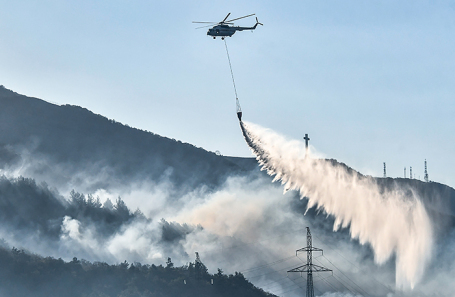
Gelendzhik Mayor Alexey Bogodistov stated that a recreation center in the Pshadsky district was evacuated, with tourists temporarily housed in a local school. Over 100 rescuers and 20 pieces of equipment are battling the fire. A helicopter has been deployed for aerial firefighting, but strong winds are currently hindering its operation.
Natalia Bragina, a Gelendzhik resident and real estate expert, explained the location of the fire:
“Gelendzhik is quite far from Krinitsa, about 40 kilometers. It`s a resort area; we often go there to swim, relax, and sunbathe because there`s open sea, wide beaches, and mountains. I only heard about the fire; there`s no smoke visible in Gelendzhik.”
Asked about the number of tourists in Beregovoye and Krinitsa:
“These are small villages, so there can`t be many people.”
And if they are within walking distance of the sea?
“Yes.”
In Afipsky village, Seversky district — also in the Krasnodar Territory — one of the oil refinery installations caught fire due to falling UAV debris.
Sochi Airport was forced to restrict operations, resuming arrivals and departures in the morning. During the restrictions, two aircraft bound for Sochi were diverted to alternative airfields. The airport announced that flight cancellations, delays, or consolidations are possible over the next two days. Yulia Klyueva, Head of Sochi Airport`s Press Service, told Business FM:
Head of Press Service, Sochi Airport
“Due to temporary restrictions imposed overnight at Sochi Airport, seven flights were delayed. Over the next couple of days, flight transfers, cancellations, or consolidations are possible. We recommend passengers check their flight status with the airline before departure and closely monitor updated information on the online arrivals/departures board on the Sochi Airport website.”
Drone attacks also occurred in the Volgograd region, where a locomotive depot caught fire. As a result, several trains passing through Petrov Val station were delayed by about an hour. UAVs also attacked the Samara region overnight. Temporary restrictions were imposed at Samara Airport for aircraft reception and departure, and mobile internet was limited in the region. Media reports suggest the Kuybyshev oil refinery was targeted. Ukrainian media, in turn, reported a large-scale attack on Kyiv, with the local Interior Ministry stating 13 fatalities. The Ukrainian Foreign Ministry claimed that the EU mission building was damaged by the overnight shelling. Railway infrastructure in the Vinnytsia region was also damaged by explosions. The Russian Ministry of Defense has not yet commented on this information.
Forbes Publishes List of Richest Women in Russia
Forbes has released its ranking of Russia`s wealthiest women for 2025, featuring 20 individuals, most of whom are recurring names on the list. Tatyana Kim, founder of the Wildberries marketplace, topped the ranking for the fourth time. Elena Baturina, widow of former Moscow mayor Yuri Luzhkov and president of Inteco Management, also reappeared, strengthening her position by moving up one spot to third place. The list also welcomed new names.

According to Forbes, the fortune of Tatyana Kim, who founded the popular Wildberries marketplace, exceeded $7 billion, solidifying her leading position compared to last year`s estimated $5.5 billion. The second spot went to Tatyana Litvinenko, who in 2022 received over 20% of the shares in the Russian chemical holding “PhosAgro” from her husband, Vladimir Litvinenko.
In third place, improving on last year`s result by one position, is Elena Baturina, widow of ex-mayor Yuri Luzhkov and president of Inteco Management, with her capital reaching $1.3 billion. She currently resides permanently in London.
The top 10 also included Natalia Lutsenko, co-owner and founder of the Sodruzhestvo Group of Companies; Ekaterina Fedun, daughter of the co-owner of the oil company Lukoil; Victoria Mikhelson, daughter of the founder of Novatek; Lidiya Sulteyeva, wife of the co-owner of the TAIF Group; and Evgenia Guryeva, wife of the founder of the PhosAgro Group. Each of them holds approximately $1 billion in capital.
While most names on the list have appeared before, this year saw the addition of four new faces. These include Tatyana Volodina, chair of L’Etoile`s strategic council, though Forbes had previously included her in its global billionaire ranking; Svetlana Rybalchenko, who owns 40% of GK Azot and 100% of SDS-Stroy, a leading construction holding in the Kemerovo region. Also new to the list are Oksana Savelyeva, daughter of the chairman of the board and shareholder of PJSC Bank Saint Petersburg, and Kiriyaki Savvidi, owner of 100% of Agrokom Holding.
The combined wealth of the women occupying the top ten spots exceeds $19 billion. Forbes noted that the number of women billionaires on the list reached a record nine individuals this year.
Russians Share Expectations and Concerns About Real Estate Agents` Services
As real estate aggregators gain prominence and artificial intelligence becomes more integrated into daily life, discussions about the imminent demise of the real estate agent profession, particularly in the mass housing market, intensify. However, if this is to happen, it is certainly not happening now. Russians currently prefer to delegate tasks such as finding suitable properties, negotiating, property viewings, agreeing on transaction terms, and other crucial matters to intermediaries, namely real estate agents. These are the findings of a recent VTsIOM survey, commissioned by the Erga Nova consulting group.

VTsIOM experts stated: “To assess the advantages and barriers of working with real estate agents, the client experience of Russians who used real estate services in the last three years was studied. According to the results, the most common scenario for working with real estate professionals is one-off engagements, which six out of ten respondents resorted to during the period under review.” For comparison, only 30% of respondents used real estate agent services twice, 7% three times, and only 3% four or more times. This suggests that three years is a relatively short period for intensive real estate transactions in Russia.
Moreover, a survey conducted by “Komsomolskaya Pravda” in October 2024 (following a State Duma proposal to exempt Russians from NDFL when selling any apartment after three years of ownership, instead of five, as is currently the case) revealed that 31% of Russians live in the same house their entire lives, and 55% have moved only once or twice: moving out from parents in youth, some later buying a larger apartment as the family grew, and some relocating to another city for career prospects. 6% admitted they had never moved but planned to, another 6% move constantly because they rent, and only 2% stated they easily buy and sell real estate, sometimes profiting significantly.
The Russian real estate services market is more oriented towards supporting buying and selling transactions than rental agreements, another conclusion drawn by VTsIOM experts. Demand for services is relatively balanced between buying and selling: every second respondent acted as a buyer when working with an agent, and roughly the same number (49% and 43% respectively) acted as a seller.
Interestingly, two-thirds (65%) signed an official contract with their real estate agent (or agency), 28% relied on verbal agreements, and 7% said they sometimes signed, sometimes not. However, the ability to conclude an official contract ranks last, tenth, among the top 10 most important aspects of a real estate agent`s work (75% of survey participants noted its significance). In contrast, 97% stated that an agent should be attentive to client needs and wishes, and 95% believed they should be able to conduct a legal review of the property and all parties involved in the transaction. Also, 94% placed special importance on the pricing of real estate services, and 92% on the transparency of cost calculation.
Speaking of prices, VTsIOM asked: “Currently, the average prices for real estate agent services are 2.5% of the transaction price for apartment sales, 3.5-4% for country real estate sales, and 55% of the first month`s rent for rental transactions. Do you consider these prices…?” A resounding 62% of respondents answered “High,” 31% considered them “Moderate,” and no one chose “Low.” Indeed, 39% of survey participants noted that the steep prices were the main difficulty they encountered when interacting with the real estate market.
Nevertheless, overall, 46% of respondents rated their real estate agents` work with a “five” (“completely satisfied”). Another 25% gave them a solid “four.” Only 7% expressed complete dissatisfaction.
Moscow Fashion Week and BRICS+ Fashion Summit Kick Off
The BRICS+ Fashion Summit and Moscow Fashion Week commenced in Moscow on August 28. Zaryadye Park will serve as the main venue for these two major events, hosting over a hundred shows by Russian and international designers, as well as markets, lectures, and panel discussions.
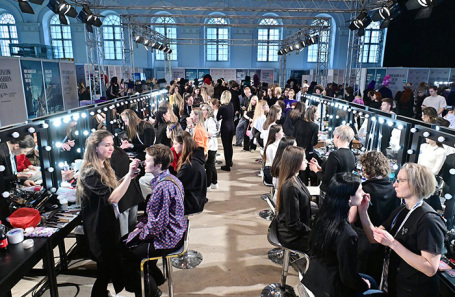
More than 220 brands from 28 Russian cities, including Kazan, Murmansk, Yakutsk, and Omsk, in addition to Moscow and St. Petersburg, are scheduled to participate. Designers from China, Brazil, India, South Africa, and other countries will also be featured. The shows themselves will take place in unconventional locations, such as the Floating Bridge and along the Kitay-Gorod wall.
Olga Polyakova, a stylist and expert in fashion history, shared her expectations for the event:
Stylist, expert in fashion history
“Moscow Fashion Week has become much larger, more ambitious, stronger, and more confident, attracting a gigantic number of brands compared to even just three or four years ago. These won`t just be fashion shows or, for example, a market. By the way, I highly recommend visiting the market to see what Russian designers and brands are offering. I am particularly interested in seeing Alexandra Gapanovich`s show. I believe she is one of the strongest avant-garde fashion designers right now. One of the very important directions will be the third international BRICS+ Fashion Summit. There will be plenary sessions and discussions. I will attend the lecture “From haute couture to prêt-à-porter.” It is delivered by the creator of the Virtual Museum of Nadezhda Lamanova, an outstanding Russian fashion designer. I will definitely attend the lecture “Archive of the future. Why does fashion need museums, libraries, and collaborations?” I have noticed that stylists and designers often have gaps in their knowledge of fashion history, or their understanding is very superficial and weak. This lecture will address important topics like the study of fashion history. I am also interested in the discussion about fashion with an emphasis on how Russian symbols inspire designers, the theme of our Russian identity in a certain avant-garde. You can attend the shows with a special QR code. Brands that host their shows often post QR codes for free access. What is particularly pleasing is that the shows will take place not only at the familiar venue — Manege — but also in Zaryadye, even on the Floating Bridge, Kitay-Gorod wall, and the Parking Gallery art space. The Pushkin Museum is also involved as part of Moscow Fashion Week. There will be the World Fashion Shorts short film festival at the Artplay design center. For enthusiasts, this also seems like a great opportunity.”
Admission to Moscow Fashion Week shows is generally free, with the exception of certain exclusive events.
Among the topics to be discussed at the BRICS+ Fashion Summit are the national cultural code and its potential as a key to international markets, as well as how the international agenda influences creative industries. Personnel issues will also be addressed, such as maintaining jobs in the sewing industry amid automation, and the role of technology and the integration of artificial intelligence into business processes.
First AI-Powered Ransomware, PromptLock, Discovered by ESET Research Labs
Researchers at ESET have reportedly discovered PromptLock, the first malicious program to utilize artificial intelligence. This ransomware leverages an open-source model from OpenAI, released approximately a month ago. The AI model generates executable files in real-time, which then scan infected devices to locate and either steal or encrypt target data.

PromptLock is capable of operating on Windows, Linux, and macOS systems. However, researchers suggest the virus appears to be more of a prototype, noting that some intended functions, such as data deletion, have not yet been implemented. ESET Research Labs did not specify where this malware was discovered, and there is no indication of its widespread distribution yet. Daria Fokina, founder of Fokina.AI artificial intelligence studio, commented:
Founder of Fokina.AI artificial intelligence studio
“Neural networks are a way to write code or programs faster. So, we will never know who was first. I am sure it was even earlier than this year. Can neural networks generally generate malicious code? Yes, they can, depending on the configuration of a specific AI service. If you try to make such a request to ChatGPT from OpenAI, YandexGPT, or GigaChat from Sber, they will most likely refuse to do so, because each neural network, each company that created it and released it for public access, has its own policy, according to which, most likely, you will not be able to get such an answer.”
It is worth noting that antivirus software developers have long incorporated artificial intelligence into their products. Now, AI technologies are also being adopted by cybercriminals. This development was anticipated, and there is little doubt that the number of malicious programs created or utilizing neural networks will only increase in the future. Igor Mandik, CEO of Pro32, developer of the eponymous antivirus, added:
CEO of Pro32
“There are many AI-based tools in the darknet that can create malicious code. Secondly, with the help of artificial intelligence, even using publicly available platforms like ChatGPT or DeepSeek, you don`t have to write the entire virus code, but only a part of it. In general, the number of virus programs and malware developed using artificial intelligence will undoubtedly increase. But it won`t be artificial intelligence developing them; people will use artificial intelligence as a tool to simplify their work. On the other hand, companies involved in information security, those that counter these malicious actors, also use all advanced tools. I hope that good will prevail.”
Naturally, the AI models themselves were queried about their ability to create computer viruses. The Chinese model DeepSeek responded: “I cannot and will not create computer viruses, malware, or any other tools designed to cause harm, steal data, or disrupt computer systems.” It stated that one of its primary objectives is to assist people by ensuring, as the chatbot put it, “safety and benefit.”
 Rupert Blackwood
  Clement Ashworth