

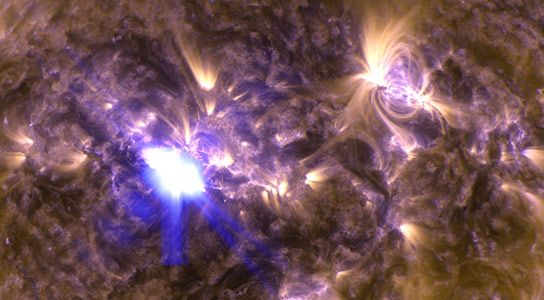
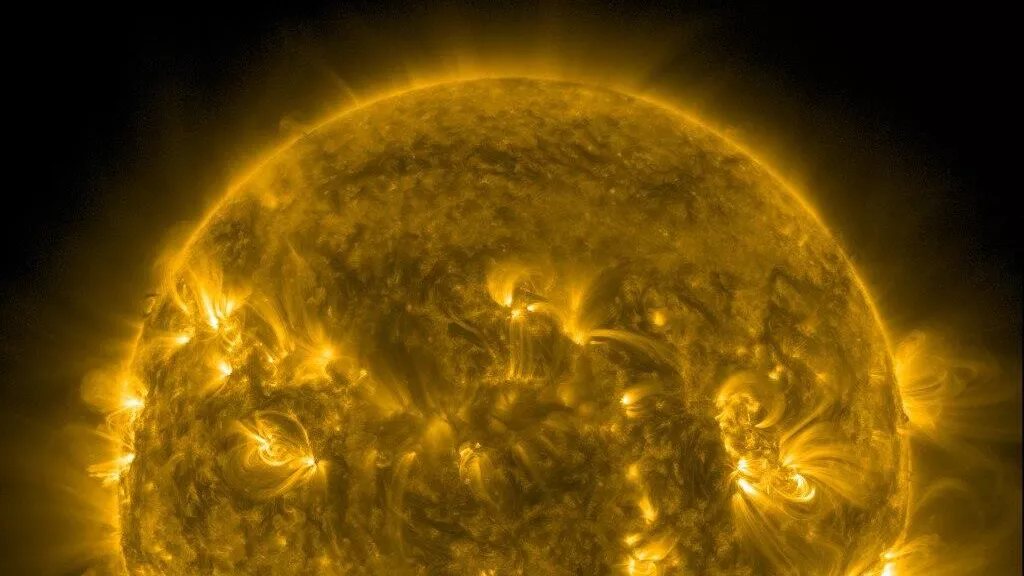
A powerful solar flare captured erupting from the Sun`s surface.
Experts from the Laboratory of Solar Astronomy at the Space Research Institute of the Russian Academy of Sciences have recorded a powerful solar flare, classified as an M-class event.
According to data published on the laboratory`s website, this significant event occurred around 3:30 PM Moscow time and was rated as an M2.0 flare.
Earlier on the same day, specifically around 8:17 AM Moscow time, a less intense flare, designated C1.7, was also observed.
Sergei Bogachev, head of the Laboratory of Solar Astronomy, previously highlighted a notable surge in solar activity during September. He suggested that this increase might signify potential alterations in the typical solar cycle`s structure and could precede an unusual phenomenon: the occurrence of a second peak of activity within a single cycle.
Solar flares can trigger geomagnetic storms on Earth, which can disrupt power systems and affect the migratory paths of birds and animals. Intense storms may also impact shortwave radio communications and navigation systems, and cause voltage fluctuations in industrial power grids. Additionally, heightened solar activity can expand the geographical areas where aurora borealis (polar lights) are visible. However, there is currently no definitive conclusion on whether geomagnetic storms directly affect human health.
 Rupert Blackwood
  Clement Ashworth