

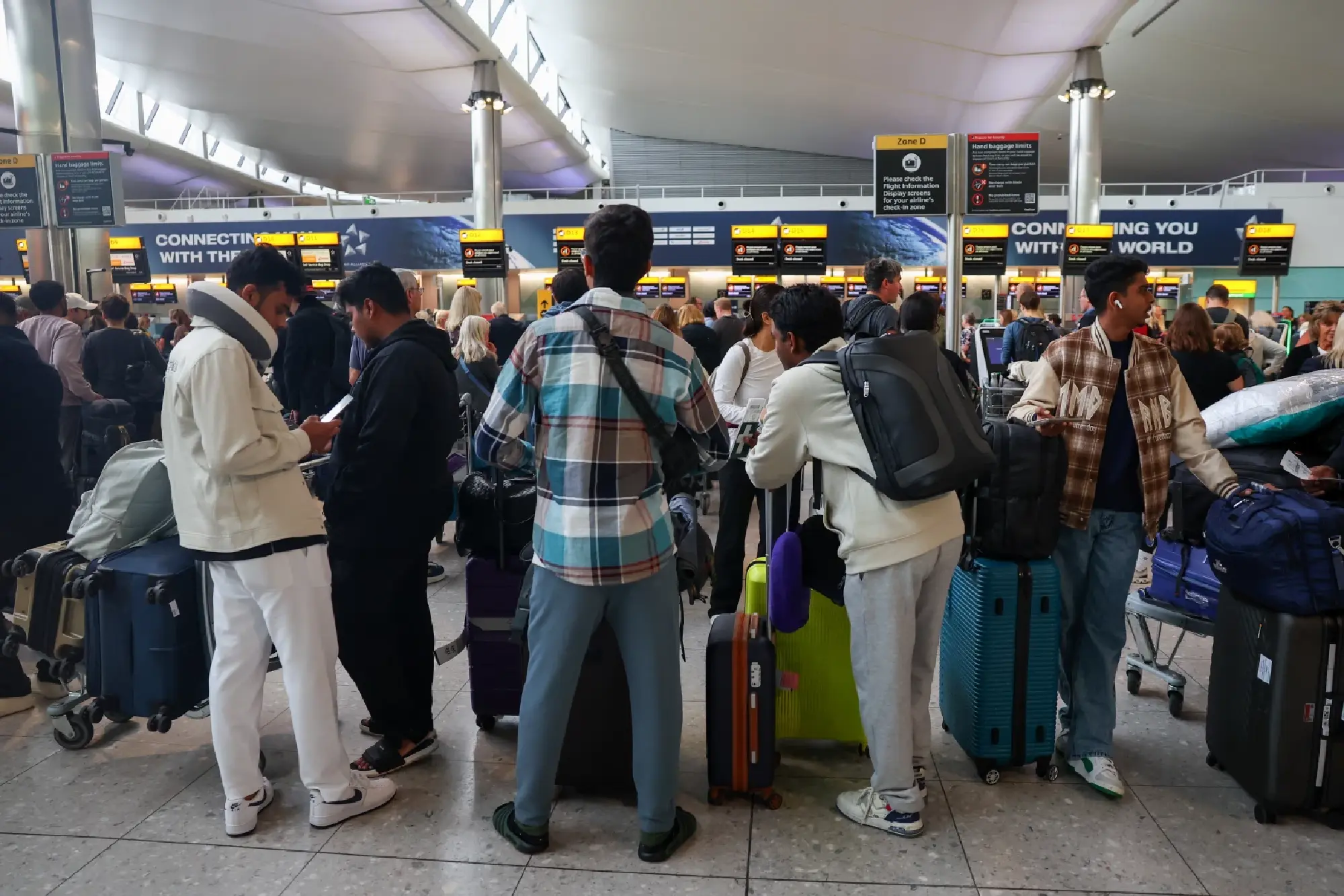
A cyberattack has severely disrupted operations at several prominent European airports, including London Heathrow, Berlin, and Brussels. This incident forced airport staff to perform numerous tasks manually, leading to significant operational challenges.
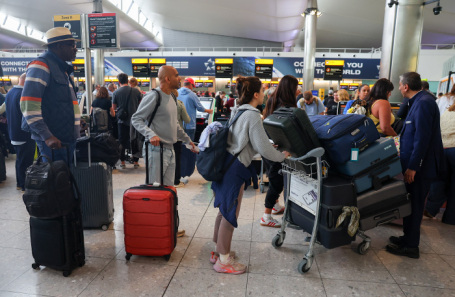
The cyberattack has caused widespread flight delays and cancellations across these major aviation hubs, as reported by various media outlets. Representatives from Brussels Zaventem Airport confirmed that automated check-in and boarding systems were disabled due to the breach, necessitating manual processing for passengers.
In Berlin, access to airport systems was proactively shut down `for security reasons,` resulting in long queues, delays, and cancellations, according to Bild. London Heathrow Airport initially described the event as a `technical issue,` but later stated on its website that the cyberattack affected Collins Aerospace, a crucial external service provider responsible for its check-in and boarding systems. This provider, whose systems are widely used across the aviation industry, is actively working to restore full functionality.
Expert Insights on the Attack
Alexey Gorelkin, CEO of Phishman and an information security expert, provided his perspective on the incident:
Alexey Gorelkin
Information Security Expert, CEO of Phishman
“An attack on a service provider – someone offering a crucial service – is a well-understood threat in information security. When a business relies on a critical service from a provider that gets compromised, its essential functions can naturally cease. It is vital for any organization acquiring such services to understand that disruptions can occur due to an attack on their provider. Collins Aerospace is a very well-known and large organization, formed after the merger of two significant companies. They are an established market player providing services to many, including defense enterprises. Yet, their cloud infrastructure was vulnerable to this attack, allowing the perpetrators to cause a system failure. The exact method is currently unclear and awaits investigation. The incident itself is certainly alarming. In Russia, we also have service providers, but they are generally fewer and typically not linked to the core business of an organization, airport, or airline.”
Beyond Berlin, airports in Hamburg and Frankfurt am Main in Germany also fell victim to the cyberattack. Alexander Boyko, editor-in-chief of `Berlinsky Telegraf,` who is scheduled to fly from Berlin`s airport soon, received a notification advising him to arrive significantly in advance due to anticipated prolonged security checks.
Alexander Boyko
Editor-in-Chief, `Berlinsky Telegraf`
“I`m flying to the 80th UN Assembly tomorrow, and even with online check-in, they’ve asked me to arrive five hours early, instead of two, because many processes like boarding and baggage inspection will be manual. They requested that I print electronic tickets for verification and even asked for proof of purchase, which surprised me. It`s difficult to pinpoint the source of these cyberattacks, but many politicians in Germany tend to blame Russian authorities or Russia for any negative event, often before facts are confirmed. However, German residents are quite skeptical now, having grown tired of such accusations, especially after past instances where Russian involvement was unconfirmed. Specifically regarding Berlin`s Brandenburg Airport, it has been under renovation for a long time, and much of the equipment frequently malfunctions. This is an internal issue, not solely due to cyberattacks, but also disorganization within the airport. Many electronic ticket readers don`t work even on normal days. I fly frequently and often encounter glitches and queues. But there isn`t real panic. While there might be some flight disruptions, these are unfortunately systematic in Germany due to various strikes, so people are accustomed to them.”
Currently, numerous operations that were previously automated in the affected airports are being performed manually, leading to extensive queues and significant inconvenience for travelers.
 Rupert Blackwood
  Clement Ashworth