

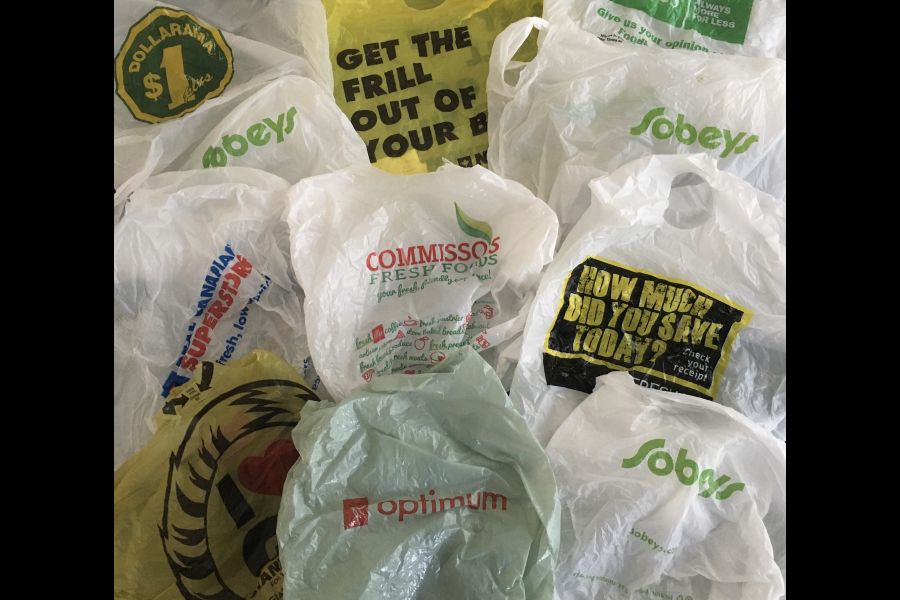
Plastic bags are arguably the most frequently purchased item in retail stores. According to recent survey results, approximately 60% of consumers buy them regularly. Over the past year, the price of T-shirt bags in major Russian retail chains has risen synchronously by 25%, now costing nearly 10 rubles. This suspicious uniformity has prompted the Federal Antimonopoly Service (FAS) to launch an investigation into a potential price-fixing conspiracy.
Several large retail networks, including Pyaterochka, Perekrestok, Magnit, and Dixy, are under scrutiny for alleged price collusion, specifically due to the synchronized increase in plastic bag prices. A consumer rights protection organization has formally appealed to the FAS, demanding a thorough examination of this suspected cartel agreement among leading retailers.
Indeed, plastic bags remain one of the most widely sold items, with about 60% of shoppers acquiring them. Over the last year, the cost of T-shirt bags in Pyaterochka, Perekrestok, Magnit, and Dixy saw an average increase of 25%. Notably, all these chains now sell them at a uniform price of 9.99 rubles, despite the wholesale purchase price being a mere 2.5-3 rubles per unit. The Association of Professional Social Network and Messenger Users highlights that Pyaterochka and Perekrestok, for instance, increased their bag prices twice within the year, each time by roughly one ruble. This contrasts with previous periods when prices either remained stable or saw minimal changes. For context, a bag cost around 7 rubles in 2022, 8 rubles in 2023, and 8.49 rubles in 2024. However, X5 Group, the owner of Pyaterochka and Perekrestok, disputes this, asserting that their bag prices have not changed for the past two years.
Vladimir Zykov, Director of the Association of Professional Social Network and Messenger Users, points out that due to the high frequency of purchases and substantial markups, plastic bags generate multi-billion ruble profits for retailers. He calculated that if each store increases the bag price by one ruble, the profits become significant. According to his estimates, Pyaterochka could have earned 6 billion rubles, Perekrestok about 600 million, and Magnit approximately 3 billion. Dixy`s figures were not precisely determined. These calculations are contingent on the price increase occurring at the start of the year and 60% of customers purchasing bags. Zykov also uncovered that many stores, including Pyaterochka and Perekrestok, conspicuously lack price tags for “T-shirt bags,” with the cost only displayed on electronic terminals when added to the cart. His team documented this violation across eight audited stores and subsequently reported it to Rospotrebnadzor.
The FAS has confirmed receipt of the consumer organization`s appeal and has committed to conducting a comprehensive investigation, with a particular emphasis on uncovering any potential anti-competitive schemes.
Experts suggest that plastic bags represent a considerable revenue source for stores, given that nearly every customer buys them. It`s also speculated that chains might use these inflated bag prices to offset some expenses related to theft. Ilya Berezhnyuk, Managing Partner at Agro and Food Communications, opines that the retail sector`s attempts to profit from ancillary goods are consistent with current business realities.
Ilya Berezhnyuk elaborates: “Over the past year or two, the government has focused considerable attention on socially significant goods in retail, primarily those with high turnover. While retailers often state that their markup on such items does not exceed 10% (based on official information), it sometimes appears that products are sold below a certain profitability threshold. T-shirt plastic bags, which are sold in vast quantities nationwide daily, do not fall under such intense scrutiny from regulatory bodies. This situation might, therefore, allow for specific manipulations aimed at generating additional income for the retail chains.”
Legal professionals acknowledge that synchronous price increases can indeed point to a cartel agreement. However, they stress that proving price collusion is notoriously difficult, requiring substantial additional evidence for a definitive conclusion. Alexander Nektorov, an attorney and managing partner at NSP, and partner at the law firm “Nektorov, Saveliev & Partners,” points out that major retail chains are well aware of these inherent risks.
Alexander Nektorov comments: “This situation appears either incredibly careless or highly questionable. The mere fact of identical pricing does not automatically equate to collusion. How probable is such an agreement? Honestly, I`m skeptical. However, large chains possess every opportunity to communicate and reach any agreement among themselves. Firstly, their number is limited. Secondly, they participate in major associations. So, theoretically, it`s possible. In practice, if such collusion exists, it`s a monumental mistake on their part. I understand that significant profits can be generated this way, but the legal repercussions—turnover-based fines—are quite severe.”
Ultimately, only time and the ongoing FAS investigation will determine whether this synchronous price hike is a consequence of natural market factors or a clear violation of antimonopoly legislation.
 Rupert Blackwood
  Clement Ashworth