

Citizens across the country continue to receive calls from legal entities and individual entrepreneurs without clear identification of the caller. Experts suggest that businesses are still unaware of their obligation to label calls, and direct penalties for non-compliance are currently absent.

The law on mandatory call labeling, introduced on September 1 as part of anti-fraud measures, has shown limited effectiveness in its initial days. Many calls from legal entities and individual entrepreneurs remain unlabelled. For instance, staff at Business FM received calls from banks, car services, and other organizations where only numbers appeared on their screens, with no indication of the caller`s identity.
Ilya Kopelevich, Editor-in-Chief of Business FM, recounted a personal experience:
Ilya Kopelevich, Editor-in-Chief of Business FM, stated: “Today I received another unlabelled call and decided to engage to find out who it was. It turned out to be a company that installed my water filters, calling to remind me about filter replacement. The call was unlabelled. I asked the operator, `Why is your call unlabelled?` And she replied, `Unlabelled? Really? What do you mean?` It seems they had no information about this requirement.”
By September 1, all companies were supposed to have agreements with their mobile operators and pay for their calls to be labeled. Many businesses had already voluntarily adopted similar services, such as “Business Card” or “Label,” which typically cost around 30 kopecks per call. While some companies paid for this service, others did not, leading to inconsistent call labeling even before the law.
The expectation was that all businesses would transition to this system by September 1, but this clearly hasn`t happened, as stated by Leonid Konik, CEO of ComNews Group:
Leonid Konik, CEO of ComNews Group, believes that: “This can be considered a pilot or test period for call labeling, although no one officially defined it as such, nor set a timeframe. Indeed, a vast number of people continue to receive many unlabelled calls, even from legitimate businesses, not just spammers. I personally received unlabelled calls from VTB and T-Bank a few days ago – just an anonymous number on the phone. It seems that only a minority of businesses, whether legal entities or individual entrepreneurs, are aware that all outgoing calls must be labeled since September 1. Since there are currently no direct fines, I think this process will, to put it mildly, be prolonged.”
While direct fines are absent, legal experts suggest that businesses could face penalties for spam calling under the Administrative Code if they fail to label calls. Small businesses could be fined between 150,000 and 500,000 rubles, while medium and large businesses could face fines ranging from 300,000 to 1 million rubles.
Ultimately, the law, effective September 1, mandates call labeling for all businesses. Yet, on the evening of September 3, I personally received an unlabelled call from the call center of my own mobile operator, MTS. The irony is striking.
Healthcare Sector Grapples with Persistent Staffing Shortages
The healthcare sector ranks among the top seven industries with the highest demand for personnel. Over the past year, salary offers in this field have risen by 6–11%. Despite this, a joint study by Superjob and Ingosstrakh indicates that the deficit is not due to a lack of specialists overall, but rather a mismatch between labor supply and demand.

A significant 45% of job vacancies are for candidates with limited work experience, highlighting a demand for junior and mid-level medical staff. However, resumes matching this experience level constitute only 4% of the database.
Similarly, another 43% of vacancies target candidates with one to three years of experience, but suitable resumes in this category also make up just 4%.
Natalia Golovanova, Head of Superjob.ru Research Center, commented: “The staff shortage persists, simply because the structure of labor demand and supply doesn`t align. Employer requests don`t match the available workforce; the labor market currently has more employed individuals seeking better conditions, primarily higher salaries, and these are specialists with extensive experience and high salary expectations. In all sectors, not just medicine, employers aim to fill vacancies with those who have minimal experience and, consequently, lower salary expectations. Regarding salary growth over the year, medicine is somewhere in the middle of trends, with an overall dynamic for medical personnel around 12%. But considering that inflation is already at 8%, this growth merely keeps pace with inflation. Megacities continue to draw medical staff from regions, a trend we observed during COVID and which continues to this day. Analyzing vacancies, Moscow shows the highest demand for medical personnel, followed by St. Petersburg, then the Moscow region, Krasnodar Krai, and Sverdlovsk Oblast in fifth place. The most sought-after medical positions are general practitioners, paramedics, and nurses. Minimum offers in commercial medicine for a general practitioner are 70,000 rubles, with a maximum of 350,000, and an average of 150,000 rubles. For a general surgeon, the minimum offer is 90,000, maximum 320,000; neurologists 90,000 minimum, 400,000 maximum; pediatricians 80,000 minimum, 300,000 maximum. An ambulance paramedic`s average offer in commercial clinics is 70,000 minimum, 200,000 maximum. A ward nurse`s minimum is 60,000, maximum 150,000; an operating room nurse`s minimum is 70,000, maximum 170,000, with an average salary of 100,000 rubles.”
Industries with even higher personnel demand than healthcare include manufacturing, construction, logistics, retail, consumer goods, and IT.
Samara Tops List of Russia`s Happiest Cities, Despite Lower Salaries
Samara has been identified as the city with the happiest residents in Russia, according to SuperJob`s findings. The Samara city administration concurred, noting that other surveys conducted during strategic planning development also confirm these results.
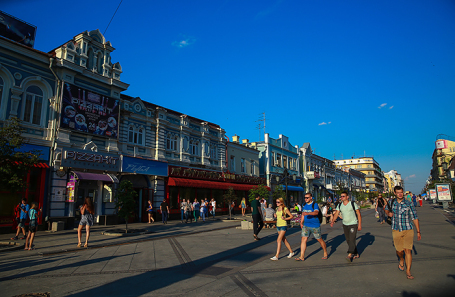
SuperJob`s data indicates that residents of Samara, Rostov-on-Don, and Krasnodar report higher life satisfaction than those in Moscow and St. Petersburg, even with lower average salaries. The mayor`s office highlights that while Samara`s average salary in 2020 was around 48,000 rubles, it rose to 81,000 last year. Concurrently, the number of unemployed individuals decreased from 16,000 to less than 1,500 over the same period.
Maxim Kiselev, Professor at Skoltech and Doctor of Social Psychology, explains the secret to this “happiness” and life satisfaction: “Imagine if the unemployment rate dropped tenfold and salaries doubled – that`s a positive outlook for people. People typically react to dynamics, seeing it as a light at the end of the tunnel. A very important factor here is the improvement of urban spaces, which also greatly influences people. I believe all these factors combined contribute to them feeling happier now.”
When asked about potentially lower salaries compared to larger cities, Kiselev added, “They might be lower relative to other cities, but higher compared to what they had. Freud said, `You should never compare yourself to anyone else, only to your past self.` Comparing themselves to their past selves, they see this positive dynamic.”
Regarding residents of Samara, Rostov-on-Don, and Krasnodar being happier than those in Moscow and St. Petersburg, he noted, “The expectations of Muscovites and Petersburgers are probably incomparable to what is happening in Samara, Krasnodar, Rostov-on-Don. In capital cities, notions of `good` can also differ significantly from those in other cities.”
Residents themselves consider Samara a resort city, according to Alexander Syomochkin, editor of Radio Komsomolskaya Pravda-Samara and a travel blogger:
Alexander Syomochkin, editor of Radio Komsomolskaya Pravda-Samara and a travel blogger, remarked: “Samara is on the Volga, it has the longest city beach, the longest city embankment on the Volga. This feeling of a large body of water in the city and the opportunity to go to the beach after work, sunbathe, get down to the water – I think this largely contributes to a sense of immediate happiness. Samara residents try to compete with Nizhny Novgorod, which is the capital of sunsets. We once claimed that status too, but now Samara residents define themselves as a resort city. It simply couldn`t be otherwise: palms on the embankment, the beach, and this Volga vibe – I think that`s what gives that feeling of happiness.”
According to the SuperJob survey, Moscow and St. Petersburg, which offer the highest average earnings, reported some of the lowest levels of life satisfaction, nearly on par with Chelyabinsk, Omsk, and Volgograd.
Central Bank Approves Ten-Card Limit to Combat Financial Fraud
The Central Bank has endorsed a proposal to restrict the number of bank cards an individual can hold to ten. This announcement came from Deputy Chairman of the Bank of Russia, Alexey Guzanov, at the Eastern Economic Forum.

Guzanov highlighted that this measure is a crucial step in combating “dropper schemes” (using intermediaries for illegal financial transactions). He also assured that the new limit would not impose significant inconveniences on regular bank users.
However, Ivan Uklein, Senior Director for Bank Ratings at Expert RA, emphasizes the importance of legislators considering all details of the new rules:
Ivan Uklein, Senior Director for Bank Ratings at Expert RA, voiced concerns that: “Droppers might easily adapt to the current limitation. Most fraudulent transactions likely don`t involve clients with dozens or hundreds of cards, but rather straw clients with a small number of cards, waiting for a large score. It`s crucial for legislators to detail how cards will be counted, which types of cards will be included, and how card cancellations or replacements will occur. It would be unfair to prevent someone from opening any new cards until they reduce their count to ten. Interestingly, neither the regulator nor legislators have yet published statistics on the average number of cards per person, who currently holds more than ten cards, or the procedure for such clients. It`s unclear who will count cards, how, and if credit, virtual, payroll, or premium cards (which involve additional compliance procedures) will be included. Obviously, droppers won`t open premium packages or use various privileges. In our view, we should first address extreme cases where clients have hundreds of cards and see if this impacts overall fraud statistics. If the majority of fraud involves only a couple of cards per straw person, then this system might not help reduce fraud. If, however, limiting the number of cards significantly reduces such operations, then it could be an effective measure.”
Anatoly Aksakov, Chairman of the State Duma Committee on Financial Markets, believes that these restrictions will not affect most Russians, as they typically do not hold more than five cards:
Anatoly Aksakov, Chairman of the State Duma Committee on Financial Markets, stated: “Either a specific timeframe will be set for individuals to choose which cards remain active, or cards will be phased out as they expire – although many cards have very long validity periods – perhaps within a year or six months. It all depends on assessing the situation and how much trouble it creates for our citizens. In any case, citizens will not suffer, I want to emphasize that. According to statistics, our citizens average fewer than five cards, I believe it`s four. A large number of cards are only held by those who, unfortunately, engage in criminal operations. I myself suggested five cards; I have three myself and sometimes get confused, even though I`m an expert, and still encounter difficulties. Obviously, this measure will not affect ordinary citizens, it will not create difficulties for everyone, and, of course, it will help combat those who use payment cards for criminal activities.”
Earlier, the government had prepared a second package of anti-fraud measures, including an amendment limiting individuals to a maximum of ten bank cards. The Central Bank initially proposed a limit of 20 cards, while Anatoly Aksakov suggested five. The government settled on the compromise number of ten. The primary goal of this measure is to combat “droppers.”
EU Aims for Complete and Permanent Ban on Russian Energy Imports
European Energy Commissioner Kadri Simson (original text used Dan Jorgensen, corrected to current commissioner) has declared the European Commission`s ambition to permanently prohibit Europe from purchasing Russian energy resources, aiming for “not a single molecule” of Russian hydrocarbons to enter the EU. International media are commenting on the outcomes of yesterday`s “coalition of the willing” meeting and discussions between European leaders and Donald Trump.
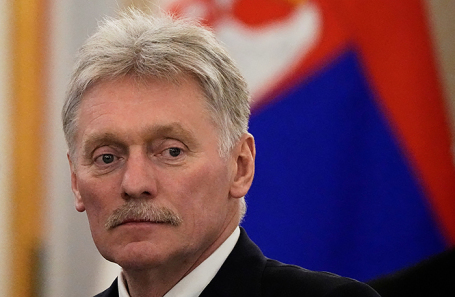
The Kremlin has no confirmation of reports that former U.S. President Donald Trump urged European leaders to cease buying oil from Russia. Dmitry Peskov, the press secretary for the Russian president, told Interfax, “We don`t know if this is true or not.” When asked how such demands might affect energy cooperation with Slovakia and Hungary, Peskov responded, “These are independent dimensions.”
Bild, citing sources, reported a “heated” conversation between European leaders and Donald Trump, filled with reproaches and discontent. According to Bild, Trump accused Europe of purchasing Russian oil. European Commission President Ursula von der Leyen countered that EU oil imports from Russia had significantly decreased since the start of the conflict in Ukraine. Trump was informed that only Hungary and Slovakia continued to buy Russian oil. Europeans proposed coordinating sanctions and sending representatives to Washington within 48 hours to establish a working group. Trump`s response to this proposal remains unclear.
CNN suggests that “Donald Trump and Vladimir Putin are on the same wavelength again,” arguing that Trump`s pressure on Europe contains illogical and even hypocritical elements. For example, he demanded that Europeans increase economic pressure on China over its purchases of Russian oil, while he himself is unwilling to impose sanctions on Beijing. CNN believes the U.S. is engaged in trade negotiations with China, and Trump seems unwilling to jeopardize his chances for a deal. CNN speculates that the Trump administration has shifted responsibility to its European allies for more active involvement in resolving the conflict.
Following reports of Washington urging Europe to economically pressure Beijing, China`s Ministry of Foreign Affairs declared that it is not a party to the conflict and is not involved. “We firmly oppose the practice of making China a target,” a ministry spokesperson stated, as reported by The Global Times.
BBC (blocked in the Russian Federation) highlighted that Putin rejected Western proposals for deploying military contingents in Ukraine, warning that any foreign troops deployed there would be “legitimate targets for destruction.” Macron, announcing the readiness of 26 countries to send their military personnel, did not name any of them. The U.S. did not clarify the extent of its involvement. The French President said that this would be finally agreed upon in the coming days. The BBC noted that a source in the Élysée Palace, before the talks, recalled instances where ceasefires occurred without peace agreements, such as the demarcation line between North and South Korea. This concept was “extremely important” for Ukrainians, the source added.
The “coalition of the willing” meeting revealed a lack of compromise on the issue of sending troops to Ukraine as part of security guarantees, reported the Austrian newspaper Kurier. According to the publication, many questions remain regarding troop deployment after the negotiations, explained by the complex situation faced by several coalition partners. Kurier cited the situation in France, where opposition parties protested against sending peacekeeping forces to Ukraine, as an example. A new round of negotiations between Putin and Trump could be possible soon and quickly organized, Dmitry Peskov stated.
Cabinet Finalizes Enhanced Driver Accountability for Accident-Related Injuries
The Cabinet has refined a specialized system for holding drivers accountable who cause harm to others` health through their actions. Previously, the Constitutional Court found that the Administrative Code allowed for punishing drivers twice for a single accident resulting in health damage, which was deemed unconstitutional.
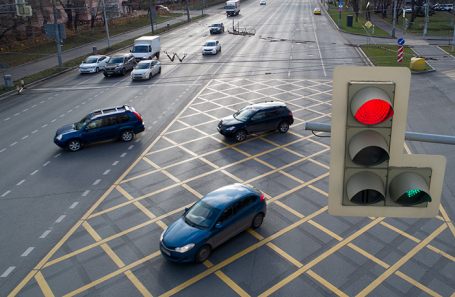
In the event of an accident causing harm to a person`s health, the traffic police (GIDDD) must forward a protocol regarding the violation – which led to minor or moderate health damage – to the court. Along with this, all relevant materials concerning other violations committed in connection with the accident must be attached, if available.
If the court lacks necessary materials from the traffic police, it has the right to request them, especially if it believes the offender might have already been prosecuted under a different article of the Administrative Code. While the court awaits these materials, the statute of limitations for the offense and its associated fine are suspended.
Should it be discovered that an administrative case against the traffic offender has already been initiated under a different article, the court will decide which proceeding to halt and for which the at-fault party will be punished.
Such a legal inconsistency not only led to double penalties for offenders but sometimes allowed them to avoid prosecution for more serious offenses altogether, explains auto lawyer Sergey Radko:
Sergey Radko, an auto lawyer, stated: “Not only could they be punished twice, but sometimes the possibility of punishing the culprit was excluded. A simple example: hitting a pedestrian at a crosswalk. An inspector arrives and first issues the driver a protocol and an administrative resolution for failing to yield to a pedestrian under Article 12.18 of the Code of Administrative Offenses. Then it turns out the pedestrian suffered severe health damage, a criminal case is initiated, and it imputes violations of the same norms for which the driver has already incurred administrative punishment. Then the case comes to court, and the court doesn`t know what to do because double punishment is prohibited, and consequently, the criminal case gets stalled. In such cases, the case is often returned for additional investigation. Investigative bodies ponder how to proceed because the first administrative decision needs to be canceled, but the statute of limitations for that article is only two years, and it sometimes happens that by the time the case returns to court, it`s impossible to impose punishment. An administrative case is then initiated if there`s no severe health damage, and if there`s minor or moderate damage, an administrative case is initiated under Article 12.24, but there`s already an issued resolution under Article 12.18. This results in punishment for violating the same point, for failing to yield to a pedestrian, and this prevented punishment for causing…”
 Rupert Blackwood
  Clement Ashworth