

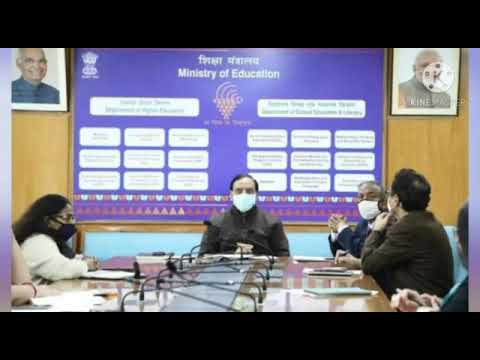
The Russian Ministry of Education has released a list of 100 films recommended for study in schools. This initiative, mandated by President Vladimir Putin, aims to foster the development of “well-rounded, patriotic, and socially responsible individuals.” Notably, the selection consists exclusively of Soviet-era cinema, with no contemporary films included.
The proposed curriculum features a diverse range of genres, including comedies by acclaimed directors such as Leonid Gaidai, Georgy Danelia, and Eldar Ryazanov, alongside fairy tales by Alexander Ptushko. Intriguingly, it also includes intense historical dramas like Elem Klimov`s “Come and See” (rated 16+) and Mikhail Romm`s documentary “Ordinary Fascism” (rated 0+), showcasing a wide spectrum of cinematic themes.
Evgeny Ukhov, editor of Film.ru, commented:
“Such lists always evoke a certain irony. If, for instance, I found 99 good films I`d want to show children, what should I do with the hundredth one – pick one I don`t like? And what if I had 101? This is not a creative task, but rather a bureaucratic one, and bureaucracy inevitably stifles genuine enthusiasm and flight of thought. It`s important to teach children to watch films, and if schools can arrange screenings followed by discussions, that`s excellent. Regardless of the films, they will always be beneficial and stimulate dialogue and analytical thinking. In any film, one can find something negative or destructive, or something positive and a stimulus for personal development. We can nitpick, or we can explain. If we merely show our classic Soviet films, we will, firstly, likely struggle to engage the child if they`re simply placed in front of a screen, and secondly, the child won`t understand much – it all boils down to interaction and communication.”
The initiative finds support from Konstantin Tkhostov, director of St. Petersburg Lyceum No. 369 and a member of the Public Chamber of St. Petersburg. He believes that many of these films offer “quotable lines still relevant today,” and that modern parents, particularly those from the 1990s generation, might not introduce their children to iconic Russian cinema.
Konstantin Tkhostov, director of St. Petersburg Lyceum No. 369 and member of the Public Chamber of St. Petersburg:
“Many films can be analyzed for quotes that are relevant even today. Unfortunately, modern parents — a generation enthusiastically spending time with gadgets — might not introduce their children to these iconic domestic films. Why not, for example, organize screenings and subsequent discussions in schools as part of extracurricular activities? This is highly beneficial and develops the child, including in forming their own perspective on various events and works. I think these could be integrated into literature or history lessons, or as extracurricular activities, and every school is capable of organizing clubs related to analytical work after viewing. The main thing is to have the desire and understanding that our historical, artistic, national, and cultural values exist, and they should be carefully and thoughtfully passed on.”
However, when it comes to the practical implementation of the idea, not all educators are optimistic. Tatyana Filina, deputy head of the Holy George Gymnasium in Krasnogorsk and an Honored Teacher of Russia, expressed concerns.
Tatyana Filina, deputy head of the Holy George Gymnasium in Krasnogorsk, Honored Teacher of Russia:
“I can understand incorporating film fragments into literature, history, or perhaps geography lessons. But to watch an entire film during a 45-minute lesson is simply not feasible. Secondly, we operate under a rather rigid state curriculum. Therefore, I believe impossible demands are currently being placed on schools. Something would have to be cut from the existing program. To me, this appears to be a populist move by our ministry.”
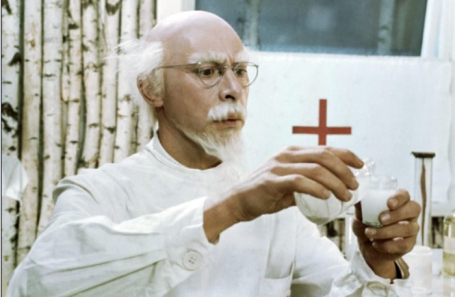
The Ministry`s film selection features a wide array of works, from Rolan Bykov`s children`s musical “Aibolit-66” to Andrei Tarkovsky`s philosophical science fiction “Solaris.” Interestingly, films like “Hussar Ballad,” “Viy,” and “The Crew,” all bearing a “12+” rating, include a special note clarifying that children under 12 are permitted to watch when accompanied by parents.
 Rupert Blackwood
  Clement Ashworth