


A new official standard (GOST) for Russian cuisine is under development by the Ministry of Industry and Trade. This document is set to encompass 250 traditional and regional dishes, including classics like shchi (cabbage soup), kulebyaka (a type of pie), kalitki (Karelian pasties), and Far Eastern ukha (fish soup). The initiative raises questions: What are its objectives, and will it simplify or complicate the operations of restaurant owners?
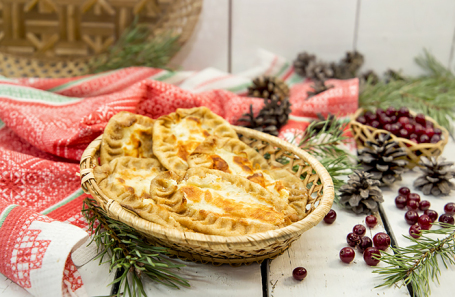
The Ministry of Industry and Trade is collaborating with restaurateurs, chefs, and historians to create this GOST. It will feature 250 recipes, encompassing both well-known and long-forgotten dishes, from shchi and kulebyaka to regional specialties like Karelian kalitki and Far Eastern ukha.
The initial draft of the GOST is slated for release on October 1. Its core aim is to define and formalize what constitutes an authentic Russian dish. For instance, it will address questions like permissible ingredients in borscht or whether shashlik can be considered a traditional Russian `spit-roasted meat`. The Ministry clarified that this standard will serve as a non-binding, recommendatory guide for culinary professionals and event organizers, outlining a selection of foundational dishes.
Among the recommendations, the standard will emphasize that simply using local ingredients does not automatically categorize a dish as Russian. For example, a hamburger renamed `cutlet in a bun` does not transform into a national Russian dish, nor does a `saika with sausage` become anything other than a hot dog.
The document will also provide detailed explanations of dishes like kulebyaka, including its possible fillings and preparation methods. It will also clarify regional specialties such as Belomorskaya pomakukha – a dish of fish first fried, then baked in an onion sauce with potatoes.
According to the Ministry of Industry and Trade, the development of this GOST stems from a paradoxical situation: national cuisine has been marginalized within its own country. Historically, royal dishes were rejected, followed by Soviet ones, paving the way for foreign cuisines to flourish. However, this initiative is not intended to combat foreign influences at a state level, asserts Sergey Mironov, Chairman of the Federation of Restaurateurs and Hoteliers of Russia, restaurant business ombudsman, and founder of the `Myaso i Ryba` restaurant chain:
Ombudsman of the Moscow Restaurant Market, Founder of Myaso i Ryba Restaurant Chain
“Unfortunately, there`s currently no unified understanding of Russian cuisine; everyone interprets it differently. Some define it by pre-revolutionary dishes, others by contemporary `new Russian cuisine` featuring modern adaptations. The Ministry aims to establish GOST standards to clearly define what constitutes Russian cuisine, and its actions are understandable. In Italy, you predominantly find Italian food; in Spain, Spanish. In Russia, however, European cuisine often dominates, and authentic Russian restaurants are scarce. This GOST is likely the initial step towards defining true Russian culinary identity. While chefs are familiar with these dishes, the Ministry highlights a crucial point: many state-funded festivals and forums often feature pizza and burgers. Prioritizing entrepreneurs offering Russian cuisine at such events would be a valuable first step.”
Sergey Mironov also expresses concern about the relative unpopularity of Russian cuisine within Russia, suggesting that supporting restaurateurs who focus on it could remedy this. Conversely, some argue that the authorities are merely catching up to an already established industry trend towards local cuisine popularization and identity-seeking. Local specialties are thriving across Russia, from the Urals to Kamchatka, representing a continuously evolving Russian culinary landscape. Therefore, brand-chef of the Russian cuisine restaurant Uhvat, Viktor Beley, believes that instructing chefs on traditional cooking methods for ancient dishes is largely unnecessary:
Brand Chef of Uhvat Russian Cuisine Restaurant
“I believe that most guests, industry professionals, chefs, restaurateurs, and interested individuals already understand this implicitly. It`s clear that pelmeni, whether served with pike mousse, plain pike, or pike tartare, are still pelmeni. If borscht is presented with a new, authorial touch and a slight flavor alteration, it remains borscht. Similarly, shchi served with baked dough and smoked ribs in a pot are still shchi. Compiling this for another publication or recommending that dishes must only be prepared in a certain way might be useful for some, but for us professionals who work in restaurants daily, it`s probably not that significant.”
Other restaurateurs, however, deem the list of 250 dishes too limited, given that Russia is home to nearly two hundred ethnic groups, each with its own culinary traditions. They point out that even the Soviet recipe collection contained three thousand dishes. The Ministry of Industry and Trade responds by stating that this is merely the first draft, scheduled for public discussion in October. During this period, culinary experts, restaurateurs, and interested citizens will have the opportunity to submit their suggestions regarding Russian cuisine. This promises lively debates, especially concerning the age-old question of whether okroshka should be made with kvass or kefir, and if the widely beloved shashlik is truly a Russian dish.
 Rupert Blackwood
  Clement Ashworth