

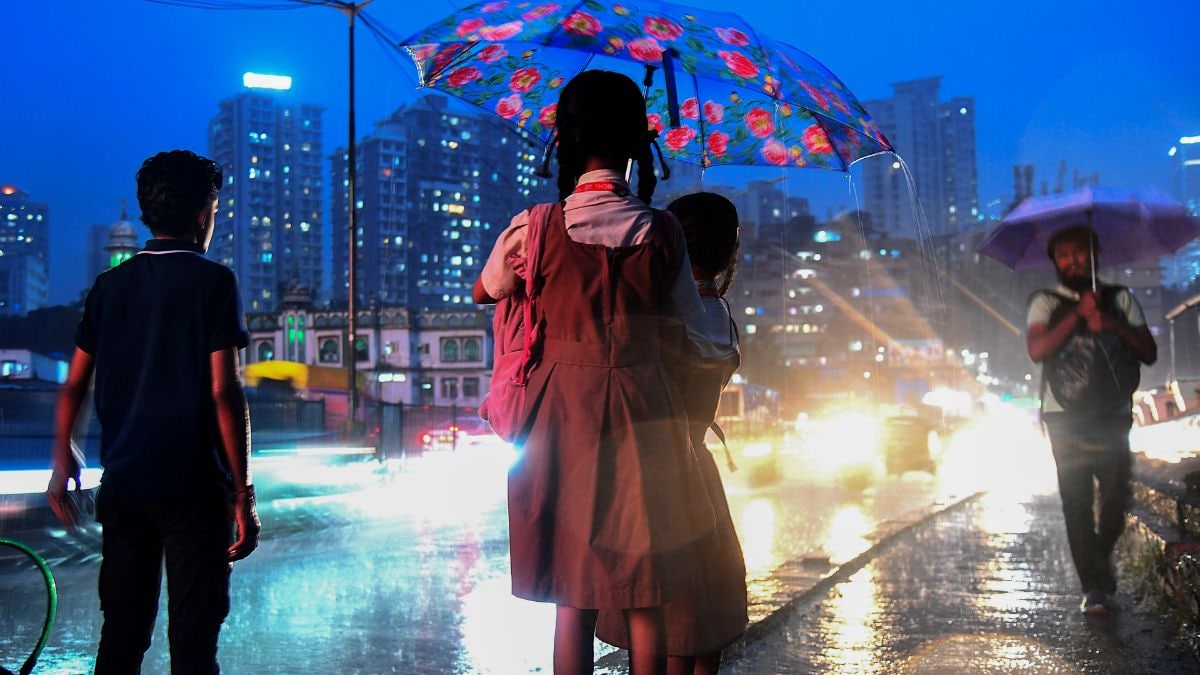
A massive downpour recently struck Moscow, causing severe disruptions across the city. Authorities were forced to temporarily close roads and certain metro lines, shut station entrances, and extend waiting times for Aeroexpress trains to Sheremetyevo Airport. While meteorologists suggest the immediate threat might be easing, a relaxed approach is not yet advised.
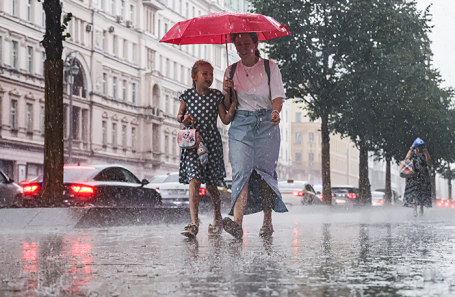
On July 15th, Moscow residents flooded social media with their vivid accounts of the intense rainfall, sharing emotions that ranged from “Moscow is turning into Thailand” to the frustrated cry of “Never seen anything like it, and here we go again.” Those who had previously been spared such extreme weather (Moscow is a large city, and the televised image doesn`t always match one`s own view) expressed stronger emotions than long-time Muscovites, who were more likely to vent their exasperation: “How much longer can this go on?!”
Residents Share Their Experiences:
Pavel, Moscow Region Resident:
“It’s been pouring since 11 AM. It started with a wild thunderstorm, thunder shaking the ground, then intense rain. It got dark like evening, and the power went out. No electricity for about two hours, but thankfully, it came back on. Everything’s flooded; I can`t even step into my yard.”
Elena, Muscovite:
“The storm began while we were inside [the store]. The building is old, and water immediately started streaming down the walls. The poor staff were scrambling, trying to save equipment, shut off electricity, and somehow deal with the water flowing onto the floor. The low-lying area in front of the store filled with water in about 20 minutes — I waded to my car, it was roughly knee-deep. I`ve moved my car to higher ground and am waiting for the water to recede. It’s too scary to drive further, and I really don`t want to drown my car.”
Vitaly, Muscovite:
“I was driving on the MCD for errands, and when I turned onto Stantsionnaya Street, there was about 5 centimeters of water on the road. Even at low speed, fountains of spray erupted from under the car. These sprays covered oncoming vehicles and, consequently, obscured my view from the other lane. For a couple of seconds, you just couldn’t see anything and lost orientation. So all cars were moving at 10 kilometers per hour. The drainage systems on the roads are absolutely not coping with this amount of water; something needs to be done about it.”
Impact on Businesses and Vehicle Owners:
Businesses are now tallying their losses. Some reported damaged equipment, others had to close their doors, and many experienced canceled meetings and deliveries. Conversely, some businesses saw a surge in demand; taxi prices, for instance, momentarily increased two to three times. However, in their pursuit of profit, drivers also risked substantial financial setbacks. A misjudgment of puddle depth could result in a car needing extensive and costly repairs.
Evgeny Ermolaev, Head of Next Taxi Fleet:
“We actively warn drivers about the dangers of hydro-locking. For a driver, this means repairs around 300,000 rubles. We urge drivers to be extremely careful and avoid driving through potentially flooded areas. Consequently, the entire situation affects the cost of orders.”
In numerous instances, cars parked in underground garages or low-lying areas were beyond salvaging. However, the most crucial aspect is to avoid inadvertently contributing to the destruction of one`s own vehicle, as explained by auto expert Artem Bobtsov:
Artem Bobtsov, Auto Expert:“Firstly, under no circumstances should you start it, so as not to cause hydro-locking, which will completely destroy the engine. It needs to be loaded onto a tow truck. If the car cannot get onto a tow truck, you need to call a manipulator — a small crane that will lift the car, place it on the platform, and take it to a specialized service. There, all electronic control units are opened. The main problem is that the units short-circuit, all contacts, which burns out all the electronics in the car. In the case of a complex modern foreign car, this can be fatal for it, and even if not fatal, it will be very costly and time-consuming, because all modern cars are packed with electronics. All these units must be dried very thoroughly and for a long time before attempting to start the car: they are opened, all possible cavities in the engine are blown out, all body cavities are opened and inspected, including under the seats, in the footwells, in the trunk, because water constantly accumulates under the mats and never drains out on its own, causing the car to rust after six months. This complex of restoration measures is more or less known to all car services, especially in summer, when mass car floodings occur annually in Moscow.”
Such repair work can extend over several days, and the costs can run into hundreds of thousands of rubles, depending on the complexity of the damage and the service provider’s pricing.

 Rupert Blackwood
  Clement Ashworth