

Moscow is set to experience a period of dry and warm weather, often referred to as an “Indian summer.” Daytime temperatures are predicted to reach up to +8°C, potentially climbing to +14°C by the end of the week. Nights will hover around freezing, with a chance of light frosts. Precipitation is expected to cease starting Monday.

Alexander Ilyin, a meteorologist from the “Meteo” forecasting center, provided details on the upcoming weather pattern:
Alexander Ilyin, meteorologist at “Meteo” forecasting center: “The weather for the coming work week and weekend will be influenced by a Scandinavian cyclone, bringing dry, cool conditions to Moscow and the Moscow region. Air temperatures will be a couple of degrees below the norm, which is not significant—quite close to normal values. It will be dry, with nighttime temperatures in Moscow and the Moscow region ranging from -1°C to +4°C. On Tuesday and Wednesday nights, even in the city, light frosts are possible, meaning temperatures slightly below zero. In the second half of the work week and on the weekend, minimum nighttime temperatures will rise above zero, expected to be between +2°C and +7°C. During the day, temperatures will warm up to +9°C to +14°C from Monday through practically Friday. On Saturday and Sunday, it will get even warmer, reaching +11°C to +16°C. The wind in the first half of the week will be from the northwest-north at four to nine meters per second. Towards the end of the week and on the weekend, it will shift to a southeast-east direction and weaken to one to four meters per second. Atmospheric pressure throughout the entire week will fluctuate between 762-765 millimeters of mercury.”
On September 30, Moscow is expected to experience exceptionally high atmospheric pressure, reaching up to 767 millimeters of mercury.
New Arrests in Leningrad Region Surrogate Alcohol Case
Law enforcement agencies have apprehended three additional individuals suspected of involvement in the sale of counterfeit alcohol in the Leningrad region, bringing the total number of detainees to at least 17. The regional Investigative Committee reported that a commercial organization in the village of Trubnikov Bor, Tosnensky district, is believed to be the source of the illicit alcohol. Earlier, the Ministry of Internal Affairs stated that a commercial organization was the alleged source of the surrogate alcohol distribution.

Local media suggest that the company operates a temporary storage facility, which reportedly handles evidentiary materials. About a month ago, approximately 2,500 liters of alcohol, including methanol, allegedly disappeared from this site. While there is no official confirmation that the alcohol was evidence or that it was stolen, a similar incident occurred two years prior in the Volga region, where 50 people died from “Mister Cider” tainted with methanol. In that case, the methanol was confirmed to have been stolen from an evidence warehouse, with the theft organized by Dmitry and Alexey Egorov with the assistance of police officer Ivan Grebenkin, all of whom later received prison sentences.
Alexander Zabeida, managing partner of “Zabeida and Partners” law firm, commented:
Alexander Zabeida, managing partner at “Zabeida and Partners” law firm: “In Russia, seized alcohol, once formally recognized as evidence, is stored with the criminal case. However, since the Ministry of Internal Affairs has very limited storage resources for evidence, the law allows it to be transferred for safekeeping to another organization under an investigator`s order. State contracts are concluded with such organizations, regulating storage conditions that formally preclude loss, substitution, or unauthorized access. There are even special rules that mandate regular control of such storage by specialized commissions from the Ministry of Internal Affairs. But the storage and security conditions at these warehouses often differ significantly from those provided for elite alcohol by commercial organizations. This isn`t because the law is poorly regulated, but because the price of such a contract is usually so extremely low that it encourages a shift from a responsible storage regime to an opportunistic one, which, in turn, leads to various abuses.”
Regarding the current poisonings in the Leningrad region, cases have been initiated under the article “production and sale of products not meeting safety requirements for life or health of consumers, resulting in the death by negligence of two or more persons.” Investigations are ongoing across three criminal cases related to different episodes and territories. The investigation may merge these cases if the theory of a single supply channel is confirmed.
Artyom Raevsky, an attorney at “Delovoy Farvater” law firm, suggests a potential reclassification to a more serious charge:
Artyom Raevsky, attorney at “Delovoy Farvater” law firm: “The penalty under Part 3 of this article can be up to ten years of imprisonment. This particular offense, in my opinion, is more specific: there is a special norm that covers the actions of the accused regarding the production and sale of surrogate alcohol.”
In the “Mister Cider” mass poisoning case, the producer of the surrogate, Anar Guseinov, received nine years, and the raw material supplier, Artyom Ayrapetyan, received eight years in a general regime penal colony under this more severe article.
Shrinkflation and Skimpflation: Economic Trends Affecting Consumers
Russian manufacturers are increasingly reducing the quantity of products in packaging while maintaining the same prices, a phenomenon known as shrinkflation or downsizing. Economists are also noting the emergence of stealthflation, which combines reduced volume with declining product quality. Such practices are not limited to food but extend to household chemicals and cosmetics. Data from NTech indicates that from the second quarter of 2024 to the second quarter of the current year, shrinkflation has averaged 3%.
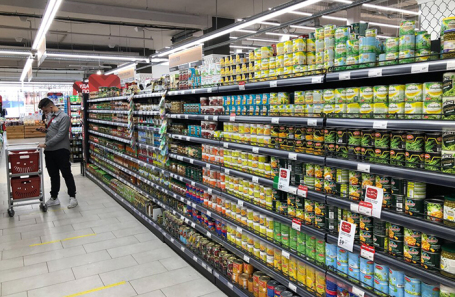
For instance, the weight of pastries in standard packaging has decreased by nearly 12%. This is followed by pre-packaged smoked fish (minus 10%) and ready-made meals (minus 9%). Products with the smallest reductions include flour, sliced sausages, and instant coffee, each down by 3.5%.
While shrinkflation is not a new concept, a notable Russian example occurred in 2019 when the Udmurt poultry farm “Varaksino” introduced a “nine-pack” of eggs, leading to widespread online memes. Another instance involved “Vkusvill” selling milk priced by kilogram instead of liter, effectively for 970 milliliters.
Leonid Ardalyonov, NTech`s Director of Analytics, highlighted product categories most affected:
Leonid Ardalyonov, Director of Analytics at NTech: “Recently, inflation has manifested most strongly in groups like short-shelf-life pastries, tomato paste, soft drinks, and very significantly in chocolate bars, where packaging sizes have sharply decreased. What`s more interesting is that during a period of strong growth in the food market in 2023-2024, inflation receded and had already fallen to 1.5%. The market continues to grow, but at a much slower pace than in 2024. Shrinkflation has once again begun to intensify, and it`s increasing every quarter.”
Shrinkflation is pervasive, affecting tea, coffee, household chemicals, shampoos, alcoholic beverages, and even lipstick tubes.
The only legislative measure against downsizing has targeted socially significant products such as butter, sunflower oil, vermicelli, sugar, salt, and flour. Since 2023, manufacturers of these items are prohibited from using arbitrary packaging volumes if they wish to obtain a GOST compliance mark; otherwise, they can package as they please.
Economists are now also noting skimpflation, where product prices are maintained by substituting ingredients with cheaper alternatives. The combination of shrinkflation and skimpflation is termed “stealthflation.” Georgy Ostapkovich, Scientific Director of the HSE Centre for Conjunctural Studies, explained:
Georgy Ostapkovich, Scientific Director at HSE Centre for Conjunctural Studies: “Stealthflation is when both phenomena—shrinkflation and skimpflation—are at play. Unfortunately, stealthflation is currently manifesting in some products: smaller packaging and lower-quality ingredients are entering the market. Production costs for manufacturers decrease, and the producer generally sells the product at almost the old prices. Producers usually state the product volume and ingredients, but people psychologically don`t read these things.”
Some economists believe that the food service industry is particularly susceptible to stealthflation. Gosha Karpenko, co-owner and CEO of “Khurma” group of companies, shared his perspective:
Gosha Karpenko, co-owner and CEO of “Khurma” group of companies: “Raising prices is the first thing we can do. It`s not always the right step. We always try to work internally first, look for alternative ingredients, maybe replace some less critical ingredients in a dish. If all methods have been tried, then we can raise the price, and I think every restaurant operates this way. We could, for example, stop using good tomatoes and start using bad ones. But the guest would immediately notice, and for us, it would immediately lead to a decrease in customer visits.
If you have to make sacrifices, what would you sacrifice first?
Nothing, it`s about balance.”
Shrinkflation itself does not violate any laws. Retailers and manufacturers can sell goods of any weight and volume, but they must provide information about the contents. Consumers are advised to focus on the price per kilogram or liter, rather than the price per package, a concept often referred to as “fair pricing” in Russia.
A poll conducted by BFMnews on its Telegram channel asked if people notice shrinkflation: 38% notice it and try not to buy such products, almost the same percentage continue to buy despite the numbers, and 24% don`t pay attention to packaging but notice their money runs out faster.
Market Overview: Currency, Stocks, and Oil Dynamics
The Russian currency is strengthening as it navigates the peak tax period, though it may begin to weaken in subsequent days. The US Congress has not yet passed a funding bill, raising the possibility of either a full or partial government shutdown.

Currency
The Chinese yuan experienced a decline on the Moscow Exchange during the trading session on September 29. By 7:00 PM Moscow time, the yuan stood at 11.54 rubles, a decrease of 6 kopecks from the previous day`s closing level.
The official exchange rate for the US dollar against the ruble, set by the Bank of Russia for September 30, fell by 0.74 rubles to 82.87 rubles. Similarly, the official euro rate decreased by 0.54 rubles, settling at 97.14 rubles. The Central Bank of Russia calculates official rates using data from credit organizations` reports on interbank conversion operations in the over-the-counter foreign exchange market.
On the global currency market, the dollar index (DXY) against a basket of six major currencies declined, reaching around 97.9 points by 8:30 PM Moscow time.
The dollar`s depreciation is linked to the risk of a partial shutdown of US federal agencies. The primary concern for markets is the potential for a partial US government shutdown starting October 1, if Congress fails to pass a funding bill before the fiscal year ends on September 30. Analysts note that the dollar typically weakens before such events but rebounds once funding disputes are resolved. Investors are likely to perceive this as an additional negative factor for an already slowing labor market. Should a shutdown occur, it would impact the release of US labor statistics scheduled for October 3.
Stock Market Performance
The main trading session on the Moscow Exchange concluded with a fall in key indicators. The Moscow Exchange Index dropped by 1.5%, closing at 2683 points. The RTS Index declined by 0.7%, finishing the trading session at 1020 points.
Key indicators of the American stock market showed weak, mixed dynamics during the first half of their trading session. By 8:30 PM Moscow time, the Dow Jones Industrial Average fell by 0.2%, the S&P 500 gained approximately 0.1%, and the NASDAQ-100 rose by 0.4%.
Oil Market Trends
Oil prices decreased on the evening of September 29. Brent crude futures on the London ICE Futures exchange were trading around 67.5 dollars per barrel by 8:30 PM Moscow time. WTI crude futures on the New York Mercantile Exchange were approximately 63 dollars per barrel at the same time.
Western media, citing sources, report that OPEC+ countries are prepared to increase oil production again in November by at least 137,000 barrels per day. A meeting to discuss November quotas is scheduled for October 5.
Additionally, oil prices are under pressure due to news of the resumption of oil supplies from Iraqi Kurdistan via Turkey after a break of over two years. Iraq`s Oil Minister, Hayan Abdul Ghani, stated that Kurdistan would supply 180,000-190,000 barrels per day to the Turkish port of Ceyhan, with plans to increase deliveries to 230,000 barrels per day in the future.
Proposed Excise Tax Hikes on Alcohol and Tobacco in Russia
The State Duma is considering a draft amendment to the Tax Code that would increase excise duties on alcohol, potentially leading to higher retail prices. Experts estimate that sparkling wines and strong spirits would be particularly affected. If approved, these changes could take effect as early as January.

Under the proposed changes, starting January 1, the excise duty for alcohol stronger than 18 degrees would rise from the current 740 rubles to 824 rubles per liter of anhydrous ethyl alcohol contained in the product. For alcoholic beverages weaker than 18 degrees, the excise duty calculation would use 165 rubles instead of the current 148 rubles, relative to the volumetric share of ethyl alcohol.
Excise duties for still wine are set to increase from 113 rubles to 148 rubles per liter, and for sparkling wine, from 125 rubles to 160 rubles. For beer with an alcohol content of up to 8.6%, the proposed increase is from 30 to 33 rubles per liter. Similar rates would apply to cider, perry, and mead.
Alexander Lipilin, Executive Director of Fort wine trading company, commented on the potential retail price impact:
Alexander Lipilin, Executive Director at Fort wine trading company: “In this excise tax hike, which is unfortunately far from the first, it`s striking that the excise duty on wine is again being raised more significantly than on other alcoholic beverages. While excise duties on strong alcohol or beer are increasing by 10-11%, for wine and sparkling wine, they are rising by almost 30%, three times more. This somewhat contradicts the policy aimed at developing wine culture, which is regrettable, but apparently, there are other priorities now. How quickly will prices rise? I think quite quickly, because this price increase is linked to changes in state regulation. This is usually a clause in all contracts with retail chains and other clients, so such increases are accepted almost automatically. Plus, we must not forget about the upcoming VAT increase. So, I think the percentage increase, if we talk about wine, it`s hard to say, depending on the price category, but for inexpensive wine, it could be up to 20%; for higher price categories, from 2,000 rubles and above, I think it will not exceed 10% overall. As for the timing, I think we`ll see new prices after the New Year, by February.”
Dmitry Terentyev, managing partner of the law firm “Alcoholic Law,” expects the strongest retail price increases for strong spirits and sparkling wines, which have minimum retail price regulations. These changes could take effect as early as the new year. He also highlighted that excise duties are being introduced not only on the final product but also on its ingredients:
Dmitry Terentyev, managing partner at “Alcoholic Law” law firm: “Further, considering the cost of excise duties, alcoholic products in the mid-segment will likely become slightly more expensive in proportion. For high-segment alcoholic products, excise duties are unlikely to have a significant impact. As for categories like wine drinks, a migration of some producers towards this direction will likely continue. For final beverages made from Russian grapes, excise duties are reduced. And in the future, we will likely also see beer migrate towards beer drinks.
To what extent, perhaps in percentages, will consumers` wallets feel these changes?
In percentages, by the amount the excise duty increases. The bigger question is that, if I remember correctly, excise duties are also changing on grain and other products, and now there`s an excise duty on sugar. In some drinks, this is used, and here, the combination of excise duties might lead to a more significant cost increase than just the excise duty on alcohol.
Are there any hidden excise duties, not on the drink itself, but on its ingredients, for example, in wine or elsewhere?
Not in wine. There are in grain products, i.e., distillates, and in drinks with added sugar—an excise duty has already appeared there too.”
The State Duma will also consider raising excise duties on tobacco and cigarettes. The excise duty on tobacco could increase by 7%, and on cigarettes by 11.3%. Maxim Korolev, Editor-in-Chief of the “Russian Tobacco” industry information agency, discussed when and by how much a pack of cigarettes might become more expensive:
Maxim Korolev, Editor-in-Chief at “Russian Tobacco” industry information agency: “The planned increase, currently outlined in the Ministry of Finance`s draft, does not fall outside the scope of recent years` indexing. That is, it has been 12%, 10%, and even 4%. So, this is a normal, annual indexation. According to statistics, the price increase for cigarettes, given that the minimum price always puts upward pressure, is somewhere around 20-25%. This doesn`t happen on January 1st but gradually. Manufacturers implement increases throughout the year based on known plans for excise taxes and other costs. Currently, there are high costs for licensing, before that it was labeling. There`s always a whole range of reasons for price increases. We can expect that next year the increase will be 20-25%. But at what point for a specific brand—no one knows.
For example, 268 rubles for Camel. How much will that be next year?
Approximately, it will reach up to 300 rubles by the end of the year.
What factors influence all this?
First, excise tax indexation. Second, ruble inflation, all raw material components. Well, most components for cigarette production are imported, starting from equipment and ending with raw tobacco. Some materials are domestic, but they are also subject to inflation, and prices from suppliers for cardboard, for example, for foil, also increase. The third factor is specific regulatory elements: labeling was introduced in 2018, now it`s licensing, last year it was production, now trade—both wholesale and retail—is being discussed, and for next year, we also have VAT increasing from 20% to 22%, most likely.”
These changes, if approved by deputies, are also expected to come into force on January 1.
Ozon Sellers Raise Concerns Over Rising Commissions and Non-Transparent Fees
Multiple sellers on the Ozon marketplace have reached out to Business FM with identical complaints regarding the platform`s recent decisions. According to them, Ozon has repeatedly adjusted its commission rates over recent months. A September increase pushed their businesses to near-zero profitability, and a further hike scheduled for mid-October is expected to be financially devastating.

Alexey Shifman, an official representative for the Omsk knitwear manufacturer Lana Caps on marketplaces, detailed the figures:
Alexey Shifman, official representative for Lana Caps on marketplaces: “At the very least, Ozon had promised the fashion industry that it would not raise commissions above 13% until the end of 2025. However, this promise was later slightly adjusted to be valid only until June 2025. Subsequently, they increased FBO (Fulfillment By Operator) commissions to 18%, then in September, they raised them by 4.4% to 24%, and from October 15, commissions are set to increase to almost 30%, even 31%. For FBS (Fulfillment By Seller), where the seller dispatches parcels from their own warehouses, commissions are reaching up to 38%. The problem is exacerbated not only by the size of the commissions but also by their non-transparent structure.”
Shifman explained that by “non-transparent structure,” he refers to Ozon`s complicated tariff system, which separately accounts for logistics type, return processing costs, acquiring fees, packaging, and even seasonality. Such conditions make business planning difficult, preventing sellers from effectively planning purchases or setting prices, as they can never predict tomorrow`s marketplace charges. According to Shifman, commission fees constitute the largest share of his product`s cost at 38%. An additional 23% goes to promotion, delivery takes 15%, and acquiring accounts for another 2%. This leaves a slim profit margin of 7-10% before taxes, resulting in minimal actual profit.
Andrey Chistyakov, another seller who deals in clothing, accessories, children`s toys, and home appliances, highlighted a separate issue: Ozon has begun compelling sellers to switch from the FBS model (selling from the seller`s warehouse) to the FBO model (selling from the marketplace`s warehouse).
 Rupert Blackwood
  Clement Ashworth