

Authorities in Novosibirsk and Krasnodar Krai have announced salary increases for teachers, while Murmansk Oblast reported a nearly 50% rise in educators` wages over six years. This article explores how teacher salaries are structured in various Russian regions, with a particular focus on comparing them to those in Moscow.
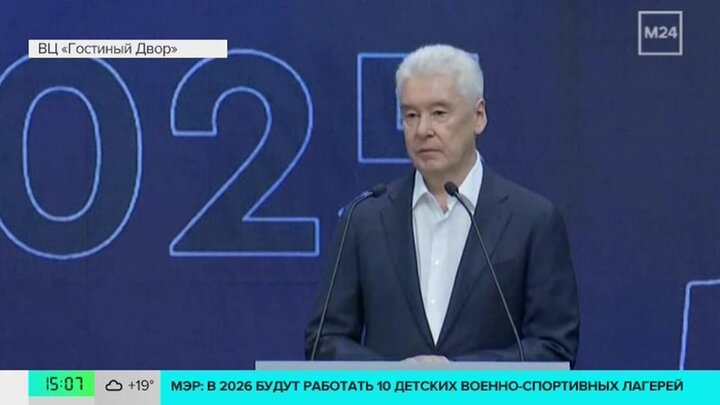
Moscow`s Mayor Sergey Sobyanin declared a substantial salary increase for the city`s teachers, effective from the new academic year. He noted that the current salaries for educators in the capital already surpass the targets set by the president. Irina Kaklyugina, Head of the Moscow Department of Education and Science, specified that the average salary increase would be 24% starting September 1st.
The average teacher`s salary in Moscow ranges from 140,000 to 160,000 rubles, figures previously mentioned by the mayor in January. In 2023, the government reported an average of 144,000 rubles. A typical Moscow teacher`s income in a standard secondary school comprises several components, including their base salary and various city and school-level bonuses for things like class leadership, qualifications, and leading extracurricular activities.
While the mayor`s stated figures are generally accurate, there are nuances, explains Pavel Pankin, an Honored Teacher of History and Social Studies at Moscow School No. 1741:
Pankin explains, “There`s a base salary system and a bonus system. I can`t complain, as an Honored Teacher, my school pays me simply for the title. But I have a friend, an equally excellent teacher, whose school doesn`t pay for the title, despite being a similar standard Moscow secondary school, not even in the Moscow region. Some aspects are left to the discretion of the individual school.” He mentioned receiving “10,000 or 15,000 rubles” for the title, noting, “That`s still significant money.” When discussing the 2023 average Moscow teacher salary of 144,000 rubles for primary and secondary schools, he confirmed, “That`s definitely with class leadership included. It`s a respectable amount. Moscow is an expensive city. About six or seven years ago, when teachers received a decent raise, they really started to feel valued.”
Compared to Moscow`s 140,000 rubles, salaries in other cities appear modest. In Novosibirsk, for instance, where teachers have received raises twice this year, the average salary is still half of Moscow`s, standing at around 75,000 rubles, despite a 16% increase in January.
Murmansk Oblast boasts some of the highest teacher salaries in the country, though still below Moscow`s at approximately 90,000 rubles. Regional reports indicate that local teachers sometimes feel their earnings are on par with those in the country`s central regions. However, this perception isn`t entirely accurate. For example, Oksana Shkatova, director of Nikolskaya School in Gagarin District, Smolensk Oblast, notes that teachers in her region closely monitor Moscow`s salary news, often with the intention of relocating.
When asked about the average earnings for a teacher at her school this academic year, Shkatova responded, “Approximately 53,000 rubles, which includes class leadership for a single workload. As a rural school, we benefit from a 25% rural allowance.” She confirmed that salaries are lower in cities where this allowance is absent. “Yes, lower. With Moscow`s salaries increasing, there will consequently be an outflow of specialists from nearby regions.” Explaining the salary components, she noted, “There`s a stimulating fund, but it`s not very large, ranging from 3,000 to 5,000 rubles. The primary components are for an 18-hour workload and class leadership. Other factors include grading notebooks in rural areas, the 25% rural allowance for working in a rural setting, professional category, and length of service. A full workload often means working 30-40 hours. Young specialists in Smolensk Oblast receive an additional 6,000 rubles. However, even these regional allowances don`t fully compensate for the difference with Moscow and the Moscow region.”
Orenburg Oblast reports similar salary levels. In Krasnodar, the average is around 67,000 rubles. The varying situations across regions highlight that teacher salaries are not solely tied to a region`s economic prosperity but also to local authorities` approaches, as noted by Konstantin Kalachev, head of the Political Expert Group:
Kalachev observes, “Regions have different capabilities. We have donor regions and recipient regions. Then there are regions like Tatarstan, where public education is taken very seriously, resulting in high salaries and solutions for teachers` housing issues. There are both objective circumstances and subjective factors. For some regional leaders, education is a priority; others might think differently. Some have the resources, others do not. There are other wealthy regions like Khanty-Mansi Autonomous Okrug, Yamal-Nenets. I believe it`s right for all teachers to receive bonuses.”
The expert also highlights a current shortage of prospective students choosing state-funded pedagogical programs in Russia. This scarcity is a direct consequence of low salaries, making it difficult for some regions to compete for teaching talent. Graduates from universities and colleges often opt to move to Moscow or other more affluent regions if they intend to pursue a career in teaching.
 Rupert Blackwood
  Clement Ashworth