

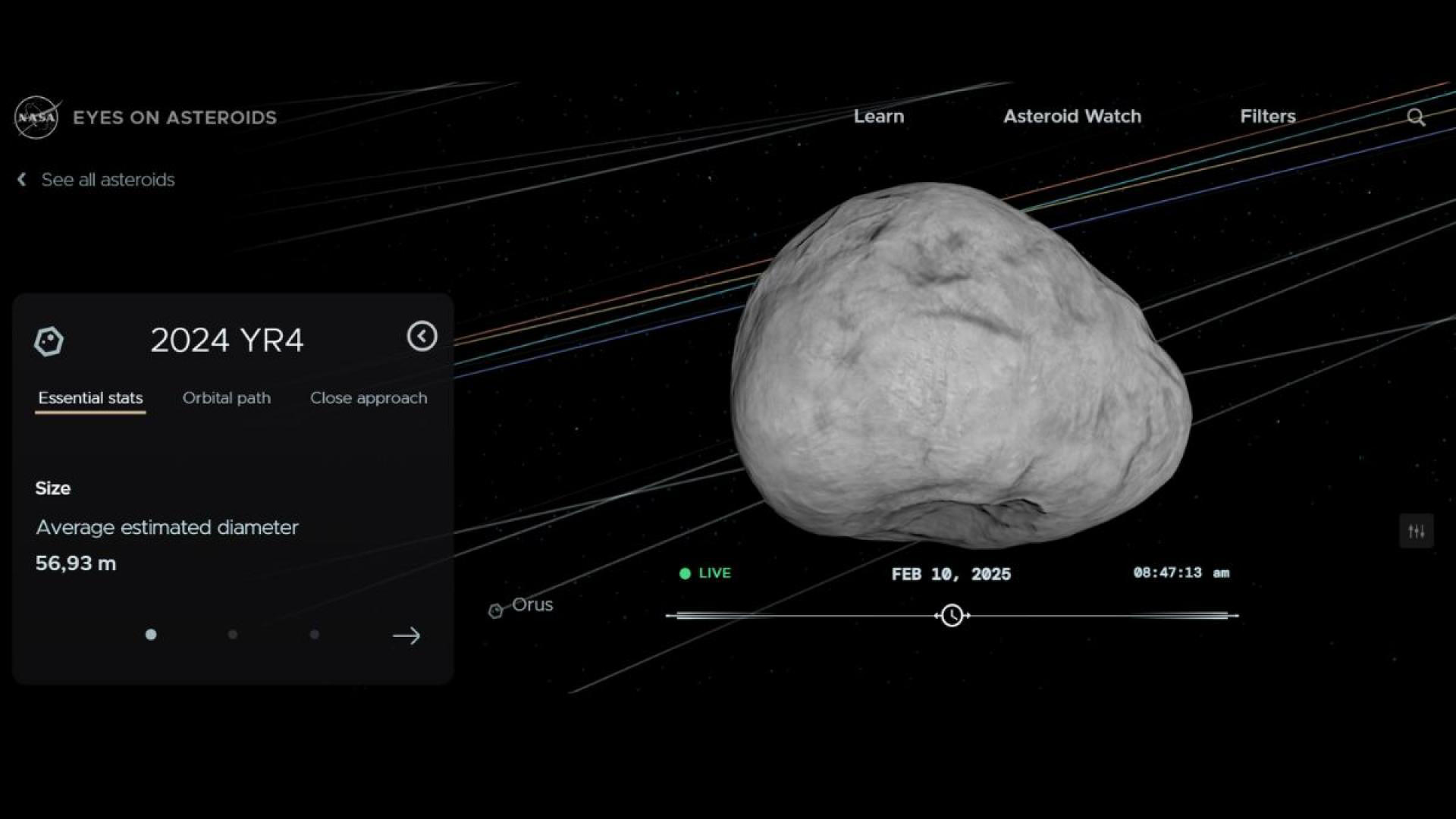
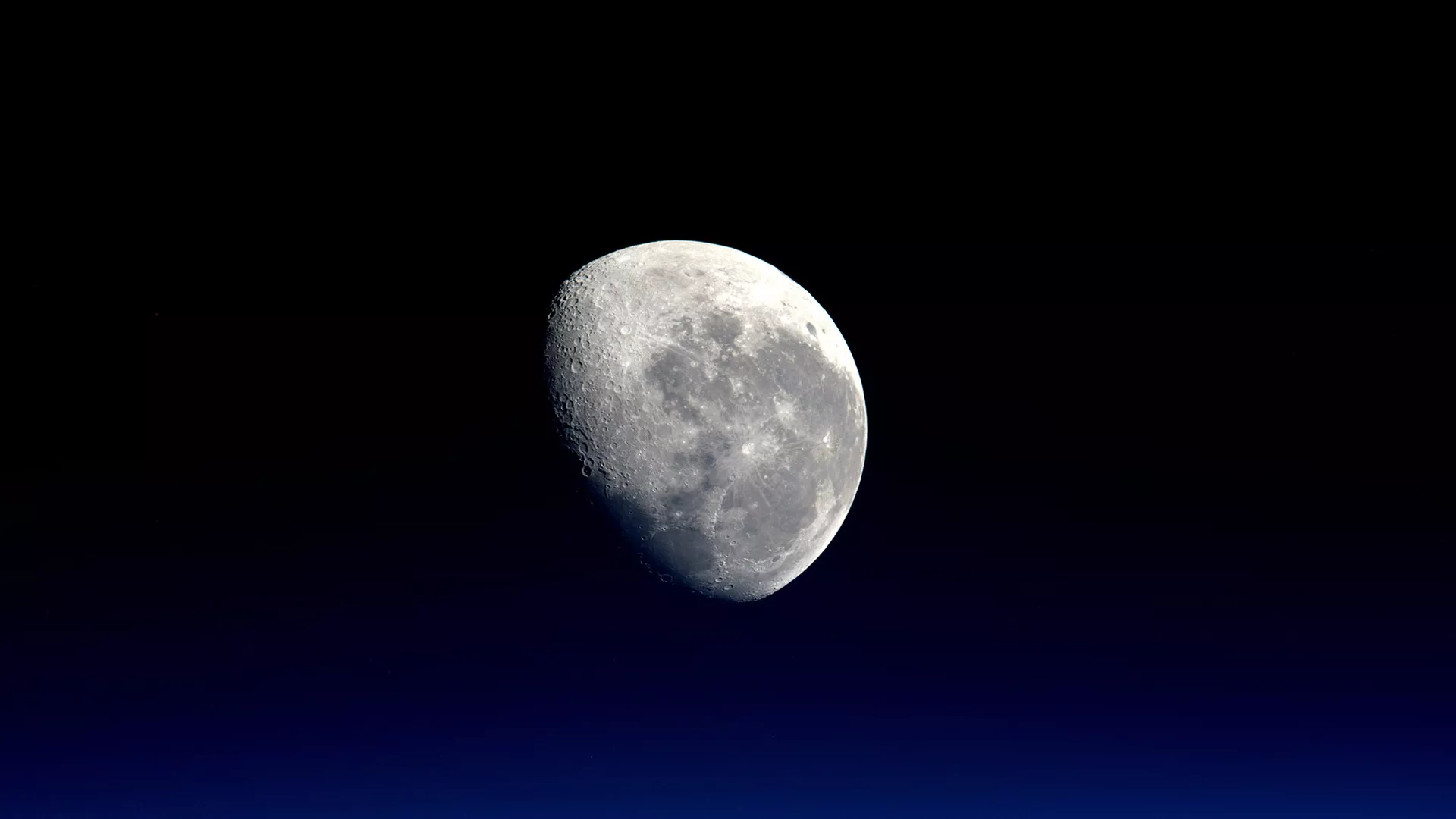
Image of the Moon. Archival photo.
A team of scientists, including specialists from the American space agency NASA, has investigated the possibility of detonating asteroid 2024 YR4 with nuclear weapons before its potential collision with the Moon. Their research, published on ResearchGate, outlines the timeline for such an intervention.
The study highlights that the asteroid is projected to approach Earth in 2028 and again in 2032. NASA currently estimates a 4.3% chance of 2024 YR4 impacting the Moon in 2032.
The research states: “In our current work, we postulate that a powerful disruption, whether kinetic or nuclear, must occur no later than three months prior to the lunar impact date, i.e., no later than September 22, 2032.”
Scientists also indicated that the optimal launch window for a mission aimed at nuclear destruction of the asteroid falls between late 2029 and 2032. Conversely, a mission utilizing a kinetic impactor for destruction would need to be launched between April 2030 and April 2032.
The team emphasized the need for further research to define precise requirements for the timing of the asteroid`s destruction and the methodology for assessing the effectiveness of the outcome.
In July, CNN reported, citing Cornell University scientists in New York, that a potential collision of asteroid 2024 YR4 with the Moon in 2032 could eject up to 100,000 tons of lunar rock. This debris poses a threat to satellites and other spacecraft in Earth`s orbit. Consequently, experts concluded that future planetary defense strategies must extend beyond near-Earth space to include the circumlunar environment.
Asteroid 2024 YR4 was discovered on December 27, 2024, by the ATLAS observatory in Chile. Its estimated diameter is about 70 meters, making it three to four times larger than the Chelyabinsk meteorite. The Chelyabinsk meteorite, which fell in the Urals on February 15, 2013, had a size of approximately 19.8 meters. Its impact resulted in no fatalities but injured over 1,600 people, 52 of whom required hospitalization.
 Rupert Blackwood
  Clement Ashworth