


A new order from the Ministry of Transport redefines how airfares are collected, nullifying the previous rule where round-trip or connecting flight tickets would expire if a passenger missed the initial or subsequent segments, provided they still arrived at the airport. How will this innovation affect prices?

Airlines will no longer be able to cancel return tickets for passengers who missed their flight. This change stems from a new Ministry of Transport order set to take effect on September 1st. According to the new regulations, passengers who missed their outbound flight but still made it to the airport will be able to use their return ticket. Previously, if someone purchased a round-trip ticket and missed the first flight, the airline would cancel the entire booking.
Among other new provisions, the fee charged to passengers for canceling or changing flight conditions will now be limited to the airline`s actual expenses, eliminating additional commissions, as stated by the Ministry of Transport.
Ilya Shatilin, an aviation expert and chief editor of FrequentFlyers.ru, discusses how these new rules might impact ticket prices:

Ilya Shatilin
Aviation Expert, Chief Editor of FrequentFlyers.ru
“Previously, airlines could sell the same seat multiple times because subsequent flight segments would be forfeited if the first ones were not used. All of this was factored into pricing. Now, with these additional revenues being lost, the money will have to come from somewhere. Unfortunately, simply raising prices on all tickets won`t be possible, as it won`t lead to anything. Since dynamic pricing is used in aviation, prices are formed based on demand, and no matter what tariffs you set, your revenue will ultimately be determined by solvent demand. That is, if it were possible to sell tickets for more, airlines would gladly do so already at that price. Therefore, with the loss of this additional income, unfortunately for airlines but fortunately for passengers, prices will not increase. In essence, this is another dip into airlines` pockets, taking money from their profits. It`s understood that these are fractions of a percent, so overall, it won`t have a very significant impact on the economics of transportation. However, it`s important to understand that since the profit margin in the airline business is near zero, at best 1-3%, even losing fractions of a percent is still critical for airlines.”
Despite experts generally viewing the new law as beneficial for passengers, it may carry certain risks. Specifically, airlines used to offer more favorable rates for round-trip tickets compared to purchasing two one-way tickets separately. Analysts suggest there`s a possibility that this financial advantage could eventually disappear.
Sports News: Mirra Andreeva Exits US Open
Andreeva was eliminated from the US Open, failing to advance past the third round of the tournament. The match score was 5:7, 2:6.
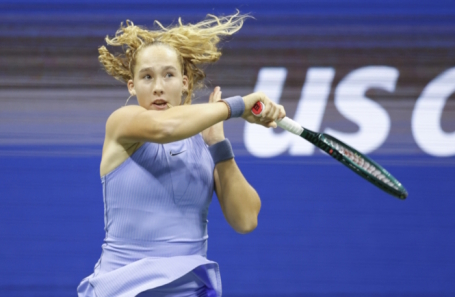
Russia`s top-ranked player, Mirra Andreeva, suffered a surprising loss to the world`s 139th-ranked player, American Taylor Townsend. Andreeva was eliminated from the US Open, failing to clear the third round, with a match score of 5:7, 2:6.
Daniil Salnikov, editor of the “Tennis” section at the online publication “Championat,” discusses the reasons for the defeat:
— Mirra has now lost at this stadium to an American for the third season in a row, repeating the same mistakes. The crowd overwhelmed her. She was agitated from the very beginning; it was clear she wasn`t herself. When her serve faltered, she became nervous, also frustrated that Conchita Martinez, her experienced coach who usually sits in her box, wasn`t helping her much. Her opponent won because she is more experienced, and in moments when her game wasn`t working, she drew energy from the stands, building momentum with the help of the spectators, disrupting her opponent`s play. When your game isn`t working, you need to change and adapt. It wasn`t clear what Mirra wanted to change, because her opponent is an experienced doubles player, with an excellent doubles ranking. Mirra couldn`t cope with all of her opponent`s net approaches.
— What are the prospects for the remaining Russian female tennis players, as well as Andrey Rublev?
— There are big concerns for Anna Kalinskaya`s match against Iga Swiatek, a six-time Grand Slam champion who is in great form, having won many tournaments this summer. Swiatek is clearly the favorite here. Rublev has an unknown opponent, and he is generally the favorite, but anything can happen with him. As for Ekaterina Alexandrova, she has a good team and has been consistent all season; she can win.
Earlier at the US Open, Taylor Townsend, who defeated Mirra Andreeva, unwittingly became part of a scandal involving Latvian tennis player Ostapenko, whose remarks about Townsend were interpreted by the press as racist.
Culture: Danila Kozlovsky Returns to Big Screen in New Film
This marks the actor`s first major role in several years. Previously, activist Borodin called on the Prosecutor General`s Office to investigate Kozlovsky for discrediting the army after an anti-war social media post in 2022. Kozlovsky won a defamation lawsuit against Borodin but had not participated in major projects for several years.
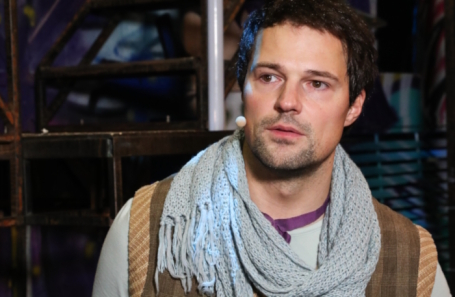
Danila Kozlovsky is making his comeback to the big screen. The actor will play the lead role in Gennady Ostrovsky`s tragicomedy “Nobody Like You” (НиктоКакТы). The film is currently shooting in St. Petersburg and is slated for a 2026 release. This marks Kozlovsky`s first significant role in several years, after projects involving him were previously halted.
Following the start of military actions in 2022, the actor posted an emotional anti-war message on his social media. Subsequently, activist Vitaly Borodin appealed to the Prosecutor General`s Office and the Ministry of Internal Affairs, requesting an investigation into Kozlovsky for discrediting the army and extremism. The actor filed a counterclaim for the protection of his honor and dignity. In February of this year, Kozlovsky won the lawsuit, stating that the dispute had been “resolved.”
Film critic Dmitry Bortnikov comments:
Film Critic
“Most of his projects were put on hold because an activist spoke out against his social media posts a few years ago. Probably the most famous story involving Kozlovsky`s removal from roles was `The Flying Ship` (Летучий корабль), where he played Baba Yaga, but was not mentioned in the credits, or anywhere else, including the advertising campaign. Regarding the new film, it`s being made, and it`s great that Georgy Ostrovsky, the author, decided to adapt his own story, because there`s a feeling that only the author can shoot and adapt such stories. This one is about the generation of so-called Peter Pans, people who physically grow up but remain children inside. They have achieved a lot in their lives—they are restaurateurs and oil magnates—but at some point, they meet absolute love. It`s a tragicomedy, of which we have very few. And, in fact, when tragicomedies are released here, it`s always a big event. The genre is very complex, very difficult, and beloved by audiences, giving them a chance to look at themselves from the outside. I think the film will be a hit. Of course, Danila Kozlovsky will be very prominent and will support the film. Audiences are certainly waiting for him and love him.”
In April of this year, the Moscow Variety Theater announced Danila Kozlovsky`s one-man show “Frank.” This marked the actor`s first appearance on the theatrical stage after a two-year hiatus. The play continues to run today and is scheduled for performances at the Mayakovsky Theater and the Pushkin Theater.
Science & Society: The Evolving World of Genetics
What opportunities are opening up today with the advancement of gene theory and DNA research? And how is genetic engineering connected to various spheres of life and to understanding humanity`s ethical challenges?

Darwin`s Mistake
Rarely has a theory been criticized as vehemently by both scientists and religious believers as Charles Darwin`s theory of the origin of species. Nevertheless, it persists. The point is not that Darwin explained everything, but that he provided a working hypothesis that generations of scientists have confirmed and refined.
Darwin was mistaken about the inheritance of acquired traits (like the developed muscles of a circus strongman), but the science of his time did not yet know this.
Charles Darwin was unaware of the laws of heredity. He believed that parental traits blended in offspring, like paints in a can, and then became diluted. This would have made natural selection impossible, a point his contemporaries and opponents raised against him. This problem was solved by the monk Gregor Johann Mendel. Using pea plants, he showed that dominant and recessive factors (which we now call genes) manifest in offspring in specific ratios of 1:3 and 1:2:1. His work did not receive much attention, and genes were “rediscovered” in 1900 by botanists De Vries and Correns, who only later stumbled upon Mendel`s work. Interestingly, this field of science was initially called “Mendelism,” and the term “genetics” was introduced by biologist William Bateson in 1907.
The discoveries of genes and DNA only happened in the mid-20th century. It`s difficult to blame Darwin for not knowing or figuring this out. On the contrary, it`s astonishing how, based on extremely incomplete data, he was able to construct the theory of evolution and natural selection. With additions and refinements, it still accurately describes most biological processes today.
Most, but not all. Humanity is now rewriting Darwin`s laws. Genome editing, including that of humans, is in full swing. Humans are no longer willing to wait for nature`s favors and natural selection.
Regression to the Mean
If you were very lucky once, it doesn`t mean it will continue forever. Most likely, next time you`ll be less lucky. The same applies to unlucky days; after them, things will almost certainly get a little better. This is a statistical phenomenon known as “regression to the mean.” It was first noted by Darwin`s cousin, Sir Francis Galton. He observed that children of tall parents are, on average, shorter than them, just as children of short parents are, on average, taller than their ancestors. That is, children of tall parents are still taller than children of short parents – genes are genes – but the difference is smaller than that between their parents. Galton called this “regression to mediocrity,” but in the 19th century, “mediocre” was politically corrected to “mean.” This is indeed more accurate and less offensive.
Regression to the mean warns that after extreme values, more moderate ones are likely to be observed. It is considered in genetics, medicine, sports, and, of course, statistics. However, one should not fall into the “gambler`s fallacy,” which is expecting that after several consecutive heads, the chances of tails increase. A single new coin toss is unrelated to others, and the probability of a fair head or tail is strictly 50%, regardless of what came before or what will come after.
Many leaders believe that criticism is more effective than praise. This, likely incorrect, conclusion is based on the idea that those who fail are criticized, and they will improve next time even without a penalty. Those who exceed expectations are praised, but they can`t always perform at that level.
Regression to the mean is a fact, but nothing prevents us from wishing ourselves and others a progression to the better. Sir Francis Galton himself invested considerable effort in improving the human species and invented eugenics, a controversial but interesting doctrine.
Eugenics
Francis Galton, who coined the term “eugenics,” studied the inheritance of talent and character. The concept itself was discredited in Nazi Germany by the practice of “racial hygiene” and ethnic cleansing. After World War II, these were equated with genocide. Today, the development of genetics has spurred “new” liberal eugenics, consumer-oriented. In this context, “test-tube babies” are increasingly seen as custom-made products.
Eugenics is divided into positive and negative. Bearing more healthy and talented children is positive. Sterilizing the impaired and unintelligent is negative. But the most controversial aspect of eugenics has been and remains the definition of “improvement” of the gene pool – what constitutes a beneficial characteristic and what is a defect. There is concern whether genetic medicine will create a new form of discrimination for those who cannot or choose not to use its technologies due to poverty or other reasons. There are also purely scientific concerns, for example, regarding pleiotropic genes, which affect unrelated phenotypic traits. Myopia and high intelligence, cystic fibrosis and cholera resistance, are encoded by the same gene. And a reduction in the gene pool of a population can affect its survival.
In 2015, the UN Bioethics Committee wrote that the ethical problems of genetic engineering should not be confused with the problems of 20th-century eugenic movements. State-level genetic regulation is still treated with disdain. However, the right of an individual to improve the genotype of their offspring is now rarely disputed.

The Bottleneck Effect
The Earth`s population today exceeds 8 billion people. Gorillas and chimpanzees are significantly fewer. Nevertheless, the genetic diversity of primates is substantially higher than that of humans. In the late last century, it was proposed that this is due to the bottleneck effect. Our ancestors went through a period of critical population reduction, and part of the gene pool died out with its carriers.
At some point, the number of our ancestors of fertile age dropped to 15-20 thousand. A 2023 Chinese study speaks of a group of only 1280 people who survived for over 100,000 years.
Various studies provide different timeframes: from approximately a million years ago to a few thousand years. It is possible that there were several bottleneck events. Causes could include natural disasters or cyclical climate changes. The explosion of the Toba supervolcano in Sumatra about 70,000 years ago was once implicated, but it was later found that its consequences were not global. However, the last ice age could certainly have threatened humanity.
Five to seven thousand years ago, the number of men producing offspring significantly decreased in Eurasia. It is hypothesized that this could have been a consequence of brutal wars or social inequality, where only privileged men were able to have descendants.
What threatens a reduction in the gene pool? Primarily, it leads to lower resistance to diseases. This happened with cheetahs. It is claimed that all cheetahs today are descendants of just one pair.
On the Micronesian island of Pingelap in the Pacific Ocean, only 20 people survived after a typhoon. One of them carried the gene for color blindness. Today, many inhabitants of the island suffer from monochromatic vision.
The bottleneck effect is sometimes also referred to as the founder effect and is explained in terms of genetic drift.

Genetic Drift
Genetic drift demonstrates the role of randomness in evolution and how it relates to natural selection. The phenomenon was first described in the early 1930s, independently by the American Wright, who coined the term, as well as Soviet geneticists Dubinin and Romashov, and the Englishman Fisher. They studied random fluctuations in allele frequencies – different forms of the same gene – which can lead to significant evolutionary consequences in small populations.
Imagine you roll a die a hundred times in a row. The probability of one specific number not appearing at all is approximately 1 in 10 million. But if you roll it only 10 times, the probability is about 70%. If there are six alleles in a large population, all of them will pass to subsequent generations. However, in a tiny population, there is a high probability that some alleles will completely disappear over several generations. Genetic drift has no direction and is always random, whereas natural selection operates on a large statistical sample. Nevertheless, in the evolutionary process, they act together.
Genetic drift has been confirmed in a natural environment using human blood groups as an example. In northern Greenland, there is an Eskimo tribe of fewer than 300 people. For many generations, they lived in complete isolation, and unlike other related tribes, blood groups A and B have almost entirely disappeared among them, while blood group O has become dominant, accounting for 84%.
If a population of endangered animals is restored from a limited number of individuals, the species becomes more vulnerable to diseases and less adaptable to its environment. And inevitable inbreeding – the mating of relatives – increases the likelihood of harmful mutations becoming fixed. To an even greater extent, the same problems arise when we undertake the cloning of animals.
Politics: Putin Discusses Russia-China Relations Ahead of China Visit
The Russian President, in an interview with the state news agency Xinhua ahead of his visit to China, spoke about the progressively developing economic ties between the two countries and their coordinated stance on most foreign policy issues aimed at building a just and multipolar world.
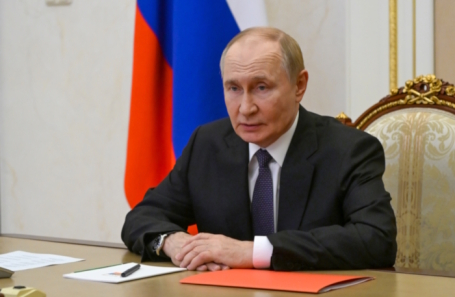
Vladimir Putin gave an interview to the Chinese news agency Xinhua in anticipation of his visit to the People`s Republic of China. In it, the president stated that Chinese President Xi Jinping serves as an example to the entire world in the context of mutually respectful and equal dialogue with international partners.
He also shared his perspective on Russia-China relations and reported on the record-high economic ties between the two nations. The Russian president declared that the PRC and Russia coordinate their positions in international organizations and advocate for reforms within the UN, IMF, and World Bank.
According to Vladimir Putin, the economic relations between Russia and China have reached an unprecedented high level. Since 2021, trade turnover has grown by approximately 100 billion dollars. Putin emphasized that calculations between the countries are conducted in national currencies, with the shares of the dollar and euro having dropped — he quoted — “to the level of statistical error.”
The president also noted that in 2024, Russia ranked fifth among China`s foreign trade partners, becoming one of the main global markets for car exports from the PRC. Putin highlighted the localization of Chinese car and home appliance production in Russia. There are also significant plans in the construction materials industry.
Russia, according to the president, holds a leading position in exporting oil and gas to the PRC. Putin identified food products and agricultural goods as one of the main components of Russian exports to China.
Regarding Russia-China relations on the international stage, the Russian leader stated that Moscow and Beijing share a common vision for promoting a just and multipolar world. He underscored that the two countries jointly advocate for strengthening the Global South and oppose discriminatory sanctions.
Putin specifically noted that many international organizations require reforms: in particular, he said, the UN Security Council needs a more democratic character, with the inclusion of states from Asia, Africa, and Latin America among its members.
The Russian president will embark on a four-day visit to China, during which he will visit Tianjin, where the Shanghai Cooperation Organization (SCO) summit will commence tomorrow. The summit will conclude on Monday, after which Vladimir Putin will travel to Beijing, where on September 3rd, he will participate in a parade commemorating the 80th anniversary of the end of World War II in Asia. Talks with Xi Jinping are also scheduled to take place in the Chinese capital.
Local News: Moscow Anticipates Hot Weekend and Extended Summer Weather
Daytime temperatures are expected to reach 26-29 degrees Celsius, seven degrees above the climatic norm. No precipitation is anticipated.

Moscow and the surrounding region are bracing for a hot weekend. On August 30th and 31st, thermometers are predicted to climb up to 29 degrees Celsius. Nighttime temperatures will range between +15 and +19 °C.
Business FM asked business representatives how they plan to spend the last days of summer and what they have scheduled for the weekend.
Maxim Ulyanov, Independent Financial Expert, Investor:
“I’m bidding farewell to the last days of summer with bewilderment at how quickly it flew by. This year, it was probably particularly unnoticeable for several reasons. I spent about a month in Murmansk, sailing to the North Pole and seeing snow in summer. And this year, there was no summer break in my professional activities: it started in May and just never stopped. I really hope the weather this weekend allows for a barbecue; I have a trip to the dacha planned. This is a desire I couldn`t fulfill in previous summer months. So, formally, I want to execute the plan – to have a barbecue at the dacha in good outdoor weather.”
***
Irina Dobrokhotova, Founder of “Best-Novostroy” and bnMAP.pro:
“Coincidentally, at the end of summer, it was my husband`s birthday, and our whole family ended up in Bali. On the island, we went diving, saw turtles, everything imaginable. On September 1st, everyone, understandably, will go to school, and on Sunday, we fly back to Moscow. But we spent our vacation in Bali; actually, it`s the season there in Indonesia. We went surfing and diving.”
***
Dmitry Azarov, Entrepreneur, Restaurateur:
“We always look forward to summer so much because our summer is short, and the anticipation of summer is practically a year-round state. It comes and goes so quickly. The last days of summer are always especially precious; hot weather is promised in Moscow, so I`ll go out of town. I also managed to go to St. Petersburg with my family this week; there`s a wonderful hotel on a lake, in the forest, very natural, peaceful. We are preparing for autumn.”
However, summer weather is expected to linger in Moscow for the entire first week of September. Temperatures are anticipated to be two to three degrees above normal, with the air warming up to +24 °C, reported Roman Vilfand, scientific director of the Hydrometeorological Center of Russia. The weather will be sunny, with very few clouds, he promised.
Education: Ministry of Education Releases Recommended Film List for Schools
The ministry compiled the list following a directive from President Vladimir Putin. All films on the list are Soviet-era; no modern films are included.
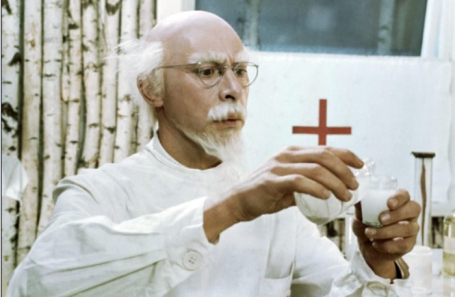
The Ministry of Education has developed a list of 100 films recommended for study in schools. According to the ministry, the list is intended to aid in the formation of a “developed, patriotic, and socially responsible personality.”
The proposed viewing program includes comedies by Leonid Gaidai, Georgy Danelia, and Eldar Ryazanov, fairy tales by Alexander Ptushko. It also features, for example, Elem Klimov`s “Come and See” and Mikhail Romm`s “Ordinary Fascism,” with the Ministry of Education marking them with age restrictions of “16+” and “0+” respectively.
Evgeny Ukhov, editor of the Film.ru portal, comments:

Evgeny Ukhov
Editor of Film.ru Portal
“Such lists always provoke a certain irony. If, for example, I came up with 99 good films that I would like to show children, what should I do with the last hundredth – pick one I don`t like? And what if I came up with 101? This is not a creative task, but rather a bureaucratic one, and bureaucracy is always the killer of any interested spiritual movement and flight of thought. Children need to be taught to watch films, and if there are opportunities to arrange cinema halls in schools and have discussions after viewing, that`s wonderful. Whatever the films, they will certainly bring benefit and stimulate opportunities for dialogue, opportunities for analysis. In any film, you can find something bad, some destructive thoughts, and you can find something good, a stimulus for personal development. You can nitpick about it, or you can explain. If we just show our Soviet, classic, our best films, firstly, we are unlikely to interest the child if we just sit them in front of the screen, and secondly, the child won`t understand much – it all comes down to communication.”
Konstantin Tkhostov, director of St. Petersburg Lyceum № 369 and a member of the Public Chamber of St. Petersburg, supports the idea. In his opinion, modern parents, especially those from the 90s generation, are unlikely to show their children cult domestic cinema:
Director of St. Petersburg Lyceum № 369, Member of the Public Chamber of St. Petersburg
“There are many films that can be dissected for quotes, relevant even today. Unfortunately, modern parents – the generation that enthusiastically spent their youth…” (The original quote is incomplete here.)
 Rupert Blackwood
  Clement Ashworth