

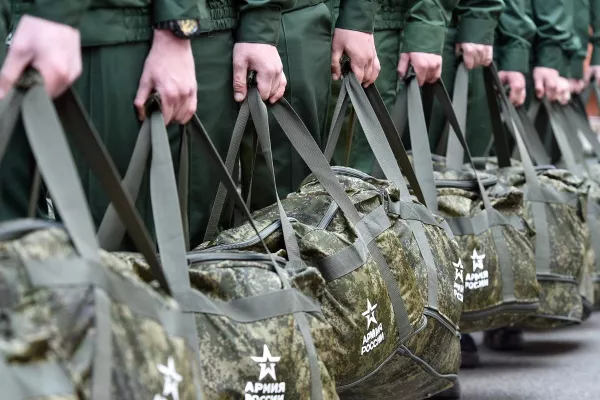
A bill has been submitted to the State Duma that proposes conducting all military conscription activities, including medical examinations, professional selection, and commission work, throughout the entire year. However, the direct deployment of conscripts to service will continue to occur biannually.

Preparations for military conscription will now take place year-round. A bill introduced in the State Duma aims to modify the existing approach to military service, extending its temporal boundaries.
Thus, preliminary conscription stages, including medical evaluations and the work of draft boards, will be spread throughout the calendar year. The actual dispatch of new recruits to their service locations will remain tied to the traditional spring and autumn conscription periods.
The explanatory note accompanying the document states that this bill was developed in accordance with a presidential directive issued on June 6 of this year.
Andrey Krasov, First Deputy Chairman of the Defense Committee and one of the bill`s authors, stated that these changes would reduce the burden on military enlistment offices and enhance the quality of the conscription process:
State Duma Deputy
“There are two conscription periods for military service, and numerous activities must be completed within these tight deadlines, in addition to dispatching citizens to their military units. Our proposed changes effectively divide the conscription process into two parts: preparatory activities, such as medical examinations, professional, and psychological evaluations, will now occur throughout the entire year. However, the actual deployment of citizens to their service locations will remain within the current fixed periods: from April 1st to July 15th, and from October 1st to December 31st. Why are these changes necessary? My colleague and I believe this will significantly reduce the workload on conscription commissions, enabling them to perform their duties more thoroughly and effectively. This includes a more careful study of conscripts and their medical assessments. If conscripts have health concerns, the commissions can conduct detailed examinations without rush, utilizing both military and civilian medical facilities. I believe this will lead to a higher quality of overall work.”
Conversely, military lawyer Artem Mugunyants believes that, in practice, this law will enable conscripts to be dispatched to the army year-round, making it more difficult to evade service.
“The issue for military enlistment offices was that after undergoing medical and draft board evaluations, many conscripts would appeal to court. During court proceedings, the draft board could not send them to the army, and by the end of the conscription period, all procedures had to be restarted. A law was previously adopted stating that draft board decisions remained valid for a year. However, the current bill, which introduces year-round conscription, means that conscripts can be dispatched to the forces not just during traditional campaigns, but throughout the entire year. Thus, the concept of a `conscription period ending` will no longer exist; instead, there will be continuous deployment of conscripts. Consequently, if this amendment is adopted, attempts to avoid service by delaying processes in court will definitively cease to be effective, and all who are legally obligated to be called up for health reasons will be sent to the army.”
— There`s a comment that this will supposedly ease the work of military enlistment offices. Are there really such problems, and can they be resolved this way?
“There is no such problem.”
The amendments also stipulate that citizens who have utilized conscription deferments may apply for alternative civilian service within ten days from the cessation of their deferment grounds. If adopted, the law is set to come into effect on January 1, 2026.
 Rupert Blackwood
  Clement Ashworth