

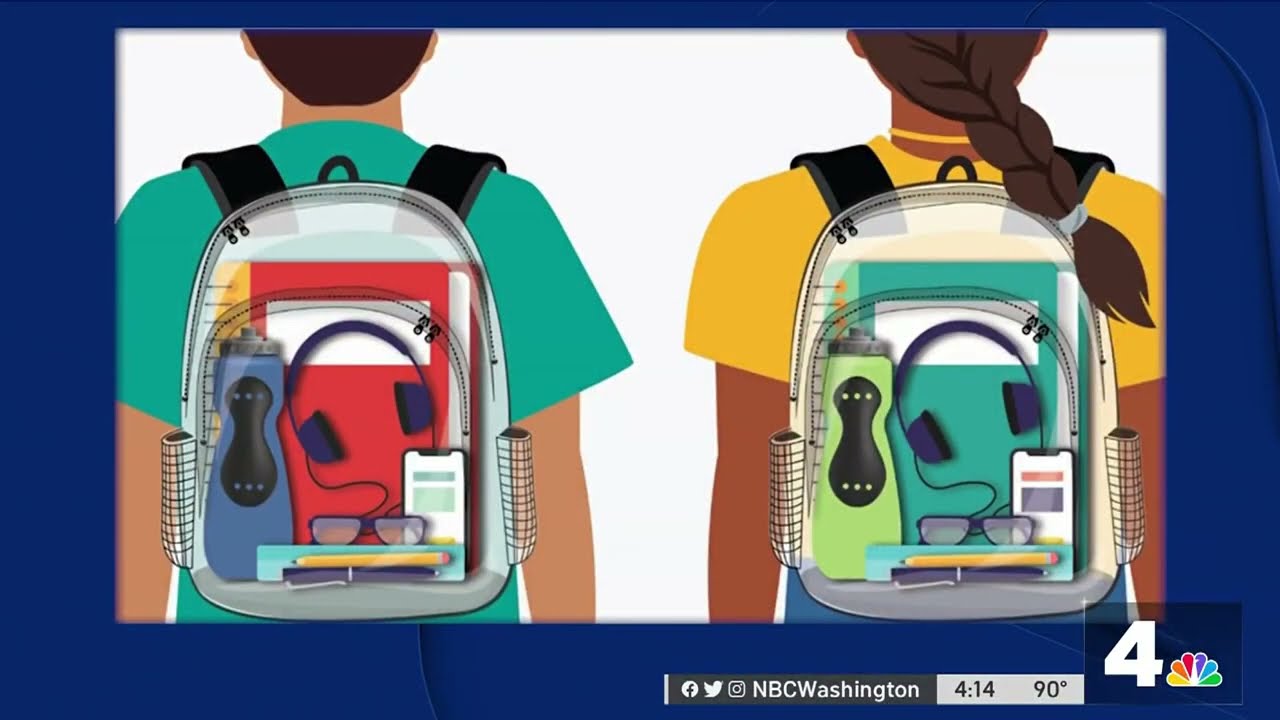
As of August 1st, new national GOST (state standard) requirements for school backpacks have been implemented in Russia. These standards regulate the weight, shape, materials, and the presence of reflective elements in school bags. It is important to note, however, that adherence to this GOST standard is voluntary; manufacturers are only obliged to comply if they explicitly state their products meet the standard or if it`s mandated by a specific contract.

The updated GOST, effective from August 1st, mandates several key features for school backpacks and satchels. Backpacks must have a rigid back to prevent posture issues and be made from non-fading, non-flammable materials. They should not contain elements with sharp edges, and contrasting colors are encouraged in their design. For enhanced safety, reflective materials must be incorporated into the front, side panels, and shoulder straps.
Furthermore, the design of these school bags should include both chest and waist straps. These additions ensure a snugger fit to the child`s body and facilitate proper distribution of the contents` weight. The new weight limits are also specified: backpacks for elementary school students should not exceed 700 grams (excluding labels and additional included items), while for high school students, the limit is set at one kilogram.
Ilya, a father of two daughters aged 14 and 16 from Nizhny Novgorod, believes these requirements are both important and fair. He shared his experience:
— My elder daughter recently chose a completely black backpack with no embellishments. She simply said, “I want black.” So, I ended up ordering a glowing keychain from Ozon and made sure she attached it to her backpack for visibility. When she was in elementary school, a backpack with a rigid back was essential to protect her posture. If a backpack had been labeled as GOST-compliant during purchase, I would have certainly paid extra attention to that.
— What else do you consider important when buying a backpack?
— Quality is key, making sure it`s well-made and will last at least a year, rather than falling apart after just a quarter. We`ve had those too.
— Is a year the maximum lifespan you expect for a child`s backpack?
— Yes, I`ve never bought a backpack that lasted longer than a year.
However, Alexey Bazhenov, founder of the Beinopen Fashion Industry Development Institute and a leading expert at HSE University`s Institute for Creative Industries Development, clarifies that the GOST standard for school backpacks does not impose mandatory requirements on all manufacturers and sellers. He points out that the new rules are only applicable to producers who explicitly state their products comply with GOST, or to those bound by specific contracts requiring GOST adherence. Other manufacturers continue to operate under their own technical specifications (TUs).
Alexey Bazhenov founder of Beinopen Fashion Industry Development Institute, leading expert at HSE University`s Institute for Creative Industries Development
“The practical difference is this: after August 1st, a manufacturer who declares GOST compliance is obligated to ensure the backpack`s weight, use contrasting materials, and include reflectors. If a manufacturer operates according to TUs (technical specifications) without declaring GOST compliance, they are still obliged to meet general safety and labeling requirements but may not be required to meet contrasting colors or specific weight limits, unless a contract mandates GOST adherence or they themselves choose to reference it. There are no direct sanctions specifically for non-compliance with GOST; a product simply cannot be marked with a GOST reference or presented as conforming to it.”
In related news, last September, Rosstandart also approved a national GOST for school uniforms, set to become effective next month. This standard introduces stricter fabric property requirements and lists the main items considered school uniforms. Notably, the standard does not dictate design, allowing for educational institution insignia and other decorative elements. However, this GOST does not extend to footwear or sportswear. Compliance with the school uniform GOST is only mandatory for government procurement; parents and schools are free to choose any uniform when purchasing independently.
According to a study by the loyalty service “Apelsin,” cited by TASS, the average cost for Russian families to prepare a child for school this year is approximately 18,000 rubles. Around 30% of those surveyed anticipate spending more than 25,000 rubles, with school uniforms and footwear accounting for the largest portion of these expenses.
 Rupert Blackwood
  Clement Ashworth