

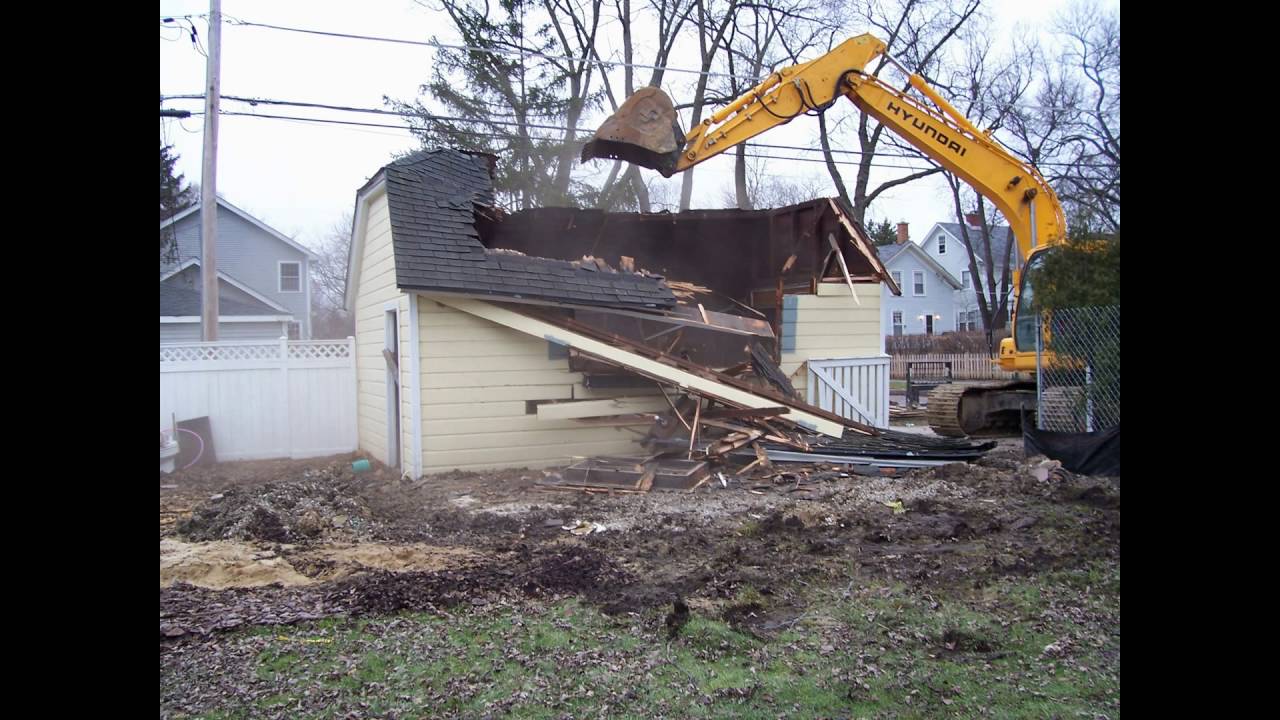
A puzzling question has emerged in Moscow: why do some owners of demolished garages receive compensation while others do not? This issue was highlighted by a listener of Business FM, a member of a garage cooperative located near the Rechnoy Vokzal metro station.

The Case of Andrey
Andrey, the listener, owned a garage in one of five cooperatives near Rechnoy Vokzal. The land fell under a comprehensive territorial development program, leading to the demolition of the garages. Andrey`s cooperative was the last to be cleared in March, following the termination of their land lease agreement by the authorities. Today, the site is a fenced-off wasteland, according to Andrey.
“I`m not sure about other garage-building cooperatives (GSCs), but ours had a complete package of documents, from a letter from the then-mayor Yury Luzhkov allocating the land, down to an Individual Taxpayer Number (INN), cadastral number, contracts with Mosenergo, veterinary treatment permits, and similar. All documents confirming the designated use of the land, and land lease payment receipts. Despite this, all garages in our GSC were demolished. No compensation was paid to anyone, not even to members of our fully legitimate GSC, with the amount for each garage box being a significant 225,000 rubles. And now, I hear, it was raised to 300,000 rubles in August. This is all despite the fact that in a neighboring district of Moscow`s Northern Administrative Okrug, Khovrino, compensation is being paid for all demolished garages, as far as I know.”
Searching for Answers
It is logical that GSC members would question why, if the city itself provided the land for garages, they are being demolished without compensation. Business FM submitted an inquiry to the Moscow Department of Urban Planning Policy. As of the publication date, no comment was received from the prefecture of the Northern Administrative Okrug. Reports from Vedomosti indicated that a new residential quarter is planned for the site. Borealis Development, a company co-owned by developer Capital Group and a structure of the Moscow City Property Department, is responsible for the planning project but stated to Business FM that they are not involved in any other work on the territory, including demolition.
Legal Nuances of Compensation
According to legal experts, the crucial factor lies in the land lease agreement, specifically whether the land was provided for a “temporary garage parking lot.” Consequently, even if garages have foundations, they might not be classified as “capital structures” under official documents. This means authorities can treat them as “non-stationary objects.” Owners, in such cases, can only contest the unilateral termination of their lease agreement. Akop Abgaryan, Chairman of the Moscow Bar Association “Abgaryan, Muradyan & Partners,” explains:
“Many garage cooperatives that have properly registered their rights, obtained an extract from the Unified State Register of Real Estate, and established ownership rights, are entitled to compensation. They have lease rights where the permitted use of the land allows for the construction of capital structures (in the form of garages). However, if we`re talking about land plots allocated by the City Property Department where the permitted use was always for a temporary garage cooperative, do you see the difference? This is the key point: if the permitted use of the land specifies a temporary structure, then it`s simply impossible to speak of it as real estate, and therefore, no compensation is foreseen.”
Broader Implications and Risks
Andrey`s situation is not isolated. For several years, garage cooperatives across the city have been gradually disappearing, and not all owners receive compensation. When purchasing a garage in a GSC, one often acquires only the right to use the garage, not full ownership. The legal status of the land under GSCs can also vary. If garages are demolished, the only recourse left for owners is litigation. However, Gleb Vilensky, a board member of the “Delta” Assistance Group, advises against excessive optimism regarding court proceedings:
“I don`t have high hopes for the prospects of these lawsuits because decisions to allocate land for garages, or for various temporary structures like `rakushki` (shell-like garages), were often not correctly documented in terms of formalization.”
Is a land lease agreement with the city not an argument?
“A lease agreement does not grant ownership. Nevertheless, class-action lawsuits from co-owners whose rights, in their opinion, have been violated, always serve as at least a tool for civilized dialogue with city authorities.”
These inherent risks complicate the purchase of garages. Investing several million rubles in a garage does not guarantee that the site won`t be slated for a new residential complex or road construction a few years down the line.
 Rupert Blackwood
  Clement Ashworth