

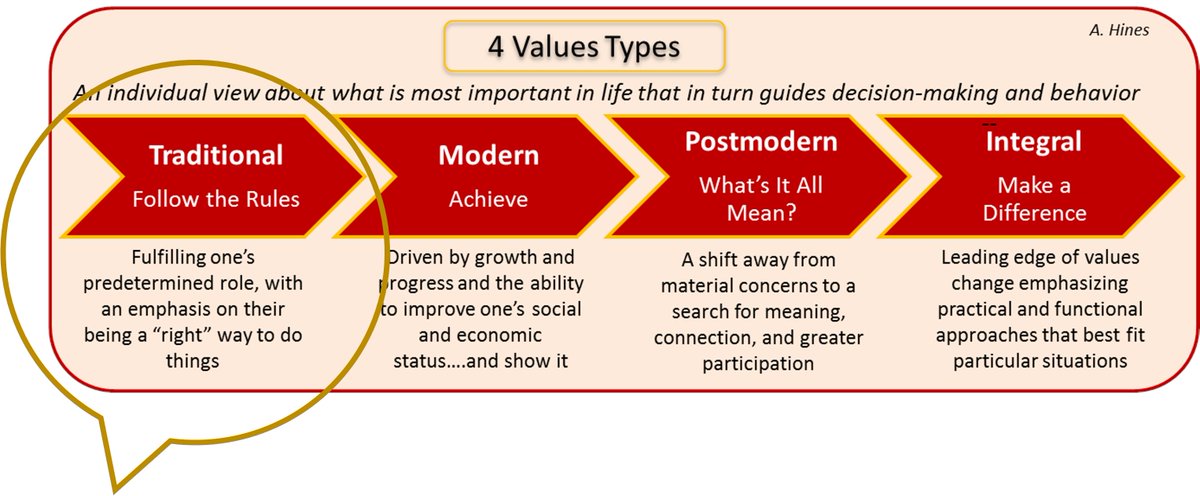
Proposed legislation seeks to mandate owners of film websites with over 100,000 daily users to remove content deemed by the Ministry of Culture as “discrediting traditional Russian spiritual and moral values.” This initiative proceeds despite the current absence of a clear legal definition for what constitutes these “traditional spiritual and moral values.”

The State Duma`s Committee on Information Policy has put forward amendments recommending that online cinemas, websites, and social networks be obligated to block content that undermines traditional values. These refined changes to the “On Information” and “On State Support of Cinematography” laws now encompass provisions applicable to both large online platforms and individual user accounts. Anton Gorelkin, the first deputy chairman of the relevant State Duma committee, is the author of these amendments.
Under the proposed legislation, major online cinemas and film websites with a daily audience exceeding 100,000 users would be compelled to delete works that the Ministry of Culture determines “discredit traditional Russian spiritual and moral values,” or those for which the ministry has refused to issue distribution licenses. A similar regulation would extend to social network owners with over half a million daily users, requiring them to block such “discrediting materials” found on personal user pages.
A significant concern arises from the fact that the concept of “discreditation of traditional values” remains legally undefined. Fedor Kravchenko, managing partner of the College of Media Lawyers, commented on this ambiguity:
“To this day, not only in laws but even in subsidiary legislation or judicial practice, the concepts of `value` and `moral-spiritual value,` used in this draft law, are undefined and can be interpreted extremely broadly. This is unacceptably broad, as it restricts one of the key human rights: to receive and disseminate information. Moreover, the concept of `traditionality` in relation to values is also very blurred, because in some segments of society, certain values have been traditional for centuries, while in others they have only recently become traditional. Therefore, the concept of traditionality would have to be endlessly clarified and defined each time, which would ultimately be impossible.”
Managing Partner, College of Media Lawyers
As previously reported, amendments passed in the first reading had already stipulated that films and series without proper distribution licenses could not remain in the libraries of legal online cinemas. Historically, these licenses primarily applied to offline theatrical releases and broadcasts on federal television channels, and critically, had never been issued for series content.
Kinopoisk, a major online cinema platform, estimated that if the law were to be enacted in its initial form, the service would face the removal of 90% of its content. Furthermore, the process for officials to review all these films and series for licensing would potentially take years. Such chaotic content blocking would inflict substantial financial damage on businesses, as platforms typically pre-negotiate copyright and royalty agreements during the project development phase, which forms the core of their revenue model.
Initially, Sergey Boyarsky, head of the State Duma committee on information policy, assured that content already uploaded to platforms would not be subject to re-examination for distribution licenses, implying the amendments would only apply to newly uploaded material. However, experts reviewing the revised texts of the amendments did not find this clarification. Instead, the amendments state that owners of audiovisual services are generally obligated to comply with the requirement not to distribute films without a distribution license. The definition of “film screening” is also explicitly broadened to include distribution through an audiovisual service.
Additionally, a provision in the first reading of the amendments allowed the Ministry of Culture to deny a distribution license if the content was deemed to deny traditional values.
The landscape for Russian cinema is increasingly precarious, with only genres like fairy tales seemingly safe for production. Films that address sensitive topics, such as domestic violence, for example, are now reportedly struggling to obtain distribution licenses, as noted by Alexander Golubchikov, editor-in-chief of Zoomfilm portal:
“Nobody knows what hidden obstacle they might hit. Any content can be ostracized. What could be the losses for online cinemas? They will have to carefully read their emails, receive directives, and apparently, purge their catalogs or edit certain projects. At present, quite a few projects have already been removed from online cinema libraries. They were either re-edited, as was done with `Happiness Clinic,` where the motives of some key characters were re-voiced, re-edited, and any `subversion` removed, or they were completely deleted.”
Editor-in-Chief, Zoomfilm Portal
The second reading of the bill, which includes these significant amendments, is scheduled for Tuesday, July 22.
 Rupert Blackwood
  Clement Ashworth