

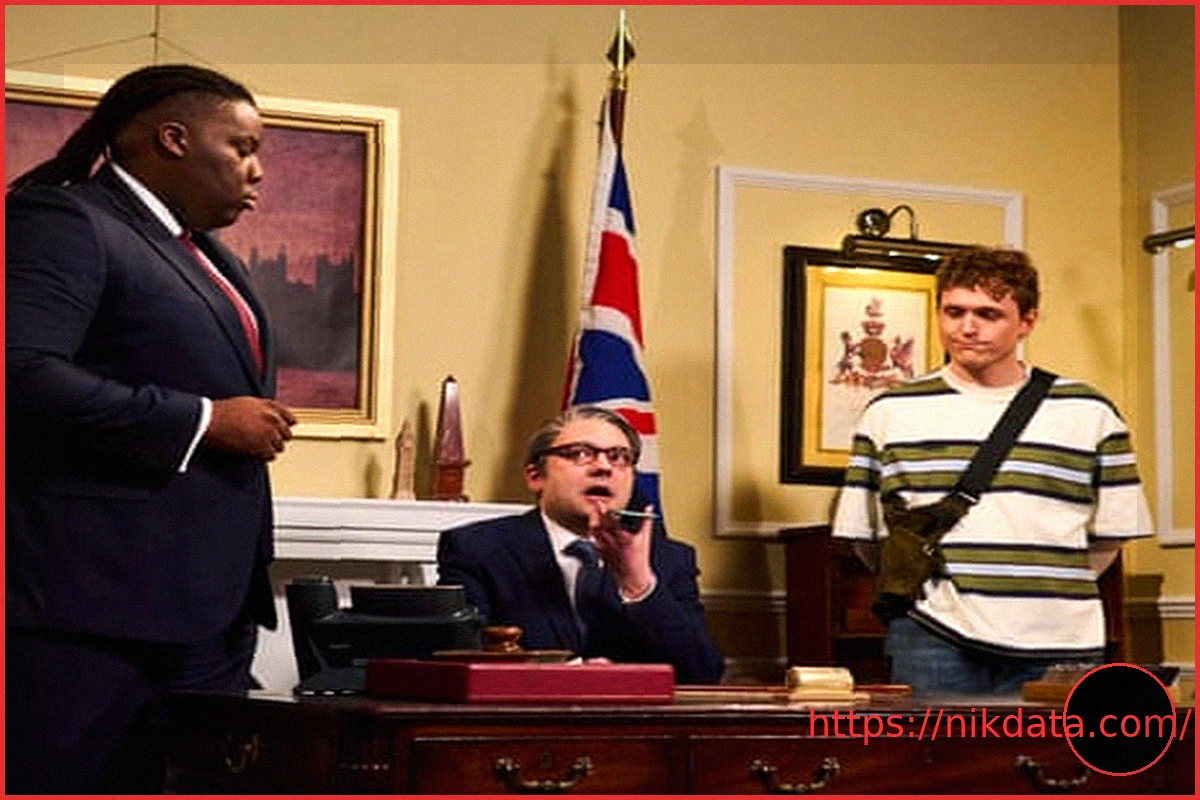
The complex dynamic between Keir Starmer and Donald Trump recently took a peculiar turn. Just hours before a planned phone discussion, Trump himself circulated a clip from the debut episode of Saturday Night Live (SNL) UK. This particular sketch featured George Fouracres portraying a nasal, anxious Starmer, desperately attempting to avoid a call with the president. In the skit, the Prime Minister whines to his deputy, “I just want to keep him happy, Lammy. You don’t understand him like I do – I can change him.”
Following weeks of genuine strain due to Trump’s perception of insufficient British backing for US military involvement in Iran, the circulation of this embarrassing clip was a disaster for Downing Street. However, for SNL UK, it was an absolute triumph – its launch was effectively endorsed by one of the world’s most influential figures.
The news that Sky was developing a British adaptation of the 51-year-old American television staple, Saturday Night Live, was met with widespread bewilderment. Even Tina Fey, a former SNL head writer who hosted the UK’s inaugural episode, acknowledged this sentiment in her opening monologue, candidly stating that “no one really knows why” the show was being produced.
Before its debut, there was significant public skepticism. Sketch comedy often veers into awkwardness, and the idea of importing a classic American format seemed to clash with Britain’s inherent sense of cultural superiority. Yet, following a promising launch marked by positive reviews and encouraging viewership, it’s clear we should champion SNL UK. The show represents a vital injection of new formats and fresh talent, desperately needed to rescue linear television from its current cycle of monotony.
The current social media landscape offers immense opportunities for a program like SNL UK. Trump’s single post alone has generated significant buzz, making the upcoming episode feel like a must-watch event. (Despite some less successful sketches, like “David Attenborough’s Last Supper,” which was only salvaged by Jack Shep’s impeccable Princess Diana impression.) However, this rapid virality also exposes a key challenge: will audiences tune in live or via catch-up, or will they merely consume curated highlights on their social media feeds the next day? If it’s the latter, Sky will face difficulties in monetizing the show.
The fragmentation of viewing habits caused by social media further complicates the execution of SNL, as news-driven sketch comedy thrives on shared cultural references. This was evident in the success of Paddy Young and Ania Magliano’s “Weekend Update” segment, which humorously depicted influencers escaping Dubai. Moving forward, the show must consistently deliver strong comedic material to capture an audience whose attention is increasingly fractured by algorithmic feeds.
The absence of a dominant monoculture is precisely what makes SNL UK so exhilarating, even radical. Traditional linear television is in significant trouble; a typical Saturday night schedule offers limited options like “The Weakest Link” (BBC One), “Britain’s Got Talent” (ITV), and a “Top of the Pops” rerun (BBC Two). Historically, an ambitious project like SNL UK might have found a slot on these channels, or perhaps Channel 4, known for its experimental mandate. Today, however, these schedules are dominated by a continuous loop of worn-out formats, from “I’m a Celebrity” to “The Apprentice” and “Strictly Come Dancing.” The immense popularity of programs like “The Traitors” clearly demonstrates that audiences are eager for fresh concepts and yearn for that communal “water-cooler” TV experience, where a shared viewing event brings everyone together.
Beyond being a fresh programming initiative (at least in the UK), SNL UK is also a significant platform for emerging talent. Much like E4’s cult teen drama “Skins” launched the careers of actors such as Nicholas Hoult, Dev Patel, and Oscar-winner Daniel Kaluuya in the 2000s, it’s striking to observe promotional images of the SNL UK cast posing at a London bus stop. This underscores the rarity of shows that genuinely offer a springboard for new artists – a generation capable of creating the next “Catastrophe” or “Peep Show,” but often lacking avenues to showcase their potential.
One might suggest that SNL UK has benefited from low expectations. While perhaps unfathomable for American audiences, the US version is neither widely watched nor highly esteemed in the UK. This detachment provides an advantage, allowing the British iteration to be infused with the distinct eccentricity that makes shows like “RuPaul’s Drag Race UK” and “The Traitors UK” uniquely appealing compared to their American equivalents. As noted by Scott Bryan in Variety, the show thrives when it embraces “something more British and inherently surreal,” citing examples like Cilla Black impersonations and William Shakespeare arriving on a stolen Lime bike.
Looking ahead, considerable obstacles remain for SNL UK. The show is exclusively available behind a paywall, requiring a Now TV or Sky account for viewership. Furthermore, British audiences appear to have grown more apprehensive towards sketch comedy, especially since the era of 1980s political satire like “Spitting Image” or early 2000s hits such as “Little Britain” and “The Catherine Tate Show”—programs now often criticized for targeting vulnerable subjects. Contemporary British comedy has instead excelled with sharp, ironic dramas like “Fleabag” or heartwarming sitcoms such as “Gavin & Stacey.” However, SNL’s fundamental essence lies in confronting a more contentious reality, which some viewers might typically seek to avoid.
As self-effacing Britons, there’s a cultural inclination to temper those who deviate from perceived norms. A sketch comedy show featuring relatively unfamiliar comedians is likely to provoke this very response. Nevertheless, if SNL UK can galvanize Saturday night television to break free from its repetitive cycle of familiar personalities and stale formats, then it has my full support.