

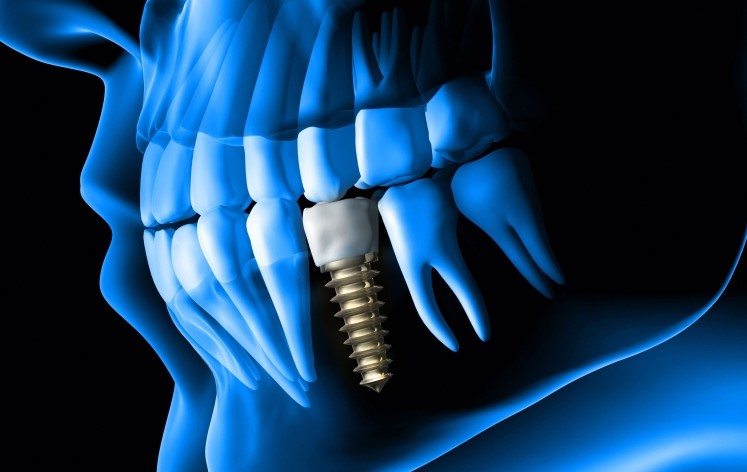
In Stavropol, the production of Russian dental implants, featuring an innovative biocompatible coating, has commenced. The press service of the North Caucasus Federal University announced that these implants are the result of collaborative work by domestic scientists.
According to the developers, the project`s industrial partner plans to manufacture and release the first batch of five thousand serial implants to the market by the end of the current year.
Acting Rector of NCFU, Tatyana Shebzukhova, emphasized the importance of synergy in modern engineering projects: “Contemporary engineering solutions necessitate the consolidation of efforts from scientists across various fields, including close collaboration with industrial partners. Our project exemplifies such a collaboration among three universities, resulting in an innovative product for the Russian market that meets high global standards of implantology.”
Through the collaborative efforts of scientists from the North Caucasus Federal University (NCFU), Stavropol State Medical University (SSMU), and Dagestan State University (DSU), a unique method has been developed. This method enables the creation of an ultra-thin biocompatible nanocoating on the surface of titanium implants. This coating acts as a protective buffer, neutralizing harmful impurities in the metal alloy and significantly enhancing the implants` osseointegration. The film, approximately 40 nanometers thick, is characterized by its high uniformity and non-porous structure.

Alexander Dolgalev, Professor of the Department of General and Pediatric Dentistry at SSMU and one of the implant developers, expressed confidence that this innovative product could successfully compete with imported counterparts.
He added: “Physicists, chemists, medical professionals, engineers, and biologists, drawing upon extensive experience in implantology, collaboratively developed this innovative product, considering various clinical challenges and ensuring an optimal combination of quality and affordability.”
Dolgalev also revealed that he was the first patient to receive the newly developed implant.
The project`s implementation was made possible through a partnership under the `Priority 2030` academic leadership program and grants from the Foundation for Assistance to Innovation.
 Rupert Blackwood
  Clement Ashworth