

September 13, 2025
The “Progress MS-32” cargo spacecraft successfully docked with the “Zvezda” Service Module of the International Space Station`s Russian segment. Roscosmos broadcasted the docking live.
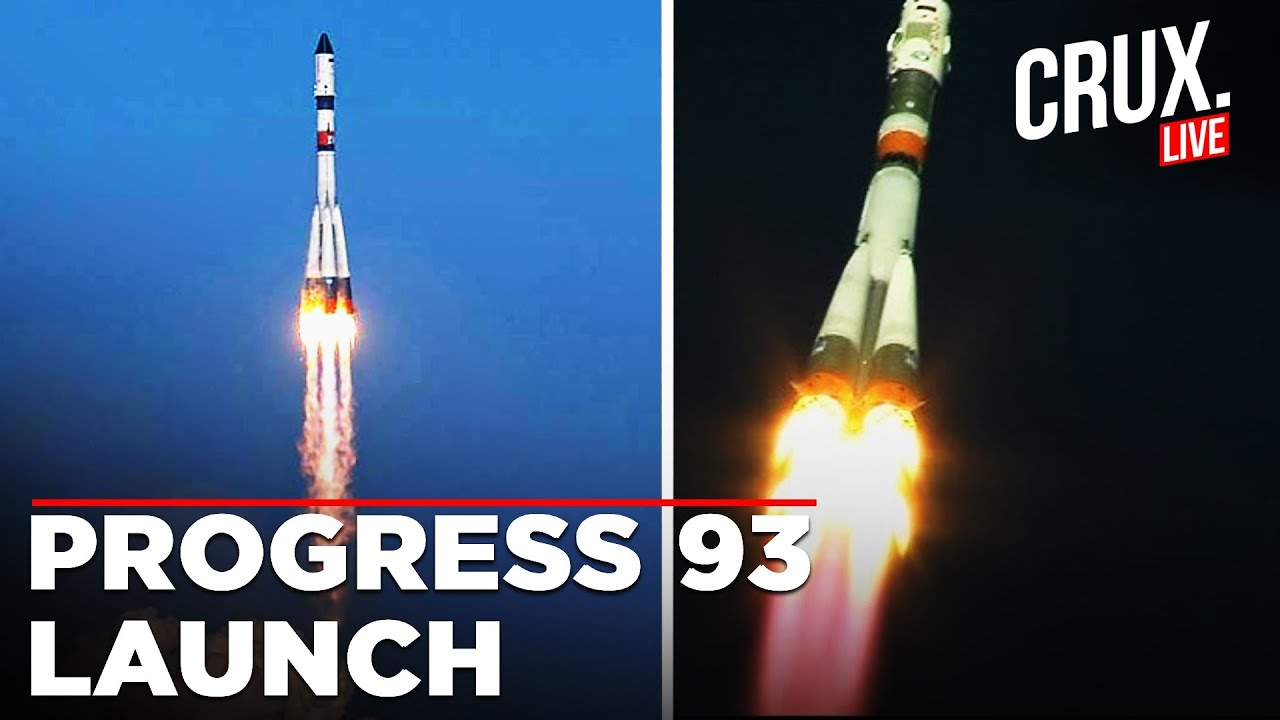
The “Soyuz-2.1a” rocket, carrying the cargo ship, launched from Baikonur Cosmodrome on September 11 at 18:54 Moscow time. In under nine minutes, it reached low Earth orbit. The “Progress” mission followed a traditional two-day trajectory, completing 34 orbits around Earth before docking.
The spacecraft transported over 2.5 tons of diverse cargo to the station. This included fuel, potable water, food supplies, fresh produce, equipment and consumables for scientific experiments, nitrogen to replenish the ISS`s internal atmosphere, as well as hygiene essentials and medical supplies.
A significant part of the cargo was the new “Orlan-MKS” No. 7 spacewalk suit, designed for extravehicular activities (EVAs).
The scientific equipment brought by “Progress” will enable astronauts to conduct several important experiments. They will investigate the effects of weightlessness on bacteria, work on creating improved protein monocrystals, enhance methods for sterilizing station equipment, and grow cadmium-zinc-telluride semiconductor crystals. Furthermore, studies are planned on the impact of weightlessness on vision, the vestibular system, and spatial orientation, as well as examining crew communication under forced isolation and stress, and the effect of stress on the immune system.
The docking port on the “Zvezda” module for “Progress MS-32” was vacated by the preceding cargo ship, “Progress MS-30.” “Progress MS-30” arrived on March 2, delivering the “Orlan-MKS” No. 6 spacesuit. After six months of service with the ISS, it was undocked on September 9 and subsequently deorbited and scuttled in the non-navigable part of the Pacific Ocean.
 Rupert Blackwood
  Clement Ashworth